
- calendar_today August 14, 2025
British Columbia’s real estate landscape in 2025 is evolving in response to economic stabilization and demographic shifts. With interest rates plateauing and affordability challenges still present, investors across the province—from Vancouver to Kelowna and Victoria to Kamloops—are seeking more stable, income-generating assets. The focus is shifting from speculative growth to steady performance, community-oriented developments, and location-specific strategies.
So which real estate sectors are showing the strongest potential in B.C. this year? Across urban, suburban, and regional centers, seven property types are gaining traction by adapting to both local and national economic forces.
Multifamily Housing: The Reliable Performer
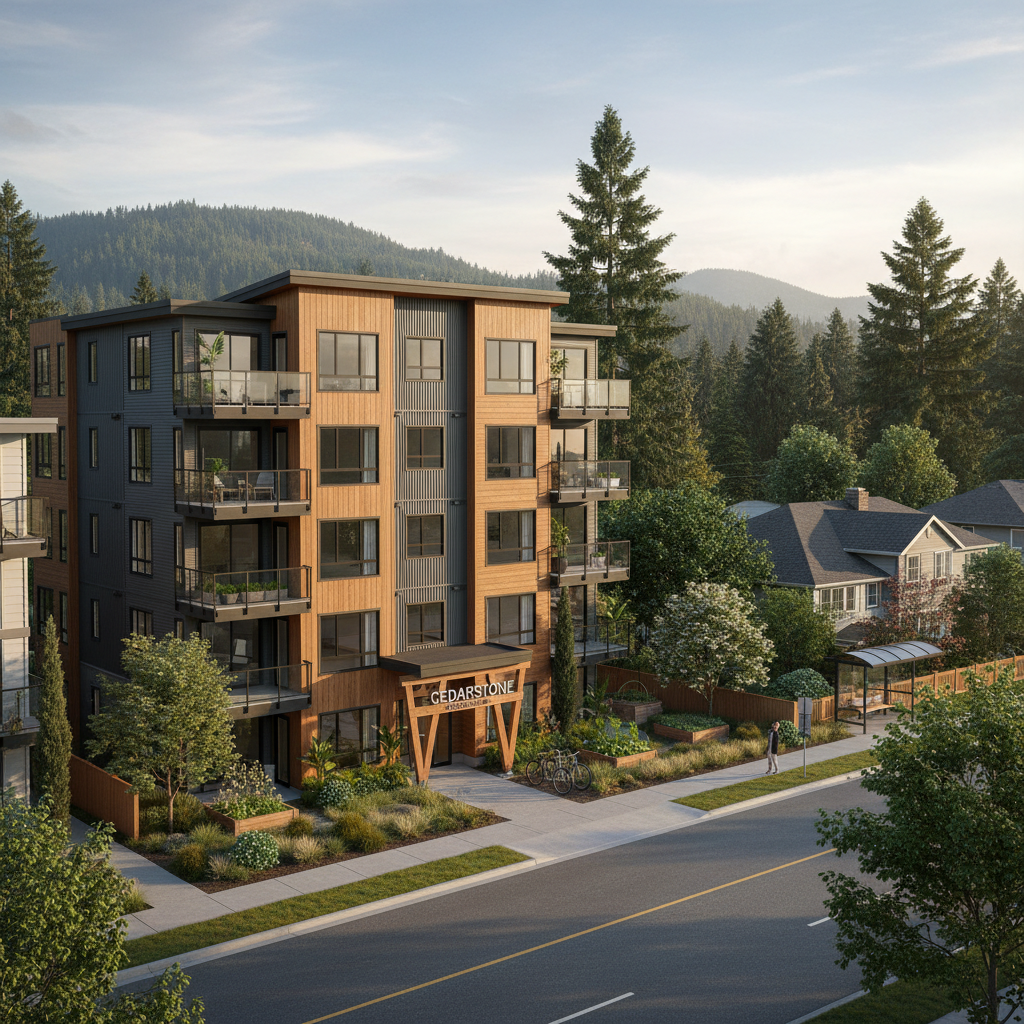
Multifamily housing remains a pillar of British Columbia’s rental market, particularly in high-demand urban zones like Metro Vancouver, Victoria, and Surrey. High interest rates and record-breaking home prices have made homeownership elusive for many, forcing a growing renter population to stay in place longer.
Class B and C apartment buildings—particularly in Burnaby, Langley, and Nanaimo—are seeing consistently low vacancy rates and modest but reliable rent growth. Mid-rise buildings and purpose-built rental communities remain popular among tenants priced out of ownership. For investors, these properties offer relatively stable cash flow, especially when paired with strong management and light-value upgrades.
Industrial Properties: Still a Growth Engine
B.C.’s industrial market is booming, fueled by e-commerce logistics, warehousing demand, and port-adjacent trade infrastructure. The Lower Mainland, Fraser Valley, and Vancouver Island are witnessing industrial vacancy rates at historic lows—often below 2%, according to Colliers and CBRE.
Demand for last-mile delivery facilities, refrigerated storage, and flex industrial space is surging. Richmond, Delta, and Chilliwack are key nodes in this expansion, benefiting from their access to highways, ports, and growing labor markets. Investor interest is high, especially as automation and robotics enter the logistics space, driving long-term operational efficiency.
Single-Family Rentals in Suburban Markets
As buyers remain sidelined by high borrowing costs, single-family rentals (SFRs) in suburban B.C. have gained popularity. In communities like Abbotsford, Langford, and Maple Ridge, working families are opting for detached rentals over condo ownership, drawn by flexible leases and access to schools and green space.
Roofstock’s 2025 Investor Sentiment Index indicates strong appetite for B.C.-based SFRs, particularly in growth corridors outside of Greater Vancouver. These homes often experience less turnover than multifamily units and cater to stable tenants seeking long-term rental housing. Investors focused on yield and tenant quality are expanding in these segments.
Population Flow: Vancouver to Interior Growth Corridors
Migration within British Columbia is reshaping real estate demand. While Vancouver remains the province’s economic hub, affordability challenges and lifestyle preferences are pushing residents toward Kelowna, Kamloops, and the Comox Valley.
Developers are following these trends, building residential, retail, and healthcare-focused assets in B.C.’s interior. Infrastructure investment—such as new transit, highway improvements, and digital connectivity—further supports regional growth. Investors willing to look beyond the Lower Mainland are finding better cap rates and long-term potential in these rising markets.
Mixed-Use Developments & Urban Revival
Mixed-use developments are driving downtown revivals in places like Victoria, Kelowna, and even smaller cities like Prince George. These projects integrate housing with coworking, dining, and retail, appealing especially to young professionals and downsizers seeking convenience and walkability.
In Vancouver, mixed-use remains strong in neighborhoods like Mount Pleasant, False Creek, and Brentwood. Despite zoning complexities and high land costs, developers are moving forward with vertically integrated projects offering residential units atop commercial podiums. Demand for urban living with built-in amenities continues to justify premium pricing in well-located areas.
Niche Assets on the Rise: Senior & Student Housing
B.C.’s senior housing sector is entering a growth phase. With a rapidly aging population—especially on Vancouver Island and in the Okanagan—demand for independent and assisted living is increasing. Occupancy rates in Victoria, Nanaimo, and Penticton are climbing, and new developments are responding with modern, healthcare-integrated models.
Meanwhile, student housing around UBC, SFU, and University of Victoria remains undersupplied. Pre-leasing rates at many private student residences exceed 90%, according to local real estate boards. Investors are capitalizing on strong, tech-savvy demand by offering furnished units, high-speed internet, and proximity to campus services.
Risk Factors and Investment Cautions
B.C.’s real estate market offers promising opportunities but comes with notable risks. Wildfires and flood-prone zones continue to drive up insurance premiums and maintenance costs, particularly in the interior and coastal regions. Older housing stock in cities like Vancouver and New Westminster also presents renovation and compliance challenges.
Regulatory pressures remain a significant factor. The provincial government’s housing policies—including rent caps, short-term rental restrictions, and zoning reforms—can affect investor returns. In high-regulation areas like Vancouver, careful due diligence and policy awareness are essential.
Interest rates, though more stable, remain elevated compared to pre-2022 levels, putting pressure on cap rates and financing structures. Conservative debt strategies and diversified asset allocation are prudent choices in this environment.
Expert Insight: What the Analysts Say
“British Columbia’s fundamentals—population growth, limited land supply, and job diversity—continue to attract long-term capital,” says Lauren Bellingham, senior economist at CBRE. “But each subregion is unique. Understanding the micro-market—whether it’s Kelowna or Coquitlam—is key to generating consistent returns.”
Redfin’s 2025 Housing Trends report emphasizes that affordability, infrastructure development, and demographic shifts are shaping real estate performance across B.C. As urban cores densify and interior cities expand, investors who pay attention to local dynamics are outperforming.
Strategic Diversification is Key in 2025
In 2025, real estate success in British Columbia means thinking beyond Metro Vancouver. Multifamily remains a reliable base, while industrial continues to outperform in key corridors. Single-family rentals are on the rise in suburban regions, and mixed-use developments are redefining urban living.
Senior and student housing assets are responding to real demographic demand, while interior markets offer high-growth potential for those seeking better affordability and long-term value. Risk mitigation through diversification—across asset classes and geography—is critical.
As B.C.’s economy evolves and regional dynamics shift, real estate investors who lead with data, local insight, and flexibility are poised to thrive in a province where precision beats speculation.