- calendar_today April 25, 2026
British Columbia is advancing salmon habitat restoration by engaging high school students in the Seeds to Salmon program, a hands-on initiative aimed at reviving aquatic ecosystems and fostering the next generation of conservation leaders.
A Collaborative Approach to Ecological Learning
Organized by the Lower Columbia Fish Enhancement Group in partnership with the Center for Agriculture, Science, and Environmental Education (CASEE), the Seeds to Salmon program exemplifies the power of community collaboration for environmental impact. Each year, roughly 130 high school students join immersive activities at Harry Gardner Park, blending classroom theories with tangible experiences in riparian habitats.
From Classroom to Creek: Real-World Conservation
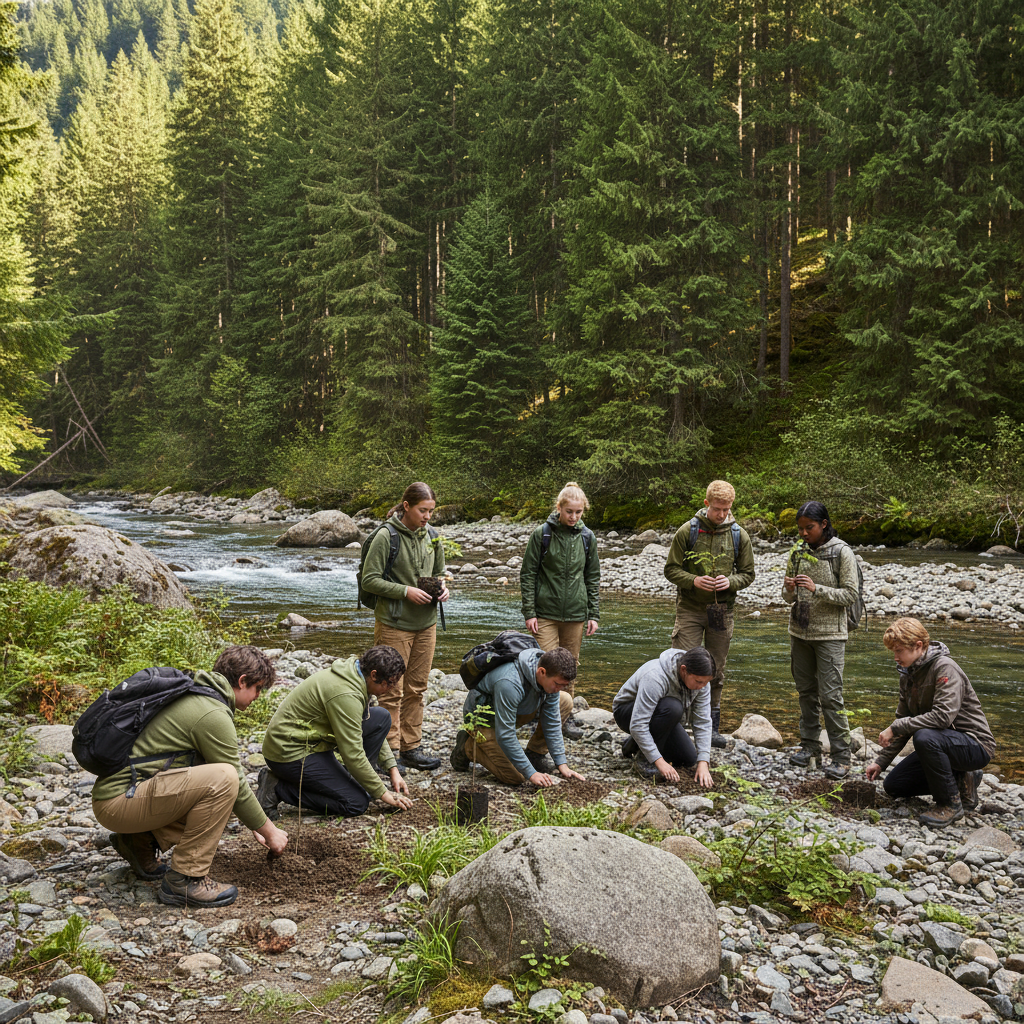
Students participating in Seeds to Salmon embark on student field trips that bridge learning and doing. Tasks such as native plantings, invasive species removal, and water monitoring encourage youth to take an active role in habitat restoration initiatives. These efforts are crucial to salmon recovery in areas still affected by historic disruptions, such as the 1980 eruption of Mount St. Helens.
Integrating Technology for Lasting Solutions
Incorporating modern science tools, the program has students employ GIS technology to map plant growth, track restoration progress, and collect useful ecological data. These hands-on projects give students technological expertise while reinforcing the principles of environmental education. By working on-the-ground, participants deepen their appreciation of the interconnectedness of healthy riparian habitats and robust fish populations.
Building Essential Skills for Future Stewardship
Throughout the program, students plant species such as Douglas fir and red osier dogwood, both essential to ecosystem balance and salmon-friendly environments. By engaging directly in salmon habitat restoration, students build valuable skills in ecosystem management, water quality assessment, and project planning. The experience highlights pathways toward natural resources education and potential environmental careers, contributing to a culture of stewardship vital for British Columbia’s future.
Funding Challenges Cast Uncertain Future
Despite clear benefits, Seeds to Salmon faces uncertainty due to state funding cuts that threaten its annual $80,000 operating costs. The program now relies on donations to continue offering these formative conservation experiences. Local conservation groups stress the program’s importance, not only for salmon recovery but for cultivating ecological awareness and leadership among British Columbia’s youth.
Regional Impact and Community Engagement
By connecting young people with opportunities to restore vital riparian habitats and participate in applied science, British Columbia strengthens both its ecosystems and its environmental workforce. Programs like Seeds to Salmon ensure that habitat restoration and invasive species removal are supported by a knowledgeable and motivated new generation. The initiative’s mix of technical training and hands-on restoration provides a model for environmental education and community-based stewardship regionally and beyond.
The Way Forward for Salmon Habitat Restoration
As seeds take root along the creeks and rivers of British Columbia, so too does the understanding that salmon habitat restoration is a shared responsibility. The Seeds to Salmon program stands as a testament to the value of sustained investment in youth-led environmental action, ensuring that the province’s much-valued salmon populations, and the people dedicated to their future, continue to thrive.