- calendar_today June 9, 2026
British Columbia communities are closely observing developments as new evidence links Southern California Edison’s (SCE) aging infrastructure to the devastating Eaton wildfire, underscoring persistent concerns over utility safety and wildfire prevention efforts. The ongoing legal battle and intensified focus on risk management have significant implications for regions facing similar wildfire threats.
Surveillance Footage Points to Idle Transmission Line
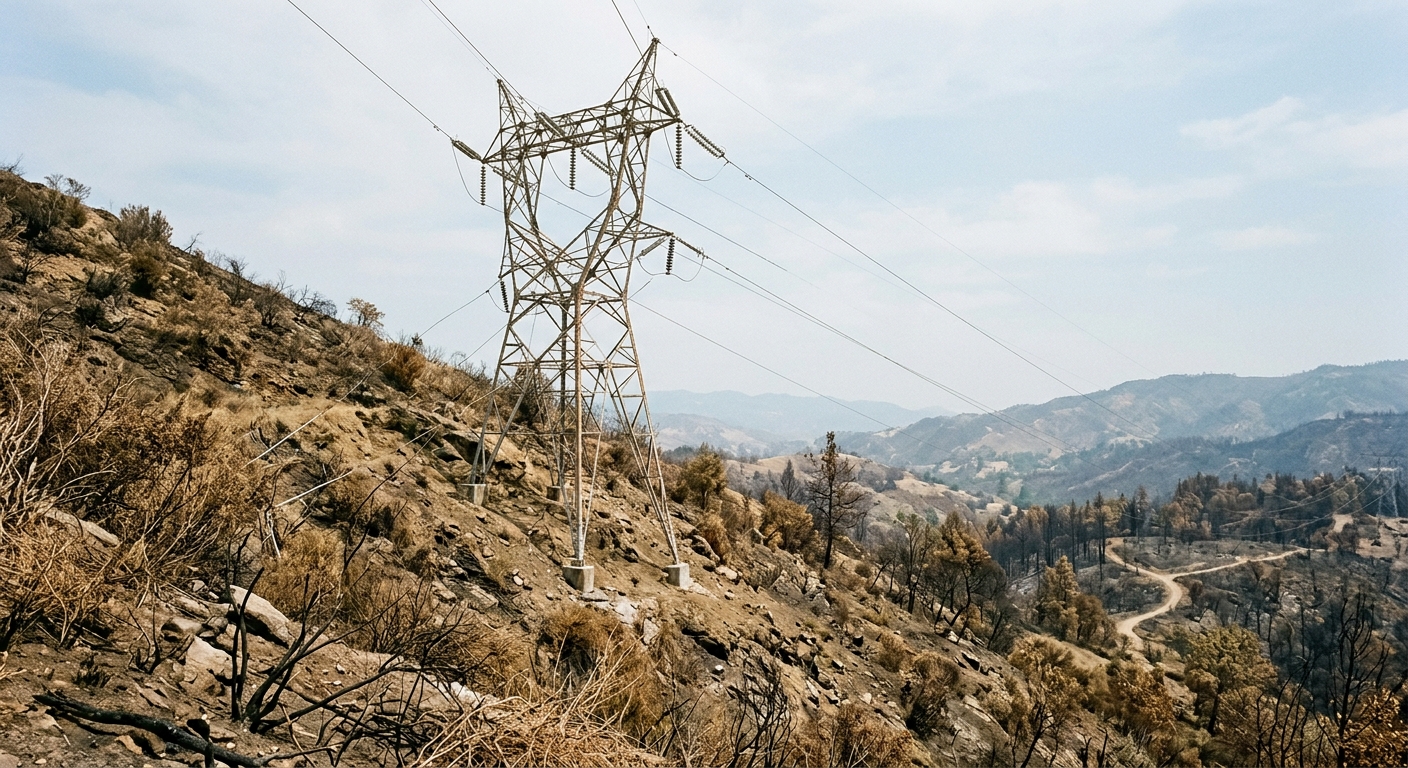
Recently disclosed surveillance video and technical analysis have pinpointed an idle transmission line—unused but still part of SCE’s vast network—as the ignition source of the deadly Eaton wildfire in Altadena, California, in January 2025. The footage, captured by nearby recreational facilities, recorded visible electrical flashes near an out-of-use tower at the exact moment the fire began. Investigators believe that induction ignition—where current jumps onto dormant lines through electromagnetic energy—may have caused the spark after SCE equipment elsewhere registered electrical faults.
Legal Disputes Over Utility Liability Intensify
The renewed focus on the role of Southern California Edison has fueled a fierce legal debate. Insurers for wildfire victims are invoking the principle of inverse condemnation, a legal doctrine allowing property owners to seek compensation from utilities for fire damages without the need to prove direct negligence. This doctrine puts enormous financial pressure on utilities, especially as fire damages from catastrophic events like the Eaton wildfire continue to mount.
SCE’s Position and Ongoing Investigations
Southern California Edison disputes the latest findings, including the submitted surveillance footage. Company representatives state that their internal investigation is still underway and question the validity of the evidence. Despite the company’s efforts to contest liability, mounting technical data—such as synchronized electrical faults and evidence of induction ignition—has made it increasingly difficult to rule out the idle transmission line as the ignition source.
Assessing Compensation and Financial Exposure
As legal proceedings unfold, SCE has already offered over $650 million in wildfire compensation to some victims of the Eaton wildfire. However, for many survivors and property owners, these offers do not fully address the extent of loss. The company anticipates limited financial exposure due to protective fire safety regulations enacted by the state, which shield utilities from significant damages when they can demonstrate adherence to prescribed risk-reduction plans. Nevertheless, insurers and advocates argue that these safeguards do not go far enough given the scale of destruction and the growing threat of california wildfires.
Trends in Fire Safety and Equipment-Related Ignitions
Despite Southern California Edison’s well-publicized investments in advanced fire safety technologies and operational upgrades, the number of fires attributed to SCE equipment rose in 2024 compared to 2019. Industry experts point to prolonged drought, higher temperatures, and unpredictable wind as factors outpacing current fire safety regulations and infrastructure upgrades. The risk posed by idle transmission lines, often forgotten in day-to-day operations, has become a focal point for policymakers and utility managers in wildfire-prone areas like British Columbia.
Regional Implications for British Columbia’s Utilities
Events south of the border serve as a critical learning opportunity for British Columbia’s utilities, prompting intensified reviews of grid management and emergency readiness. As climate change heightens wildfire risks across the province, local stakeholders are watching cases like the Eaton wildfire to better understand evolving legal standards—including inverse condemnation—and to evaluate the adequacy of compensation policies for those affected by utility-triggered disasters.
Looking Ahead Amid Worsening Wildfire Threats
The saga of Southern California Edison and the Eaton wildfire continues to capture broad attention, revealing the complex interplay of technical, legal, and financial factors that now define utility liability in the era of extreme fire weather. British Columbia’s communities and institutions remain vigilant, seeking lessons and strategies to prevent similar tragedies as wildfire seasons grow longer and more relentless.