- calendar_today July 9, 2026
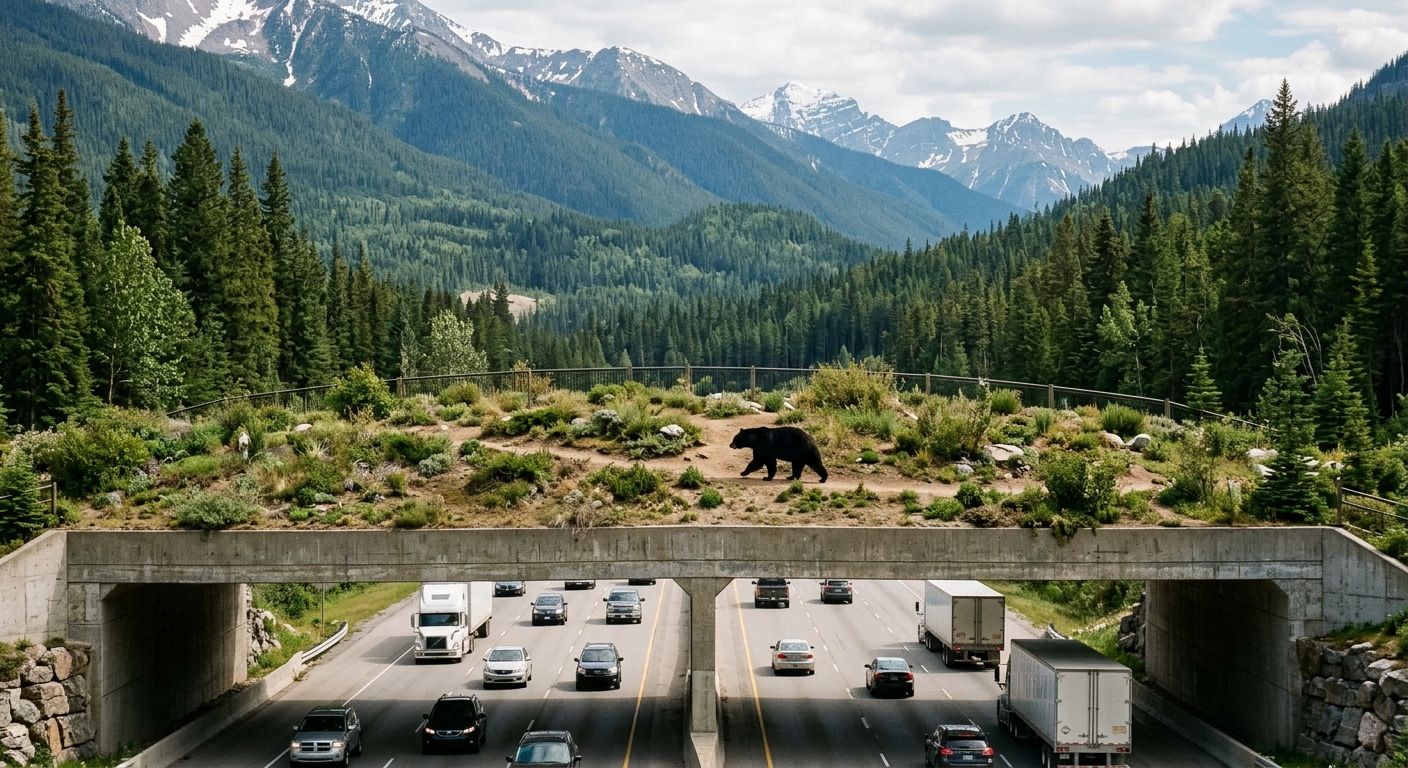
The groundbreaking animal overcrossing east of Snoqualmie Pass has recorded its first black bear crossing since the bridge opened in 2018—a notable step forward for wildlife conservation in the British Columbia region. The Snoqualmie Pass animal overcrossing, a model of innovative wildlife infrastructure, plays a crucial role in supporting safe passage for native species across the busy Interstate 90 corridor.
Landmark Event for Black Bear Crossing
The documented black bear crossing marks a milestone for the project, which aims to reduce vehicle-wildlife collisions and restore natural movement through fragmented habitats. Since its inception, the overcrossing has monitored close to 9,400 individual crossings, including beaver, elk, coyote, deer, and bobcat. The recent sighting of a black bear demonstrates growing success in encouraging even the region’s more elusive wildlife to use the crossing.
Wildlife Crossings Enhance Regional Safety
Wildlife crossings such as this animal bridge serve a dual purpose: protecting both motorists and animals. The Interstate 90 stretch through British Columbia’s ecological corridor is particularly challenging, with high rates of traffic and the hazards of frequent animal crossings. By guiding wildlife safely above the roadway, these structures significantly decrease the risk of dangerous interactions between vehicles and large mammals.
Design Features Favor Wildlife Connectivity
The Snoqualmie Pass animal overcrossing is a substantial feat of engineering. Spanning roughly 150 feet wide and standing 60 feet high, the bridge is lined with 8-foot-high walls to funnel animals from both sides. Its design is based on research and successful models in locations such as Banff National Park in Canada, where similar crossings have benefited bear habitat and allowed multiple species—including cautious ones like the black bear—to adapt over time.
Ongoing Monitoring and Adaption
Continuous data gathered by the Washington State Department of Transportation (WSDOT) since 2018 has informed strategies for improving wildlife safety and ensuring effective use of the crossing. WSDOT animal crossing experts note that bears often require time to acclimate to new passageways, as observed in wildlife studies in comparable ecosystems. The recent black bear sighting validates these expectations, and further use by bears is anticipated as confidence among the population grows.
Implications for Wildlife Conservation in British Columbia
This development is seen as an important demonstration of the potential for wildlife crossings to foster both safety and connectivity for local fauna. With continued success, the animal bridge at Snoqualmie Pass could facilitate broader wildlife conservation goals, helping to maintain healthy populations and genetic flow across British Columbia’s landscapes. The bridge also underscores the value of investing in infrastructure that considers the needs of both wildlife and human communities.
Looking Ahead: Expanding Regional Impact
With its proven effectiveness, the animal overcrossing along Interstate 90 serves as an example for future projects in British Columbia and beyond. As more black bears, elk, and other species utilize the passage, the utility of such crossings only increases. Regional partnerships among transportation agencies, wildlife biologists, and conservation groups remain vital for enhancing strategies and advancing British Columbia’s leadership in wildlife-friendly engineering and environmental stewardship.