
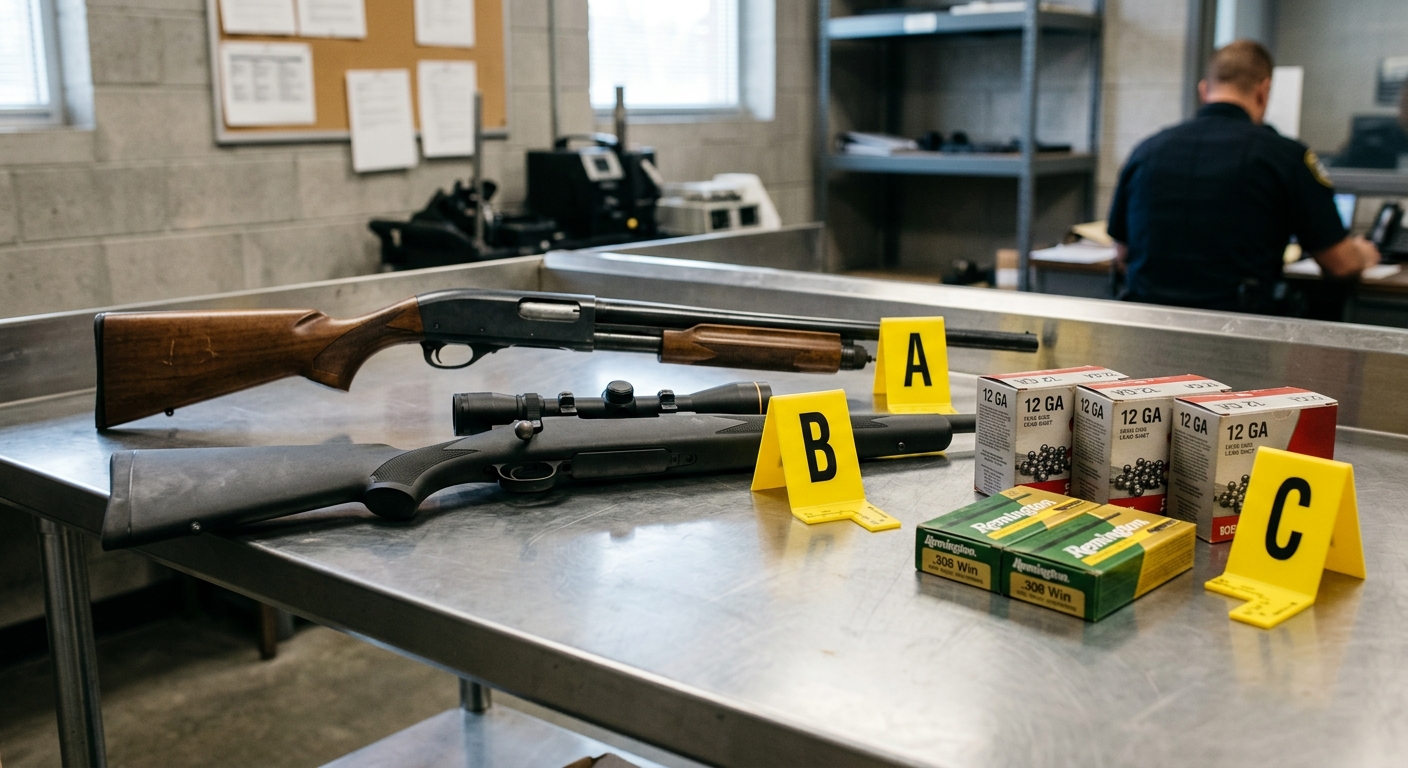
AI-generated illustration; not a photograph of the reported event.
- calendar_today October 9, 2026
New FBI Filings Shed Light on Tumbler Ridge Shooting Preparations
Nearly eight months after the deadly mass shooting in Tumbler Ridge, B.C., newly released FBI court documents provide detailed insight into how Jesse Van Rootselaar allegedly planned and executed the attack by assembling a substantial arsenal. The filings, submitted in Washington state, describe a careful process of weapon acquisition and communication with an alleged U.S.-based accomplice.
FBI Details Weapon Stockpiling and Communications
The FBI’s criminal complaint alleges that Van Rootselaar, 18, spent several months before the February 10, 2026, attack acquiring a shotgun, a scoped rifle, and a submachine gun. According to the filings, Van Rootselaar shared photographs of these weapons with James Cody Bryant of Bellingham, Washington. Bryant was arrested and charged with conspiracy to commit murder in a foreign country. In their online exchanges, Van Rootselaar discussed bringing multiple guns for the attack, with Bryant advising on the advantages of also having a handgun. The documents indicate that Van Rootselaar was determined to be well-armed for the act.
RCMP Maintains Active Investigation and Publication Ban
While the FBI documents provide significant new details, the Royal Canadian Mounted Police (RCMP) have continued to release limited information about the weapons involved, citing an ongoing criminal investigation. B.C. RCMP Assistant Commissioner Elija Rain explained that details about the firearms remain under a Canadian publication ban to protect evidence and potential charges that are still under consideration. The RCMP are pursuing leads to determine how the weapons were obtained and if other individuals provided assistance.
Guns Acquired in Canada, FBI Asserts
Heidi Rathjen of the gun control advocacy group PolySeSouvient expressed frustration about learning details of the Tumbler Ridge shooting from U.S. investigators rather than Canadian police. FBI Special Agent W. Mike Herrington reported there’s no indication any of the firearms originated in the United States. The complaint details that Van Rootselaar allegedly stole guns and ammunition from a family gun safe, concealing them in preparation for the attack. The documents cite access to a semi-automatic SKS rifle—a military-style weapon legal in Canada—and mention a “switch” device, which the FBI suggests could refer to a machine-gun conversion device. Bryant told investigators Van Rootselaar used some of these same items during the shooting.
Evidence and Messaging Reveal Attack Planning
According to the complaint, Van Rootselaar had recently been institutionalized twice, and Bryant reported a deterioration in her mental health, noting increased anger and suicidal thoughts. The court documents include photographs sent to Bryant showing Van Rootselaar modeling weapons, including a Canuck shotgun and a KRISS Vector submachine gun—a model banned in Canada in 2024. Additionally, a short 20-second livestream before the shooting showed Van Rootselaar in a vehicle with a rifle and another long gun.
Canadian Panel Reviewing SKS Rifle Legality
Following the attack, Canadian Public Safety Minister Gary Anandasangaree announced an expert panel to review whether SKS rifles should be banned in Canada. Prime Minister Mark Carney stated the panel would provide the government with objective advice about firearms classifications in the context of federal law, drawing on input from the RCMP.
Source: cbc.ca.