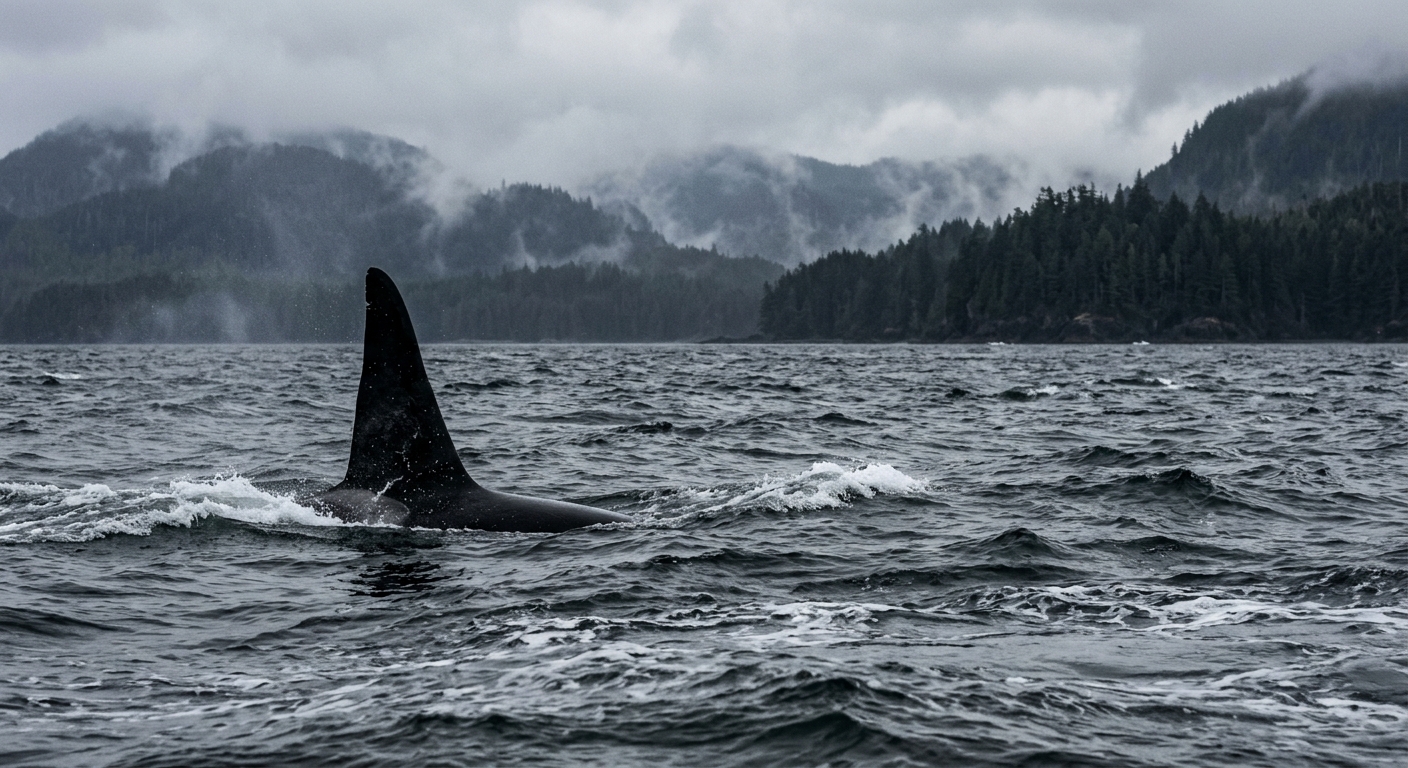
AI-generated illustration; not a photograph of the reported event.
- calendar_today October 11, 2026
Decades-Long Study Culminates in Public Orca Calls Database
John Ford, a scientist emeritus with Fisheries and Oceans Canada, has spent more than 45 years studying orcas off the West Coast, dedicating his career to recording and cataloguing their distinct calls. Now, an innovative online database makes these unique orca calls available to anyone interested, marking a significant step in marine research accessibility and orca conservation efforts.
Understanding Orca Dialects and Communication
Ford began recording orca sounds as a graduate student in the late 1970s. What he discovered was that orca populations are organized into subgroups, each exhibiting unique sets of stereotypical calls that function as dialects. These vocal patterns allow orcas to identify pods and clans over large distances during hunting and foraging activities.
"[I] sort of stumbled onto this dialect system where you can actually identify the pod that you're with by the sounds they make," Ford explained. The dialects have proven to be exceptionally stable across generations, passed down through vocal learning within family groups. Recordings from the 1950s made by the Canadian Navy—particularly of the J Pod in Saanich Inlet—demonstrate how little these vocalizations have changed over time.
The New Orca Audio Database: Features and Significance
In collaboration with Simon Fraser University's HALLO project, Ford's lifelong work is now digitized and published as an accessible online orca call catalogue. The database features calls from Bigg's (transient orcas), as well as northern and southern resident orcas. It allows users—be they scientists or the public—to filter calls by orca populations, clans, and pods.
"I published a hard copy of the catalogue with the spectrograms in the late 1980s, but of course, the internet didn't exist," Ford said. "There was nothing like an opportunity as we have now to filter through all the different calls and to actually listen to them." Previously, only visual representations of the calls—stereograms—were available, but now the actual audio can be studied and enjoyed.
Citizen Science and the Role in Orca Conservation
SFU environmental science professor Ruth Joy, who contributed to launching the online catalogue, emphasized that the tool is expected to benefit not just researchers but also hundreds of citizen scientists. The increasing network of hydrophones along the coast now enables individuals to compare their recordings with the catalogue to help identify which orca population is present in a given area.
This identification can aid orca conservation, especially protection of the endangered southern resident orcas, which currently number 75. Ship strikes have been identified as a significant cause of death for this group. Joy pointed out that real-time detection enabled by the catalogue could prompt vessels to slow down when southern resident orcas are near shipping lanes, reducing the risk of collisions.
Current Limitations and Future Aspirations
While the database includes calls from several major orca groups, it does not currently cover individual identification within pods or the less-studied offshore orca population. The precise meanings behind specific calls remain uncertain. Despite these limitations, Ford expressed hope that the catalogue will expand to include more populations in the future and inspire similar efforts worldwide.
"It's just thrilling for me finally to be able to get this out there and have it available to everybody," Ford said, signaling the culmination of decades of dedication to understanding and preserving orca communication.
Source: cbc.ca.