
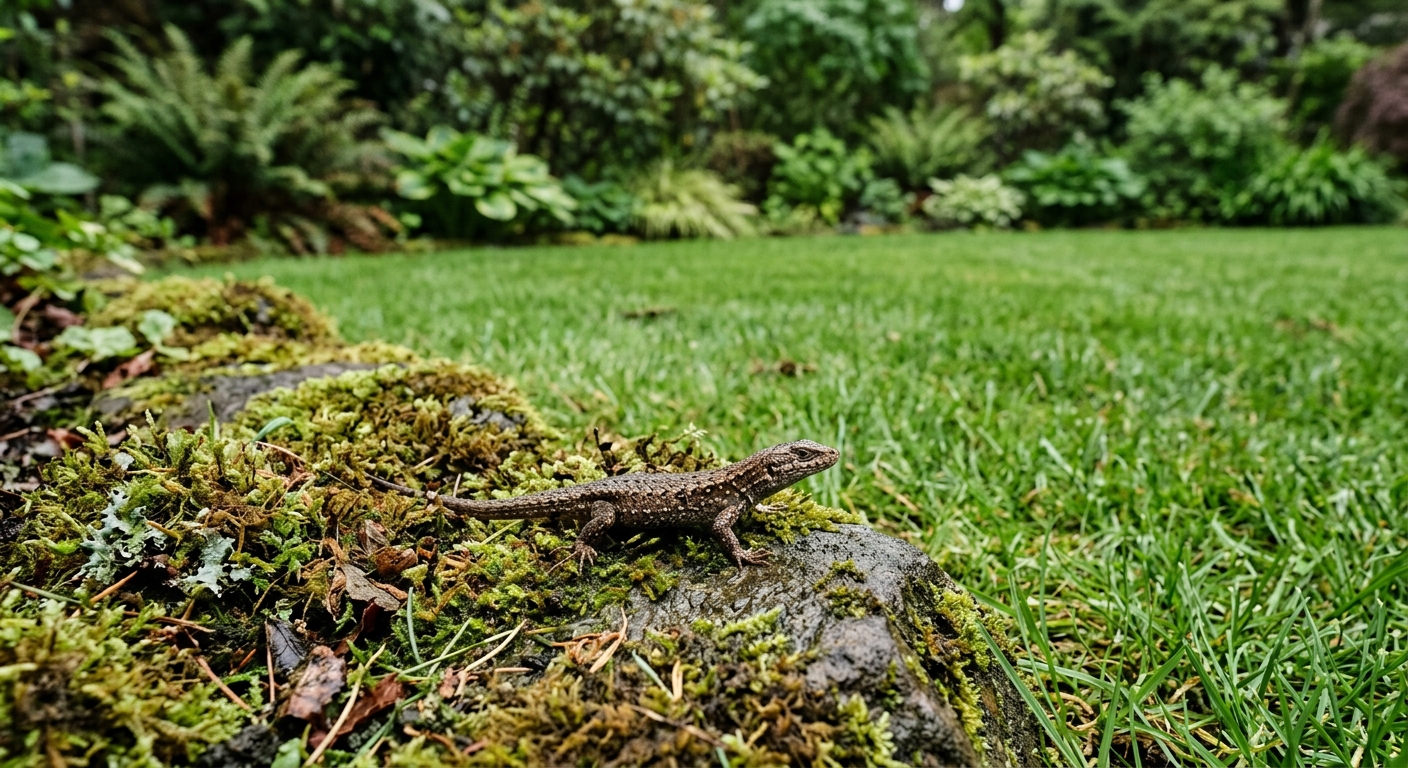
AI-generated illustration; not a photograph of the reported event.
- calendar_today October 12, 2026
European Wall Lizard Population Booming on Vancouver Island
The rapid spread of the invasive European wall lizard on Vancouver Island is raising alarms among residents and experts, who warn of potential consequences for the local ecosystem. The species, originally from Italy, is now thriving across the island, consuming a wide range of invertebrates and growing in number at a startling rate.
An Unusual Ally in the Garden
Tracy Menzies, a homeowner near the Gorge Waterway in Saanich, reported noticing a significant decline in slugs in her garden. She attributes this change to the presence of the European wall lizard, which she began noticing in increasing numbers earlier this year. "I don't have a slug in my yard, so I can only assume, given the start of me seeing the wall lizards, that they're feasting on the slugs," Menzies observed.
Though most of the lizards are just a few inches long, Menzies noted seeing larger specimens, up to 10 inches, particularly in crawl spaces.
Population Estimates and Environmental Concerns
Gavin Hanke, curator of vertebrate zoology at the Royal B.C. Museum, estimates there are between 800,000 and a million European wall lizards in British Columbia, with most concentrated on Vancouver Island. The lizards have spread as far north as Campbell River, 220 kilometres from Victoria.
Hanke warns that the spread of this invasive lizard could have a "serious" environmental impact. The lizards prey on a variety of insects and spiders—key components of the island's food web—and have been observed killing baby garter snakes. According to Hanke, "Every lizard eating something every day is really impacting the insects and spiders on Vancouver Island."
Biologist Nicholas Wong, science and operations manager with the Invasive Species Council of B.C., echoed these concerns, adding that the European wall lizard is "competing with some of our native lizards for food and space as well." There are currently no official management programs overseeing the population growth of this invasive species.
Origins and Spread of the Species
The European wall lizard population in British Columbia traces its origin to a deliberate release following the closure of Rudy's Pet Park, a roadside zoo in Central Saanich, in 1970. At the time, 12 lizards were released into the wild. Vancouver Island's climate, with its cooler winters and hot, dry summers, appears to suit the species well.
The lizards spread about 100 metres each year on their own, but they often travel greater distances by hitching rides on vehicles, firewood, or building materials. Reports have surfaced of multiple lizards emerging from hay bales being used as mulch, suggesting their spread may be more extensive than previously believed.
Diet and Behaviour
The European wall lizard is an omnivore, feeding on a diverse array of insects, spiders, slugs, ants, termites, earwigs, and even pollinators such as mason bees, honeybees, and bumblebees. They will also consume fruit that has fallen to the ground. Hanke notes, "If a fig falls to the ground and it's ripe, they will eat that."
Some homeowners, like Menzies, appreciate the lizard's role in controlling slugs in their gardens. However, others remain concerned about the long-term effect on the native ecosystem, especially as lizard populations continue to grow.
Managing the Spread and Mitigating Impact
Experts agree that directly eradicating the European wall lizard is now unrealistic. Hanke suggests that a "very plain, closely cut lawn" may discourage the lizards from settling in a yard, but notes that collective action would be needed at the community level to have much effect. Wong cautions that removing lizards from a single property is unlikely to help if neighbouring properties remain infested, as the lizards will simply recolonize cleared areas.
As for further spread, Hanke warns against moving lizards to new locations and predicts they could soon appear farther south, potentially reaching Washington state. He reflects that these lizards thrive in habitats altered by humans, remarking that, "as an invasive [species], they can just occupy any sort of habitat that's available, as long as we've messed up the original habitat."
For now, residents and wildlife experts alike are left to contend with the continuing expansion of the invasive European wall lizard and its uncertain impact on Vancouver Island's environment.
Source: cbc.ca.