
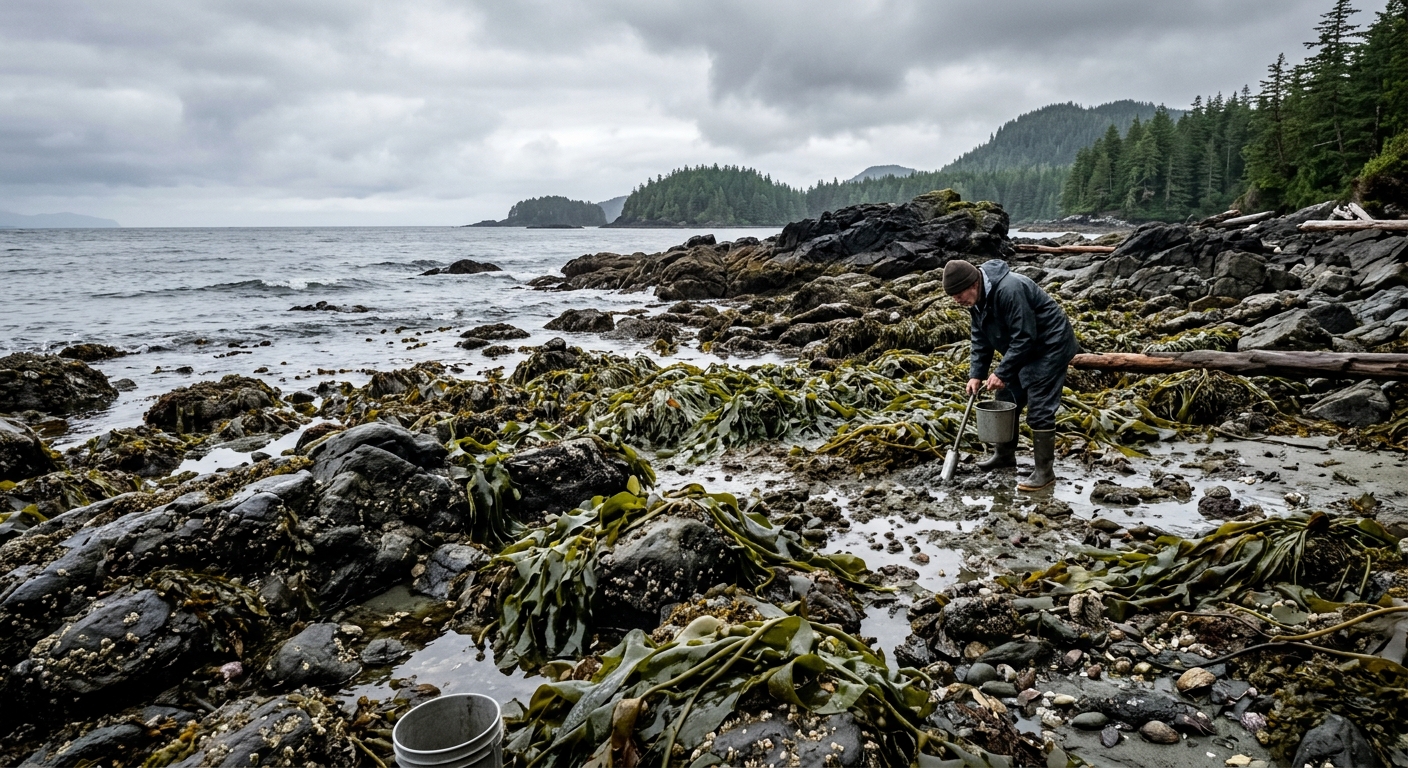
AI-generated illustration; not a photograph of the reported event.
- calendar_today October 14, 2026
Decade Since Oil Spill in Heiltsuk Territory
Ten years have passed since the tugboat Nathan E. Stewart ran aground in Haíɫzaqv (Heiltsuk) Nation territory, spilling thousands of litres of fuel into a culturally significant marine area. Despite the passage of time, the Heiltsuk Nation continues to seek compensation for harms remaining from the incident, including substantial cultural and economic losses.
Details of the Tugboat Spill
The American-owned vessel Nathan E. Stewart ran aground in October 2016 in the Seaforth Channel near Bella Bella, British Columbia. According to reports, around 110,000 litres of diesel and 2,000 litres of lubricants entered Q̓vúqvái—an area central to Heiltsuk food harvesting and culture. The spill led to negative impacts on marine life, the surrounding environment, and the nation’s ability to access and use vital food-gathering sites.
Compensation Efforts: Ship Fund and Settlements
On the tenth anniversary of the disaster, the Haíɫzaqv Joint Leadership marked the occasion by announcing a protection declaration and issuing a warning about the federal Ship Fund’s "ongoing failure to compensate for spill losses and recovery costs." Earlier this year, the nation reached a $12.2-million settlement with the ship’s owner, Kirby Corporation, and Henry Hendrix, the second mate of the tugboat who fell asleep during his watch. The company also agreed to participate in healing ceremonies with the community.
However, the Heiltsuk Nation says a further $23 million is needed for oil spill recovery, specifically referencing projects like clam bed restoration, previously providing up to $200,000 annually in income. The community is now pursuing these losses through Canada’s Ship Fund—intended to address oil spill compensation after a vessel owner’s responsibility is settled.
Challenges Accessing the Ship Fund
The federal Ship and Rail Compensation Canada has stated it remains in communication with the nation. A spokesperson said that while economic loss and loss of profit are covered under the Marine Liability Act, such claims are "comparatively rare." They highlighted that the Fund can only pay out for "reasonable" claims that are well-supported by thorough explanation and documentation. Legal representatives for the Ship Fund and the nation have been in contact for years, but final compensation through this channel remains outstanding.
Cultural and Environmental Losses Still Felt
Marilyn Slett, elected chief of the Haíɫzaqv Nation, emphasized that the lack of full resolution remains an ongoing issue. “What stands out is we're still here talking about it,” she said, highlighting the lengthy struggle for justice. Yím̓ás Q̓a̓ít Bo Reid, a Heiltsuk hereditary chief, stated that the impacts on the nation have been "devastating," and that it has been challenging to quantify the cultural significance of what was lost. Both leaders raised concerns that current response teams, equipment, and compensation structures are inadequate to address such spills and their aftermath.
Protection Declaration and Continuing Advocacy
At a recent potlatch, Heiltsuk leaders—including the Yím̓as (hereditary chiefs), the W̓iúm̓áqs du M̓im̓ṇúyaqs (women’s council), and the Heiltsuk Tribal Council—signed a protection declaration. This document asserts the nation’s commitment to remedying the harms caused by the tugboat spill and to protecting its lands and waters from oil-tanker traffic and other environmental risks. The declaration symbolizes the community’s continued advocacy for environmental compensation and oil spill recovery tied directly to their way of life.
Next Steps for Compensation
While the Heiltsuk Nation has settled with the ship owner, Chief Slett states that the community will not have closure until the Canada Ship Source Fund addresses the nation’s full claims. “We’re not going to be able to do that until the Canada Ship Source Fund comes and sits down with the nation to bring resolution to the remaining losses our community has endured,” said Slett. The nation’s call for fair compensation remains ongoing as they seek to restore the economic, cultural, and environmental health of their territory in the years following the spill.
Source: cbc.ca.