
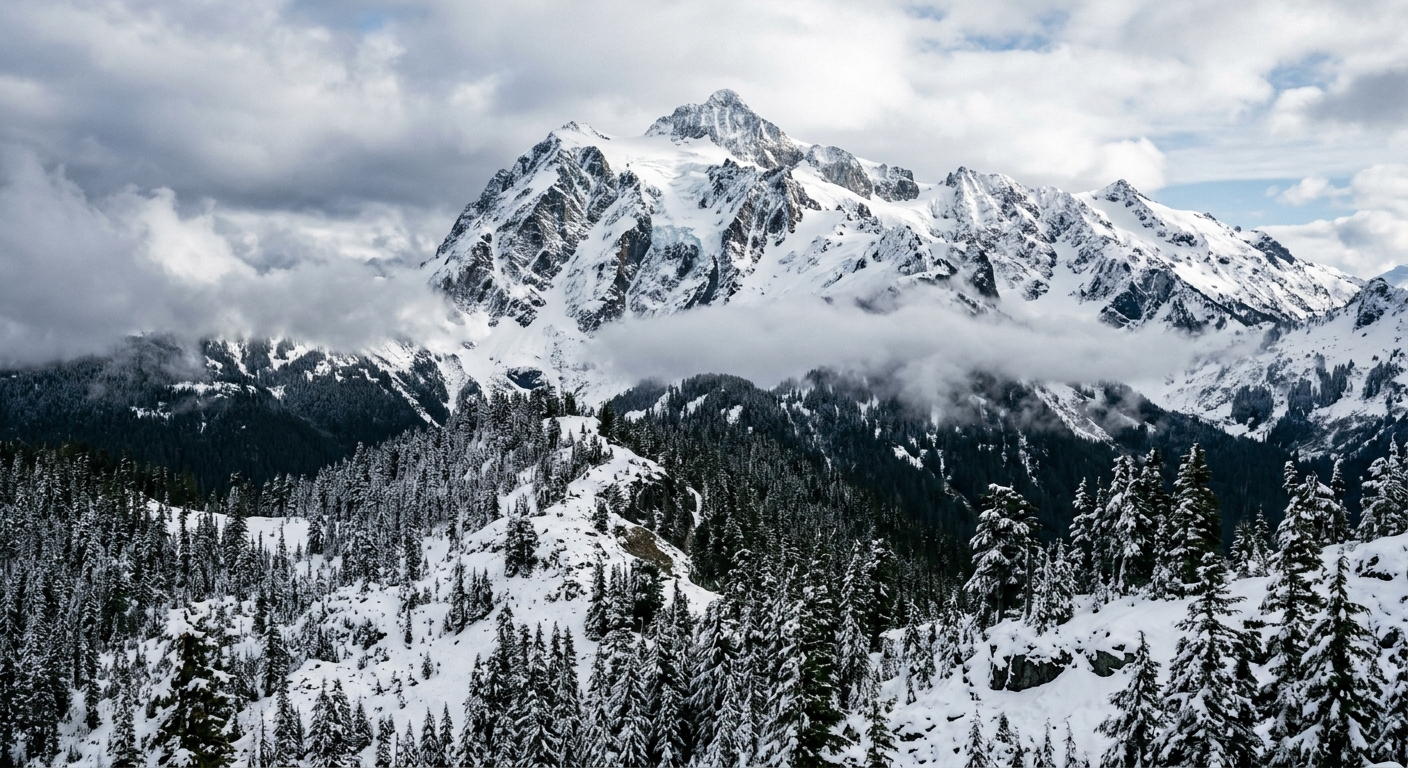
AI-generated illustration; not a photograph of the reported event.
- calendar_today October 29, 2026
Super El Niño Raises Questions About Vancouver Island’s Snowpack
With the first significant snowfall now recorded on Vancouver Island’s alpine, many are wondering what lies ahead for the region’s snowpack as a particularly strong El Niño climate pattern emerges. The situation has drawn the attention of snow enthusiasts, researchers, and local outdoor guides, all eager to understand the potential impact for the coming ski season and mountain conditions.
Early Snowfall Brings Mixed Reactions Among Enthusiasts
Recent webcam footage from Mount Washington showed a dusting of snow covering the peaks, signaling winter’s arrival. According to a B.C. Hydro weather station at Wolf River, the area received up to 40 centimetres of snow over the past weekend, including the Comox Valley’s alpine peaks.
This sighting has stirred hope after last year’s disappointing ski season. In December, rain delayed the opening day at Mount Washington, and subsequent warm, wet weather in January eroded what was already a thin snowpack. The snow cover never reached typical levels, leading to challenging conditions that impacted outdoor activities throughout the winter.
Super El Niño: A Rare and Powerful Climate Event
Bill Merryfield, a research scientist based in Victoria, says the current El Niño is shaping up to be the strongest in a century. "This one is shaping up to exceed even the ones that we've observed in recent decades," Merryfield noted. He cited three comparable super El Niño years—1982-83, 1997-98, and 2015-16—during which the Vancouver Island snowpack ended up being higher than average.
The climatic conditions associated with a super El Niño bring warmer ocean temperatures, increased moisture, and more frequent storms such as atmospheric rivers. When temperatures are low enough, these factors can combine to deliver substantial snowfall to mountain regions.
Uncertainties Remain for This Winter’s Snowpack
Despite the promising precedent set by past super El Niño events, experts caution that results are far from guaranteed. Merryfield explained that while increased precipitation is possible, temperatures play a crucial role. Vancouver Island’s alpine zones, including Mount Washington, sit at relatively low elevations. If temperatures remain above freezing, any additional precipitation could fall as rain instead of snow, potentially washing away the snowpack rather than building it up. "It's kind of a delicate balance. It can tilt either way," said Merryfield.
The area has witnessed recent years of low snowpack and even drought. In some cases, last winter included water conservation measures and a snowpack unable to withstand rain events.
Local Guides and Historical Perspectives
Jan Neuspiel, a veteran guide with Island Alpine Guides, points to 1997-98—a super El Niño year—with a snowpack 12 percent above normal as a basis for cautious optimism. However, he stresses that changing climate patterns have made it difficult to define "normal" snowfall year over year. Neuspiel noted that significant early season snow paired with a cold spell could provide a resilient base for the snowpack. He also advised skiers and snowboarders not to become overly focused on snowfall predictions and, instead, adapt plans to actual conditions on the mountain.
Neuspiel summarized, "When we fixate on what we want it to be like, we end up making bad decisions about how to make use of the conditions that we've got." With El Niño expected to strengthen through the end of the year and into January, many hope early storms will yield a better base than last season.
Preparation Is Key for Winter Activities
As excitement and uncertainty build, organizations like Comox Valley Search and Rescue remind outdoor enthusiasts to be prepared for variable winter conditions. As the super El Niño exerts its influence, the outcome for the Vancouver Island snowpack and skiing remains a developing story—one that will depend on how temperature and precipitation balance out in the months ahead.
Source: cbc.ca.