
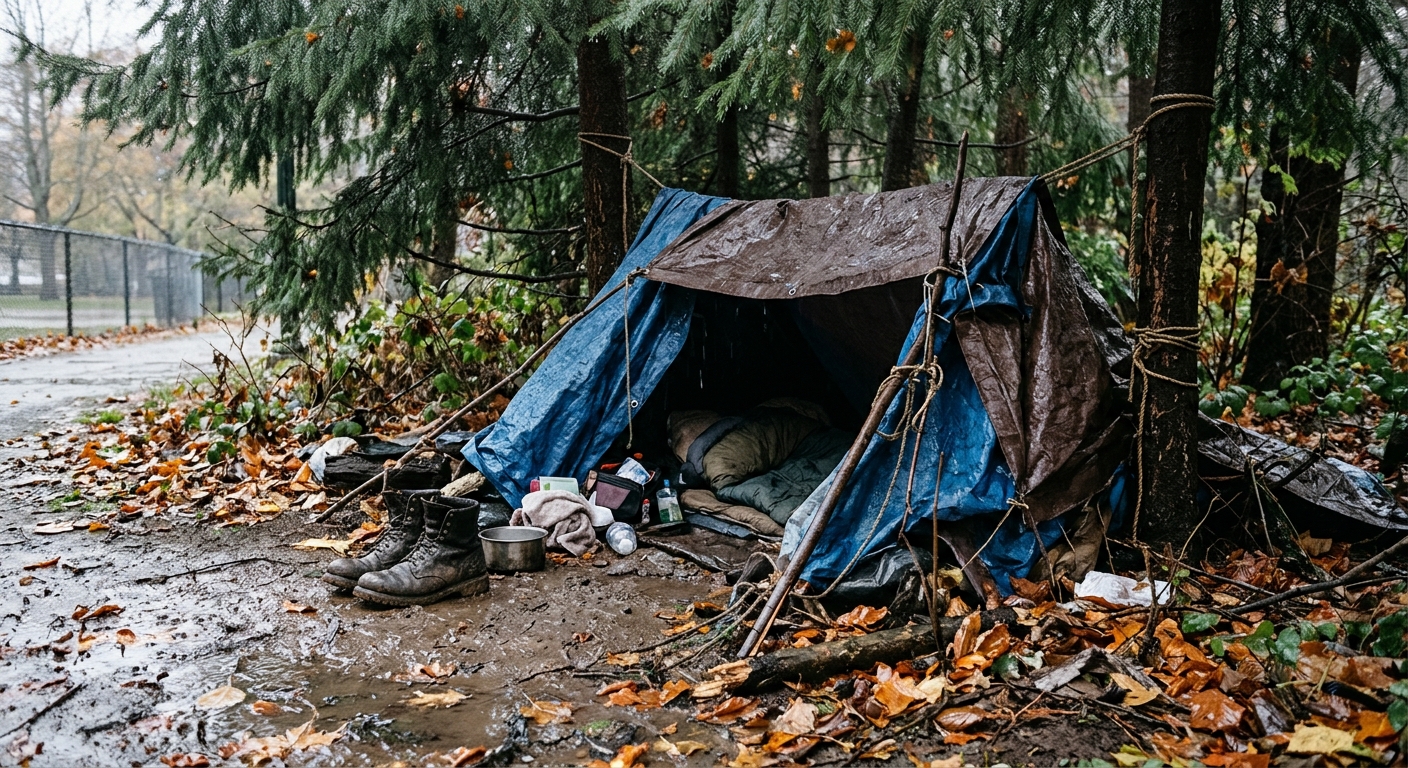
AI-generated illustration; not a photograph of the reported event.
- calendar_today November 13, 2026
Prolonged Storms Raise Alarms Among Outreach Workers
Outreach workers and advocates across Vancouver Island are increasingly worried about the challenges faced by people experiencing homelessness as a succession of fall storms brings persistent wet and windy weather to the region. Many are drawing attention to the increased difficulty for those living outdoors, particularly in areas lacking additional shelter space for winter months.
Effects of Wet Weather on Health and Daily Life
Shayla Day, founder of the Day Homes Society in the Oceanside region, describes how continuously wet conditions severely impact both mental and physical health for those without homes. "The rain wears people down. And when your boots, clothes, or bedding are wet, you spend so much energy just trying to stay warm and keep a few things dry," Day said.
Day also noted that the struggle to stay dry frequently causes people to eat less, as they may choose warmth over venturing out for meals—especially risky without access to dry clothes afterward.
Lack of Shelter Options in Oceanside and Parksville-Qualicum
According to the 2025 Point in Time Homeless Count, nearly 100 people are experiencing homelessness in the Parksville-Qualicum area, most of whom lack shelter. Oceanside, including Parksville and Qualicum Beach within the Regional District of Nanaimo, currently has no emergency shelters. The district operates an emergency weather warming centre that opens only under specific cold conditions—either when temperatures fall to -4°C, or to 0°C with a weather warning. Day indicated this type of warming centre was activated just twice last winter.
Efforts by Day Homes Society to establish a temporary winter shelter were abandoned after the process was disrupted by municipal elections across British Columbia.
Campbell River Sees Ongoing Gaps in Shelter Capacity
Further north, Campbell River continues to face a shortage of winter shelter options. No additional winter shelter has been in operation since 2025, following the closure of a previous facility to make way for city-owned downtown development projects.
Barbara Lippke, a former support worker and community volunteer, highlights the health risks for unhoused individuals during the rainy season, including a higher incidence of trench foot due to prolonged exposure to moisture: "At the very least, we should have a warming centre where people can connect with resources. You know, get wound care, get dry, have a meal, have a cup of coffee."
Existing Services and Ongoing Needs
The Salvation Army runs a year-round shelter in Campbell River with about 22 beds, but Lippke points out this falls short of the needs of more than 150 unhoused residents. The shelter serves hot meals twice daily but does not operate on weekends or holidays, prompting volunteers like Lippke to provide food outdoors at Spirit Square during these gaps.
The city does offer two official overnight shelter locations—one at city hall (year-round) and an oceanside park (winter only)—along with nine beds at the sobering and assessment centre, and an emergency warming centre when weather conditions warrant. According to city statements, these locations are equipped with port-a-loos and water access.
Despite these services, Lippke and other advocates argue that more comprehensive and longer-term solutions are needed to ensure everyone’s right to shelter, food, and safety is met.
Calls for Solutions Amid Winter Weather Challenges
The ongoing severe weather underscores calls from community advocates, outreach workers, and former support staff for greater investment in shelter capacity and resource access. Many believe expanded winter shelters and warming centres are vital for protecting the health and dignity of Vancouver Island’s most vulnerable residents during the harshest months of the year.
Related coverage
Source: cbc.ca.