
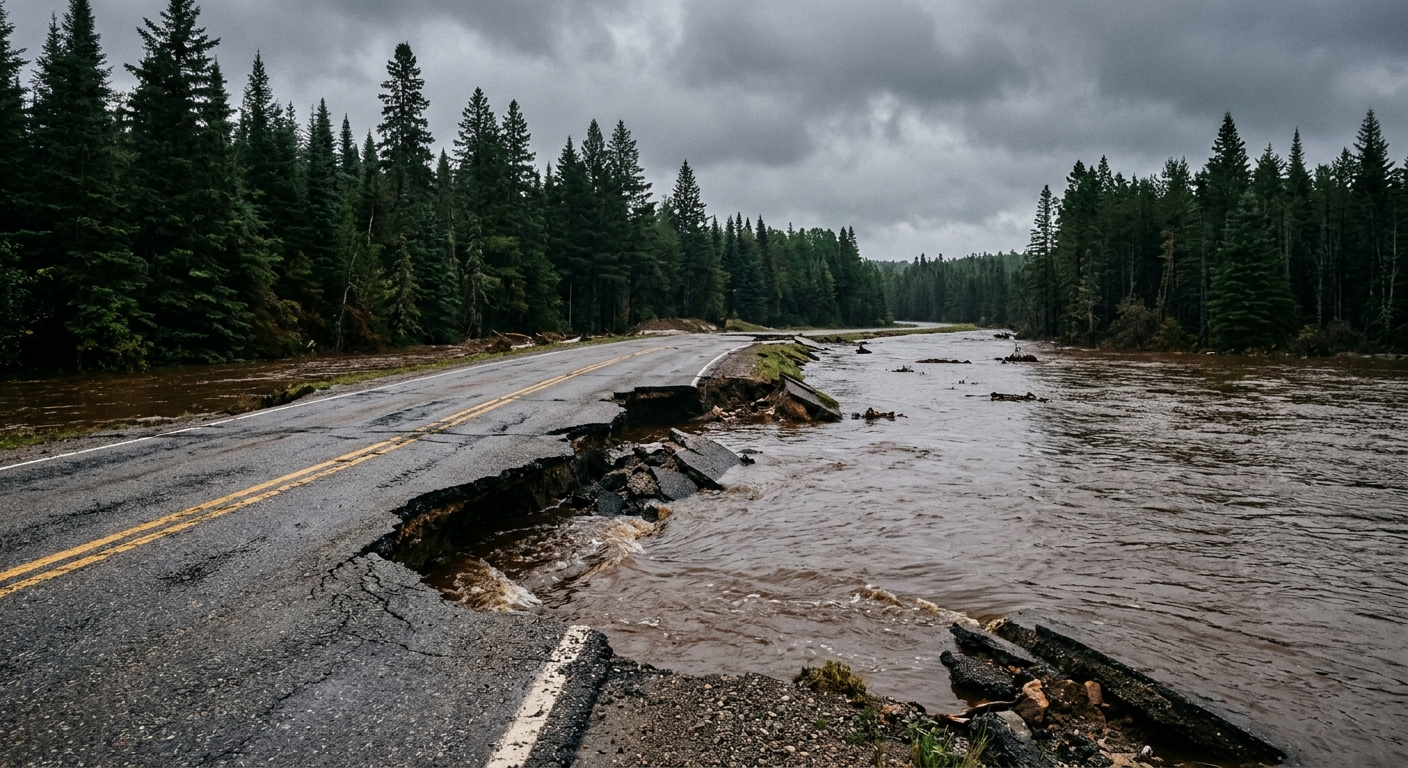
AI-generated illustration; not a photograph of the reported event.
- calendar_today November 14, 2026
The November 2021 Floods: A Historic Event
In November 2021, southern British Columbia endured a series of severe storms, described by Environment Canada's warning preparedness meteorologist Bobby Sekhon as "historical" and "unprecedented." Over several days, atmospheric rivers unleashed torrential rain and high winds across the region, disrupting lives and infrastructure in ways not previously seen.
Unfolding Disaster: How the Floods Developed
The catastrophic conditions followed a summer marked by extreme heat and wildfires, priming the province for unusual rainfall. Atmospheric river season began earlier than normal, gradually saturating the region. By early November, rain fell daily in the southwest, culminating in a particularly destructive storm mid-month. On November 12, forecasters warned of a significant storm; two days later, highways closed due to flooding, mudslides, rock slides, and debris. Entire communities were stranded, with some residents of Princeton navigating streets by boat and the whole city of Merritt—about 7,000 people—being evacuated.
Human and Economic Toll
The aftermath was tragic and costly. At least five people lost their lives, and many more were injured as the storms battered the province. Thousands were displaced from their homes, and farms, especially in the Sumas Prairie and the Fraser Valley, suffered extensive damage. Floodwaters led to the loss of livestock, contamination of agricultural land, and widespread anxiety among farmers about the future viability of their crops, as highlighted by Chilliwack’s Dave Martens, who reported $2.6 million in losses.
Provincial infrastructure faced extensive destruction. The Coquihalla Highway, a critical connection between the Lower Mainland and the Interior, was destroyed in over 20 locations. Highways 1 and 3 were also substantially damaged, effectively severing the Lower Mainland from the rest of Canada for weeks. Power outages affected tens of thousands, and fuel rationing was implemented. Rail links in and out of Vancouver stopped, intensifying existing supply chain problems caused by the COVID-19 pandemic. According to the Insurance Bureau of Canada, insured flood damage approached $700 million (adjusted for inflation), while uninsured losses were estimated in the billions.
Government Response and Recovery Efforts
In response to the devastation, the provincial government declared a state of emergency, and the Canadian Forces assisted with recovery operations. Search and rescue teams airlifted stranded people to safety, while extensive repairs began on destroyed highway sections. The Coquihalla Highway was closed for about 35 days, reopening to commercial vehicles on December 20 and to all traffic in January. It took over a year before the highway was fully restored.
Communities such as Merritt instituted flood mitigation plans, including building dikes, pump stations, bridges, and stabilizing riverbanks. The aim, as explained by Merritt Mayor Mike Goetz, was to rebuild “safer,” making these communities more resilient to future flooding events.
Lasting Lessons: Improving Preparedness for Extreme Weather
The 2021 floods, coupled with other extreme weather events, prompted Environment Canada to introduce a new colour-coded weather alert system to help residents better understand and respond to forecast severity. Ongoing improvements in infrastructure and planning aim to ensure better preparedness, with the recognition that while such disasters cannot be prevented entirely, their impact can be mitigated.
Legacy of the 2021 Floods
Five years on, British Columbia continues to recover from the 2021 floods. The event stands as a reminder of the vulnerabilities exposed by extreme weather, the necessity for robust preparedness measures, and the ongoing challenges faced by affected communities as they rebuild and adapt to a changing climate.
Related coverage
Source: cbc.ca.