
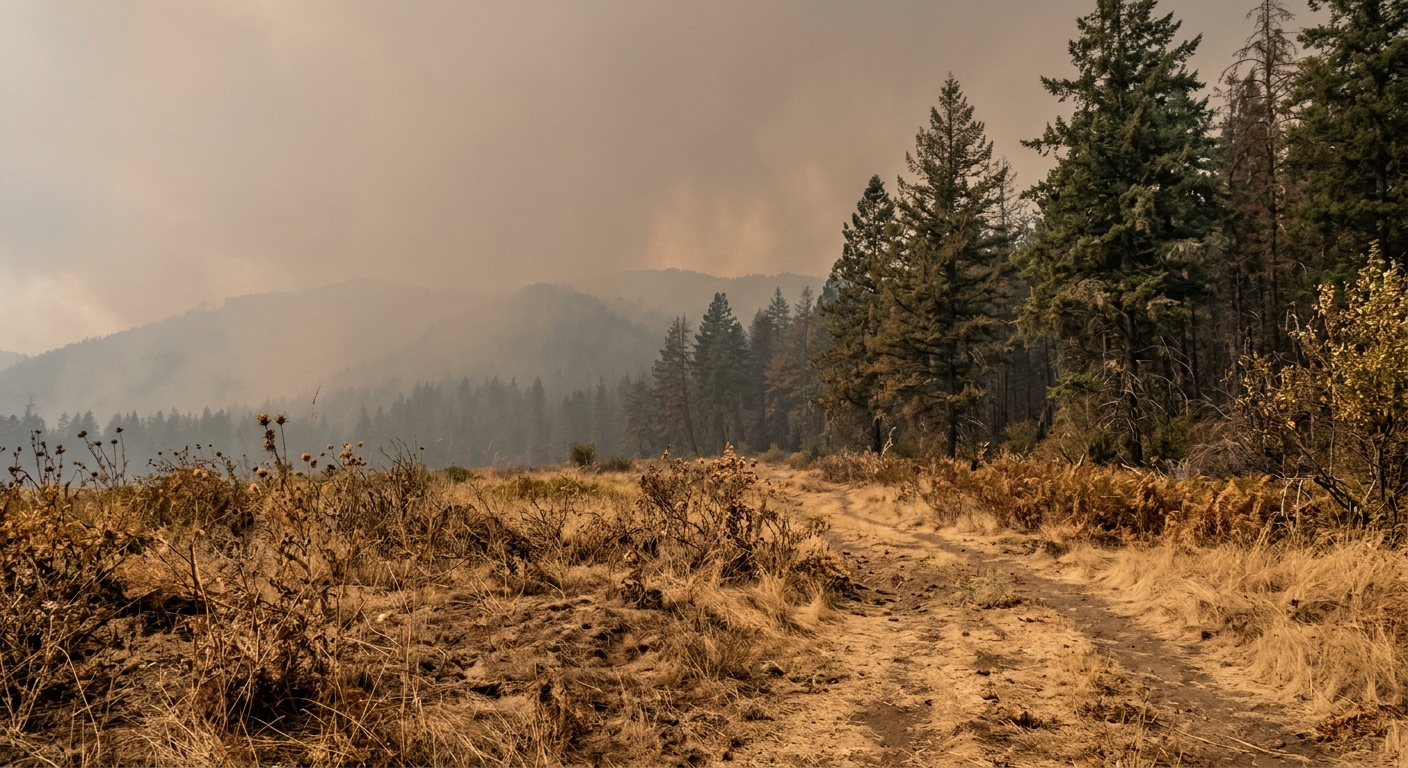
AI-generated illustration; not a photograph of the reported event.
- calendar_today November 15, 2026
Research Uncovers Parallels Between Two Historic Heat Waves
New research from Simon Fraser University (SFU) reveals fresh insights into extreme heat events in British Columbia, comparing the well-studied 2021 heat dome to the largely forgotten North American heat wave of 1941. Both events, accompanied by wildfires and resulting in hundreds of deaths, offer valuable lessons in the face of a changing climate.
The 2021 B.C. Heat Dome: A Record-Shattering Event
The 2021 heat dome in British Columbia received extensive scientific scrutiny due to its unprecedented nature. According to the B.C. Coroners Service, the event was linked to 619 deaths, mostly among elderly people with underlying health conditions who perished indoors. The town of Lytton set a new record with a temperature of 49.6°C, surpassing previous highs in the province.
The 1941 Heat Wave: A Forgotten Catastrophe
By contrast, the heat wave of July 13 to 18, 1941, impacted a wider area—including parts of Washington, Oregon, B.C., and southeastern Alaska. Nanaimo, B.C., saw temperatures exceed 32°C for six days, while Lillooet reached 44.4°C, a provincial record at the time. Most of the 344 deaths attributed to the 1941 heat event—305 in total—occurred in the eastern United States, as the heat extended beyond the west coast to central and eastern North America.
Key Differences in Impact and Vulnerable Populations
The SFU researchers, Sam Anderson and Shawn Chartrand, identified stark differences in how the two heat events affected people. In 1941, fatalities were mostly linked to outdoor labor and exertion, with drowning as a notable indirect cause as people sought relief in water. In 2021, the demographic shifted: most victims were elderly individuals who died indoors, reflective of longer lifespans and greater vulnerability due to health conditions.
Michael Brauer of the University of British Columbia’s School of Population and Public Health, who was not involved in the study, noted air conditioning as a key factor. Brauer suggested that the relatively low prevalence of air conditioning in B.C. may have made the 2021 event especially deadly, whereas its greater availability in eastern North America may have mitigated some of the harm in 2021.
Wildfire Patterns Linked to Extreme Heat
Both heat waves triggered significant wildfire activity. In July 1941, thunderstorms sparked hundreds of fires, leaving Vancouver encircled by blazes. However, cooler weather quickly brought these fires under control. In contrast, the wildfires of 2021, primarily in the B.C. Interior, were far more destructive—burning for longer periods and ultimately destroying the town of Lytton.
Lessons for the Future: Urban and Rural Vulnerability
SFU’s Anderson emphasized that both small communities and urban centers are at risk from extreme heat and climate-related disasters, cautioning against the assumption that city dwellers are immune. The study’s findings provide valuable context for public health and emergency response planning, particularly as climate change is expected to make such extreme heat events more common across the region.
With ongoing research and reflection on past events, experts hope to improve responses to future heat waves, limit fatalities, and address vulnerabilities among at-risk populations.
Source: cbc.ca.