
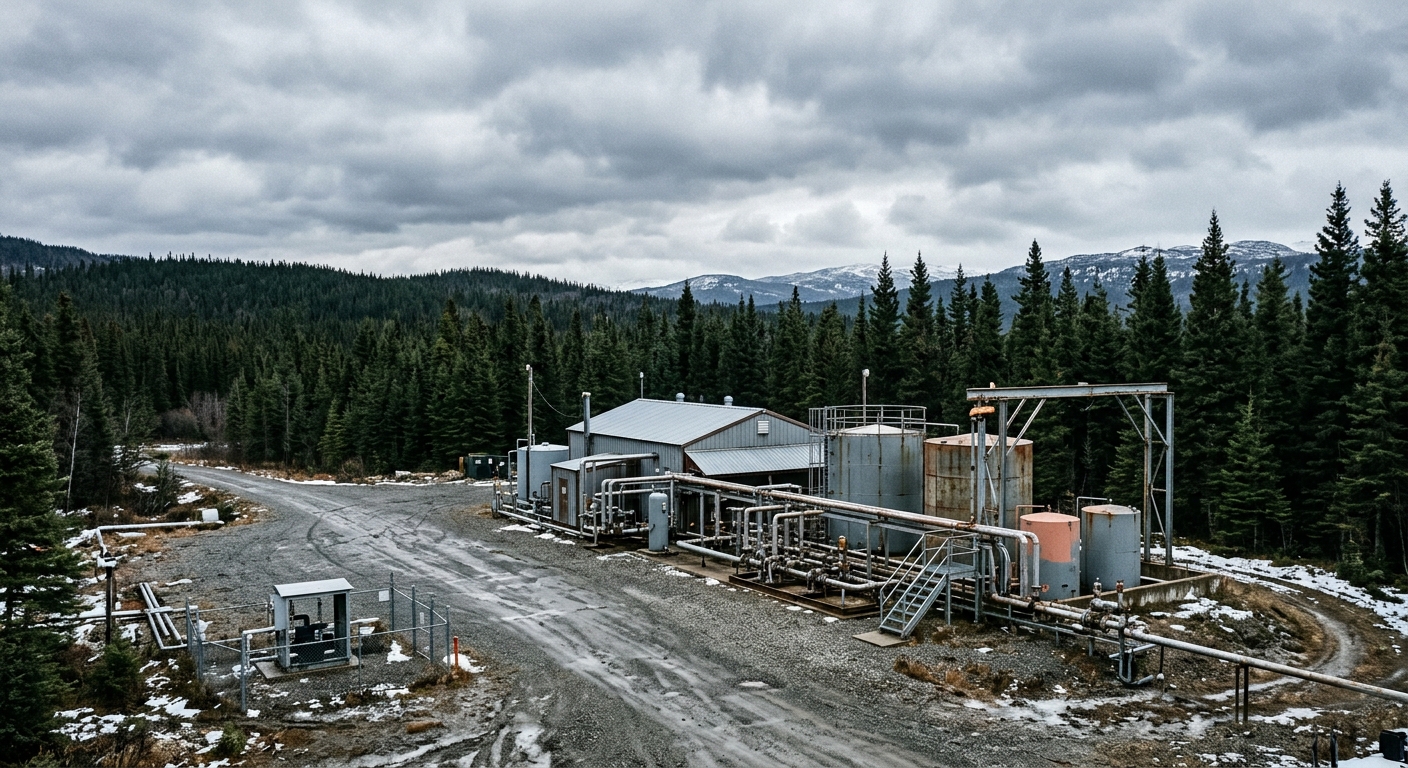
AI-generated illustration; not a photograph of the reported event.
- calendar_today November 19, 2026
Microrefinery Proposal Seeks Federal Support
A British Columbia-based company is requesting federal assistance to develop a business case for microrefineries designed to convert natural gas into diesel and home heating fuels for northern Canadian communities. This proposal was presented to a parliamentary committee focusing on affordability challenges in the region.
10,000-Barrel-Per-Day Facility Proposed for Fort Nelson
The central feature of the proposal is a 10,000-barrel-per-day microrefinery to be located in Fort Nelson, B.C. Ken Watson, president of Integrated Resource Technologies, described the project to members of parliament, emphasizing that the refinery could reduce diesel prices by eight to twelve cents per litre, or up to 61 cents if wood waste were used alongside natural gas. Over a decade, these savings could total as much as $3.5 billion, according to Watson.
Potential Benefits for Northern Communities
Watson asserted that Fort Nelson, which has extensive natural gas reserves that have remained untapped for three decades, could serve as a strategic location. The locally produced diesel could also be distributed to the Yukon and Northwest Territories, leveraging transportation efficiencies as Fort Nelson is significantly closer to these regions than existing refineries. As of November 18, diesel prices stood at 284.5 cents per litre in Fort Nelson, with prices in Yukon and the Northwest Territories remaining high as well.
Local Leadership Voices Support and Outlines Challenges
Rob Fraser, mayor of the Northern Rockies Regional Municipality, expressed optimism about the proposal in his presentation to the parliamentary committee. He underscored the potential for the microrefinery to help revive Fort Nelson’s economy and provide greater fuel autonomy for the north. Fraser noted the region possesses a century’s worth of natural gas, but production has halted in recent years due to low prices, high costs, wildfires, and the closure of the local gas processing plant in 2024. Now, the community relies on imported natural gas from elsewhere in northeast B.C.
Fraser also shared concerns about the impact of fuel prices on access to healthcare, noting that high transportation costs sometimes prevent residents from seeking medical treatment. “A refinery like this will assist in every aspect of the lives of northerners and their communities,” he stated.
Feasibility and Proven Technology
The microrefinery concept is new to northern Canada but not unprecedented. In 2024, a gas-to-liquids refinery producing synthetic diesel began operations in Carseland, Alberta, marking the country’s first commercial small-scale facility of this type. Adam Pankratz, a lecturer at the University of British Columbia’s Sauder School of Business, commented on the financial challenges of building refineries for small and remote communities. He cautioned that profitability could be difficult due to high construction costs and a limited customer base, though other energy sources might supplement regional needs depending on investment and demand.
Despite these uncertainties, Fraser remains hopeful that federal support for a feasibility study could attract investors and reduce financial risks. He emphasized the need for government endorsement to give confidence to potential investors, including First Nations and financial institutions. “We’re really early in those stages … trying to convince people that this is a viable project of national importance,” he said.
Related coverage
Source: cbc.ca.