
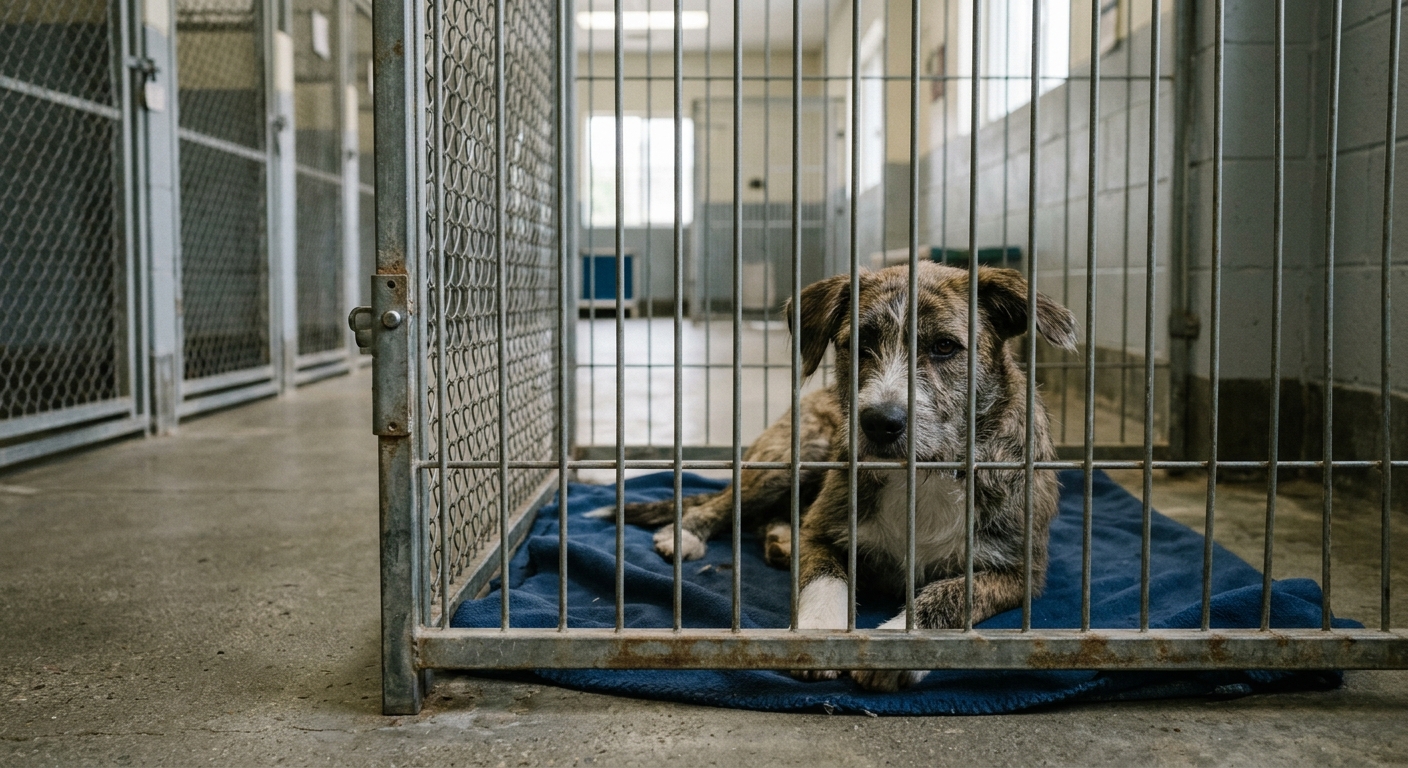
AI-generated illustration; not a photograph of the reported event.
- calendar_today October 15, 2026
North Vancouver Incident Sparks Advocacy for Shelter Animals
A recent incident in North Vancouver involving a dog left crying overnight at a local animal shelter has intensified calls from pet advocates for legal standards governing how long shelter animals can be left unattended at night. The situation gained public attention after Daniel Weidner, a local resident, reported hearing a dog named Luna crying through the night at the District of North Vancouver animal shelter on several occasions in late September.
Current Practices: Overnight Staffing Gaps at Animal Shelters
Under British Columbia’s Prevention of Cruelty to Animals Act (PCA), those responsible for animals must protect them from distress, but the legislation does not specify a maximum period that shelter animals can be left without staff present. As a result, decisions about overnight care and staff supervision fall to individual shelters, resulting in varying practices across the province.
Several animal shelters told CBC News they do not schedule staff to remain overnight. These unsupervised periods range from around 10 hours to more than 16 hours, depending on the facility. The District of North Vancouver confirmed that its staff typically leave around 5 p.m. and return between 8 and 9:30 a.m. Similarly, the B.C. SPCA reported that staff at its West Vancouver centre are generally on site from 8 a.m. to 5 p.m., consistent with its 37 centres across the province, where staff are present for eight to nine hours a day.
Community and Volunteer Concerns
Weidner’s public post about Luna prompted at least ten local residents to visit the District of North Vancouver shelter over one weekend. Some offered to foster or adopt the dog, while others voiced their concerns directly to shelter staff and called for Luna’s release. Among them was Kelly Bunting, a volunteer dog walker at the B.C. SPCA’s West Vancouver centre, who was troubled to learn that Clyde, a senior dog she walked, was alone in the shelter from 5 p.m. until 8 a.m. the next day. Bunting described feelings of distress upon realizing the length of time Clyde was left unattended and subsequently filed a complaint.
Calls for Legislative Change and Expert Opinions
Both Bunting and Weidner are now advocating for change. Bunting hopes the province will legislate a maximum of 12 hours that shelter animals can be left unattended. Weidner is calling for a comprehensive review of shelter operations and animal care policies.
The B.C. SPCA and the District of North Vancouver maintain that their care standards meet or exceed regional guidelines. The B.C. SPCA refers to the Association of Shelter Veterinarians guidelines as a benchmark, and both Luna and Clyde have since been adopted.
Some experts argue that best practices, rather than laws, currently guide animal shelters in Canada, but these are not always enforceable. Maneesha Deckha, an animal law professor at the University of Victoria, suggests that regulations should prioritize animals as relational beings. Animal welfare and behaviour scientist Rebecca Ledger notes that while some dogs may tolerate up to 15 hours without supervision, others can be stressed by prolonged overnight confinement. Animal lawyer Victoria Shroff believes the lack of robust laws is a root cause and calls for greater provincial support and potentially a government task force to address systemic gaps in animal protection and shelter staffing.
Political Reactions Amid Provincial Election
The provincial government declined comment during the ongoing election. CBC News reached out to all five major provincial parties about their positions on staff supervision at animal shelters. The B.C. Conservatives indicated they would collaborate with the B.C. SPCA and municipalities to set enforceable standards, including limits on unsupervised time. CentreBC leader Elenore Sturko committed to reviewing and potentially strengthening animal welfare laws if elected. The B.C. NDP, B.C. Greens, and OneBC did not respond by the deadline.
Outlook for Shelter Animal Welfare in British Columbia
As the conversation continues, advocates seek clear legal standards to better protect shelter animals from distress caused by extended periods of unsupervised overnight care. The issue, sparked by local concerns, has initiated a province-wide dialogue about the adequacy of current animal shelter staffing practices and the need for legislative reform to enhance animal welfare in British Columbia.
Source: cbc.ca.