
- calendar_today August 23, 2025
How British Columbia’s Economy Is Preparing for the Ripple Effects of the U.S. Government’s $6.8 Trillion Borrowing Surge
British Columbia’s economy is in limbo after the $6.8 trillion debt increase by the U.S. government. Find out how local investors and businesses are reacting to the economic shift.
Introduction
The move by the United States government to take on an additional $6.8 trillion of debt has sent shock waves through global markets, and British Columbia is watching for fiscal repercussions. When the national debt surged, British Columbia businesspeople and commentators are asking themselves the possible implications for the province’s economy, companies, and investors. Its growth can bring on higher interest rates, inflationary pressures, and instability in global trade—issues that would be met by Britain Columbia’s emerging tech, real estate, and manufacturing industries.
Major Impacts on the Economy of British Columbia
1. Interest Rates and Borrowing Costs
Perhaps the strongest fear of British Columbia is rising interest rates. The more the U.S. borrows money, the more capital demand increases and the higher the cost of borrowing anywhere. For British Columbia business, it would mean more costly loans to expand, conduct research, or accumulate inventory.
Small and medium businesses (SMEs) within the province, already struggling with issues such as labour shortages and increases in raw material prices, may become more difficult to acquire comparatively cheap financing for. Furthermore, British Columbia consumers also face higher mortgage rates, additionally making it more difficult to purchase homes in an already hot housing market.
2. Inflation and Rising Costs
The increase in U.S. national debt will also trigger inflation because there is more money in circulation with the world economy. The British Columbia import-dependent economy can experience increasing costs of goods and services. The price of the day-to-day products, from foodstuffs to gasoline, can increase, burdening consumers and firms alike.
Those sectors, including the construction sector, that use imported materials will experience rising costs, and profitability, as well as project timelines, will be impacted. Likewise, the technology sector of British Columbia, which relies on international supply chains, can observe increased prices for key components such as microchips and semiconductors impact everything from electronics in consumer devices to high-end technology products.
3. Trade and Export Concerns
The economic activity of British Columbia is closely linked to international trade, especially with the U.S. Since the U.S. borrows increasingly, it can result in economic instability that affects trade relations. Fluctuations in the value of the U.S. dollar or in trade policy could strike British Columbia’s exporters, especially those from industries such as natural resources, agriculture, and technology.
British Columbia natural resources like wood and oil are highly sought after in the U.S., and changes in the U.S. economy can influence the profitability of these exports. British Columbia high-tech firms dependent on cross-border trade and investment can also become more volatile as the U.S. government tries to cope with its economic crisis.
4. Government Spending and Local Infrastructure
With the U.S. government facing a debt explosion, there could be more pressure to cut back on expenditures for various programs. This might impact cross-border programs as well as federal funding for infrastructure projects within British Columbia. Grants from the federal government for green energy projects, transportation, and technological innovation might be cut back as the U.S. reins in debt.
In British Columbia, with such huge infrastructure development so vital to long-run economic growth, any diminished U.S. financial support could lead to delays or cuts in contemplated developments. City governments might be compelled to seek other sources of funds or postpone big projects to solve budget deficits.
5. Foreign Investment and Market Confidence
The worldwide financial market responds to shifts in U.S. budget policy. Since the United States is borrowing more and more funds, foreign investors might become more risk-averse, and investment in North America would decline. British Columbia’s economy, which is stimulated through foreign investment in natural resources, technology, and real estate, would experience reduced growth due to such uncertainty.
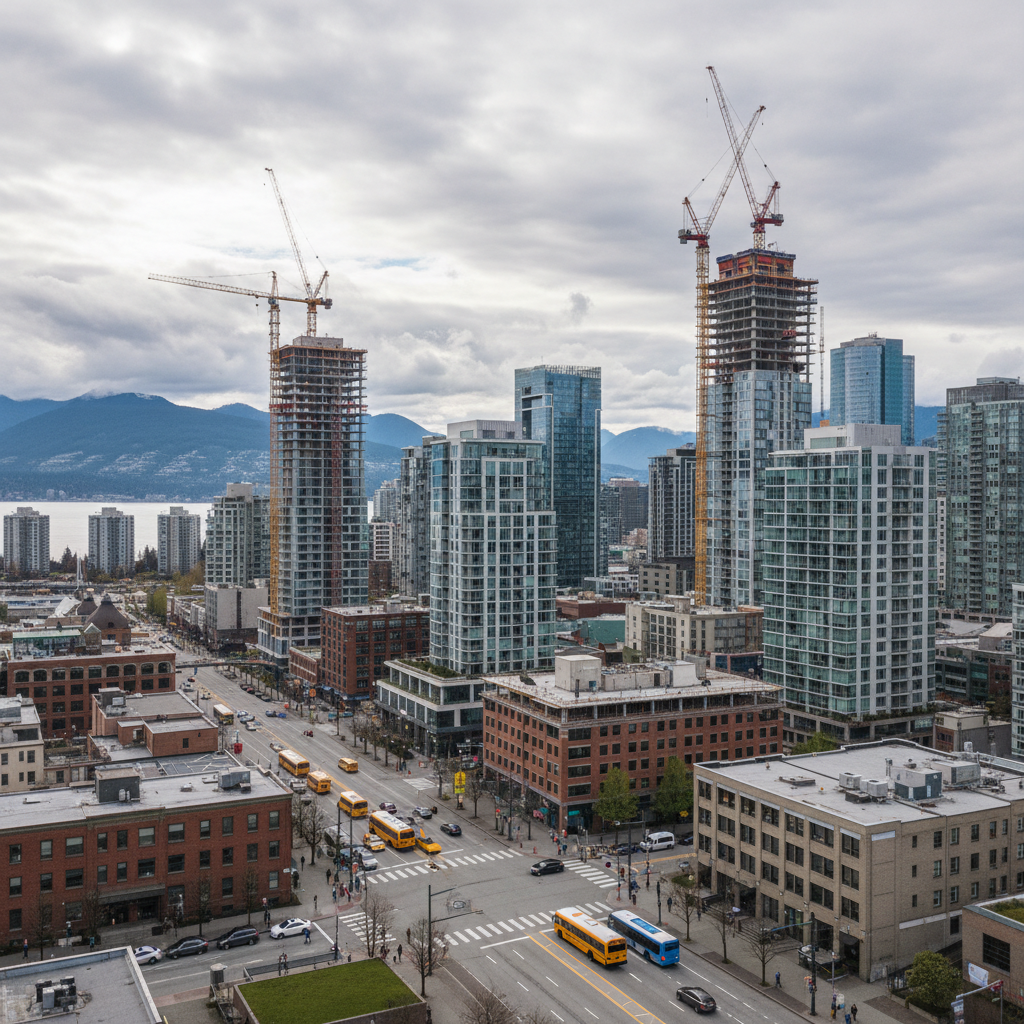
Real estate investors, as well as developers, would be keen on investing in British Columbia if markets worldwide get riskier because of debt concerns in the U.S. This would retard the speed of new constructions, particularly in economically booming urban areas such as Vancouver.
British Columbia’s Reaction to American Debt Issues
In spite of the uncertainty of United States debt increase, the British Columbia economy is still strong. Policymakers and financial analysts are reacting to offset the potential risks and establish mechanisms against the spillover effects of the rise in national debt.
1. Diversifying Investment Strategies
British Columbia investors are encouraged to diversify their investment portfolio to mitigate risks. Through the concentration of a combination of local and international assets, companies are able to insulate themselves from market fluctuation due to increasing U.S. debt. Property investors can also be cautioned to invest in real estate that is situated in developing markets in the province instead of purely high-demand urban locations.
2. Emphasis on Local Development and Innovation
British Columbia is looking to innovation as a long-term strategy against economic pressure. The province is pouring funds into local sectors, especially technology and alternative energy, in an effort to decrease dependence on overseas trade. Banning local industries has the potential to make it easier for British Columbia to be less susceptible to global economic instability and develop a more stable economy.
3. Developing Stronger Trade Relations
As global trade flows shift, British Columbia is forging trading relationships outside the U.S. The provincial government is also spreading its Asian, European, and other markets for export. This will decrease the province’s reliance on the U.S. market and establish new possibilities for British Columbia businesses in every sector.
4. Improving Infrastructure and Public Services
As much as U.S. government debt may influence federal investments in infrastructure, British Columbia is building infrastructure locally to fuel continued growth. Transportation, clean energy, and public services are being analyzed by the province to build a sustainable future foundation.
Conclusion
Where the U.S. government struggles with a stark rise in national debt, British Columbia’s economy responds with optimistic caution. While there are undoubtedly risks ahead, such as possibly higher interest rates, rising prices, and trade uncertainty, the province is taking steps to mitigate risk. By diversifying investment, promoting innovation, and creating stronger trade ties, British Columbia is in good position to weather economic volatility resulting from the U.S. government’s $6.8 trillion borrowing binge. The journey forward will not be smooth, but through astute planning and flexibility, the province can go on to thrive as a world economy changes at an ever-accelerating rate around us.