
- calendar_today August 9, 2025
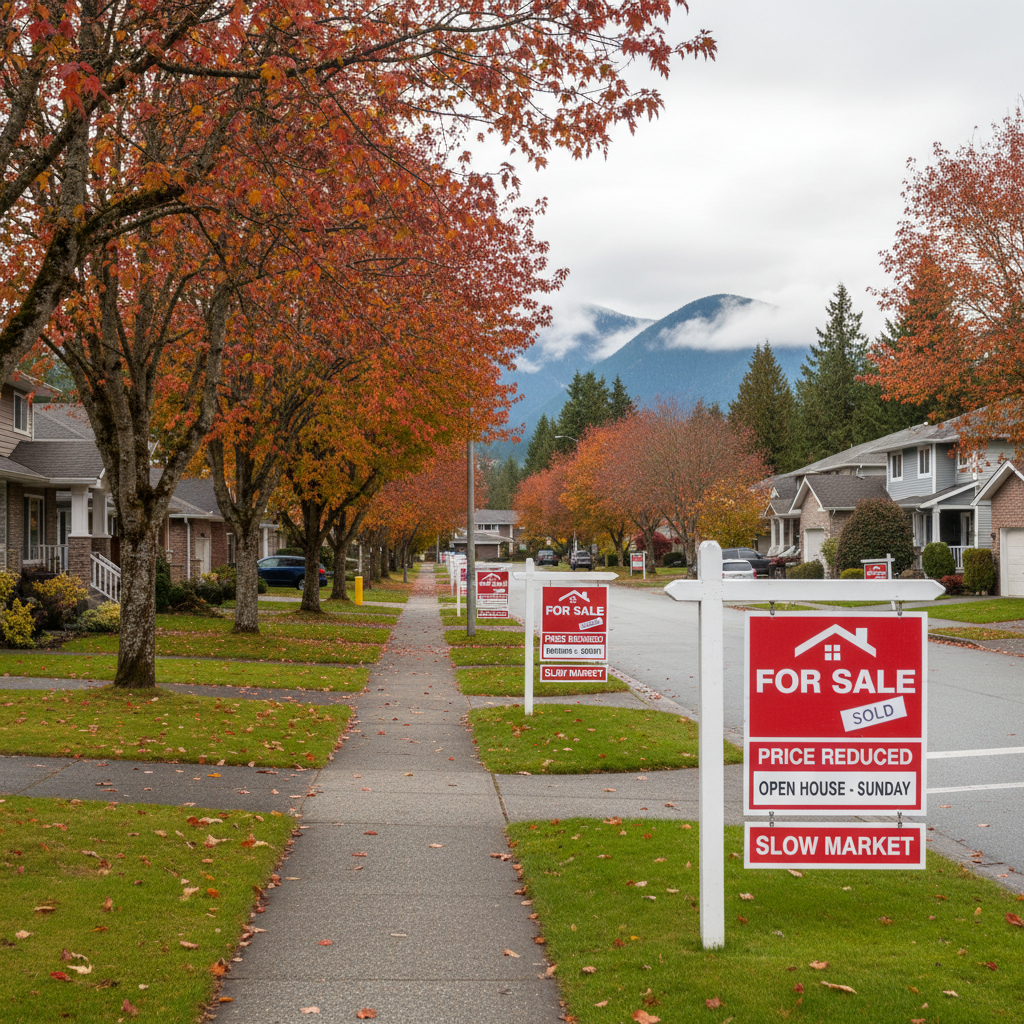
In 2025, British Columbia (B.C.), long a bellwether of Canadian real estate dynamism, is witnessing a marked cooling across its housing markets. The freeze is evident in plummeting sales volumes, extended listing periods, and declining buyer engagement. While prices have not drastically fallen in every segment, the prevailing stagnation suggests a deeper malaise influenced by interest rates, affordability challenges, policy shifts, and evolving migration patterns.
Interest Rates Continue to Ice Buyer Sentiment
One of the most significant drivers of B.C.’s housing freeze is the persistently high interest rate environment. The Bank of Canada, in its continued fight against inflation, has maintained the overnight lending rate above 5% for much of 2024 and into 2025.
For prospective buyers in high-cost markets like Vancouver or Victoria, this translates to prohibitively high monthly mortgage payments—even as prices plateau or slightly dip. Entry-level buyers are being priced out, while move-up buyers hesitate to leave their existing low-rate mortgages behind.
This phenomenon, known as the “lock-in effect,” is freezing inventory turnover. Current homeowners, reluctant to trade up and incur higher borrowing costs, are choosing to stay put.
Affordability Crisis Deepens Across Urban and Suburban Zones
British Columbia’s affordability crisis is not new, but it has become more acute in the face of inflation and income stagnation. In cities like Vancouver, Burnaby, and Surrey, the average home price remains well over $1 million, despite the market slowdown.
Even in interior and island markets—Kelowna, Kamloops, Nanaimo—the affordability gap has widened. The price corrections observed in late 2023 were not enough to offset rising interest costs, and household income growth hasn’t kept pace with the real cost of homeownership.
The provincial government’s 2025 Housing Affordability Index now classifies over 60% of B.C. municipalities as “severely unaffordable,” marking a record high.
Population Growth Slows While Outmigration Rises
Historically, B.C. has benefited from strong domestic and international migration. But in 2025, this trend is reversing in key pockets. High living costs are prompting some residents, particularly younger households and retirees, to relocate to Alberta or parts of Atlantic Canada where housing is more affordable.
Meanwhile, international migration—though still strong in Metro Vancouver—has been tempered by stricter federal visa rules and global economic instability.
Reduced in-migration means less organic demand for new housing. Coupled with existing economic pressures, this demographic shift contributes further to the market chill.
Construction Projects Slow Amid Rising Costs
Developers across B.C. are delaying or downsizing projects due to labor shortages, rising material costs, and demand uncertainty. While cranes still dot the skyline in Vancouver and Victoria, many are tied to projects initiated pre-2023. New housing starts have dropped 18% year-over-year in the province as of mid-2025.
In the Fraser Valley and the Okanagan, planned condo and townhouse developments have been paused or scaled back. Builders cite difficulty in securing financing and a shrinking pool of pre-sale buyers unwilling to commit in uncertain conditions.
This has downstream impacts on employment in the construction and trades sectors—adding another layer of complexity to B.C.’s real estate outlook.
Policy Reforms Add Uncertainty
Policy efforts aimed at cooling speculation and improving affordability have had mixed impacts. The provincial government’s expansion of the speculation and vacancy tax to additional municipalities in 2024, while intended to curb empty homes and free up supply, has led to hesitancy among small-scale investors and second-home owners.
Similarly, the federal foreign buyer ban, now extended through 2026, continues to limit external capital—particularly in luxury and pre-sale markets. While this helps reduce price inflation, it also reduces liquidity and transaction volume.
Furthermore, proposed rental reforms, including stricter eviction rules and caps on annual rent increases, have prompted some landlords to exit the market, further distorting supply dynamics.
Vancouver Market: The Epicenter of the Freeze
Greater Vancouver, traditionally one of Canada’s hottest housing markets, is at the center of B.C.’s 2025 slowdown. Residential sales across the region have dropped nearly 30% year-over-year. Detached homes sit on the market longer, and bidding wars have all but disappeared.
While prices in core areas like West Vancouver and Kitsilano remain high, values have slipped in suburban areas such as Langley, Maple Ridge, and Richmond. Condos in downtown Vancouver—once investor favourites—are seeing increased days-on-market and more price reductions.
Smaller Markets Mirror the Trend
The freeze is not limited to urban cores. In Kelowna, one of B.C.’s fastest-growing cities in the past decade, real estate agents report sluggish traffic at open houses and a sharp drop in investment activity. Similarly, Victoria’s condo market is showing signs of saturation, with price growth nearly flat for the first half of 2025.
Even in traditionally resilient markets like Squamish and Comox Valley, the slowdown is visible. Inventory levels are rising while absorption rates decline, creating a more balanced—if quieter—market landscape.
What Could Break the Ice?
A thaw in B.C.’s housing market may require a combination of factors:
- Rate Cuts: A meaningful drop in the Bank of Canada’s key interest rate could revitalize borrowing activity. Many economists project possible cuts in late 2025, contingent on inflation data.
- Income Growth: Wage increases—particularly in tech, health care, and public service sectors—would boost buyer power and affordability.
- Government Incentives: New affordability measures, such as down payment assistance or targeted tax credits, could help first-time buyers reenter the market.
- Rental Market Stabilization: Continued growth in the rental housing sector may provide relief and prevent further pressure on for-sale housing stock.
Navigating an Uncertain Landscape
British Columbia’s housing market freeze in 2025 is not defined by a dramatic crash but by a sustained slowdown shaped by interlocking forces: high interest rates, affordability constraints, shifting demographics, and cautious policymaking. For buyers, this may represent a window of opportunity—if borrowing conditions improve. For sellers and developers, patience and strategy are paramount.
While B.C.’s long-term fundamentals remain strong—natural beauty, job diversity, and global appeal—the province’s real estate story in 2025 is one of pause, recalibration, and cautious waiting.