
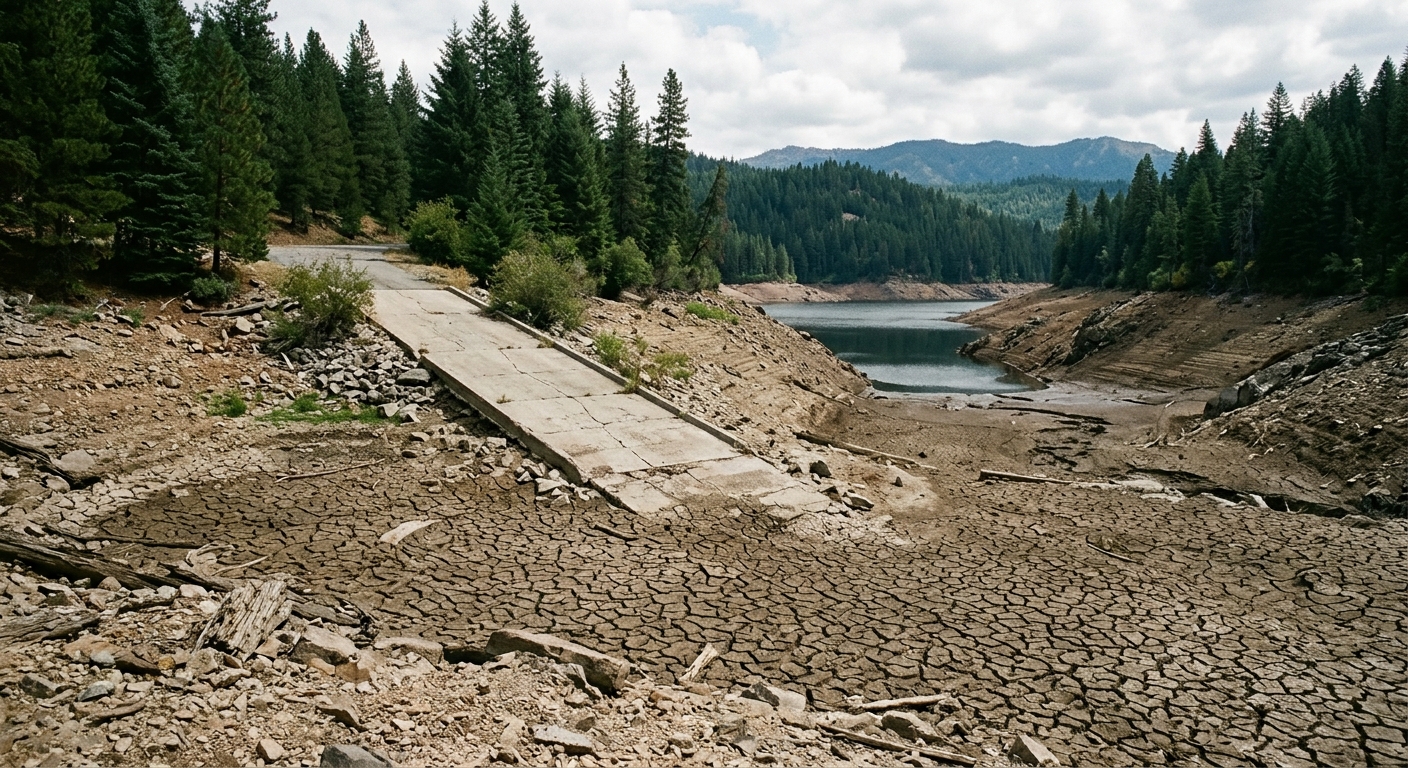
AI-generated illustration; not a photograph of the reported event.
- calendar_today October 9, 2026
Historic Low Inflows at Comox Lake Reservoir
The Comox Lake reservoir, a crucial water source and recreational hub in the Comox Valley, is experiencing its lowest cumulative inflows since May in 64 years, according to B.C. Hydro. This unprecedented shortfall is attributed to an ongoing stretch of warm, dry weather that has persisted through the normally rainy fall season.
Impact of Prolonged Dry Conditions
B.C. Hydro spokesperson Karla Louwers stated that the region has undergone "really dry conditions over the last six months." The lower than usual water levels have had several consequences for the community, including a return to Stage 3 water restrictions, the temporary closure of the boat launch at Comox Lake, and heightened monitoring of the effects on spawning salmon by a local conservation organization.
Water Restrictions and Boating Access Affected
As of October 8, the Comox Valley Regional District reinstated Stage 3 water restrictions, which prohibit activities such as watering lawns, filling swimming pools, and power-washing driveways. Kris La Rose, the district's manager of engineering services, noted that while restrictions lasted until mid-November in 2022, this year has been unique due to a brief move to Stage 2 in September before returning to stricter rules.
Additionally, the Cumberland Lake Park Society decided to temporarily close the boat launch at Comox Lake last week. Society director Kevin McPhedron explained that water levels had dropped so low that there was insufficient runway for safe access, a rare occurrence he recalls happening only once in the last decade.
Seasonal Rainfall Slow to Arrive
The Comox Valley typically starts to see heavy rain and high winds from seasonal storms at this time of year, but Environment Canada reports that little significant precipitation is expected for at least another ten days. Meteorologist Terri Lang described just occasional weak weather systems with minimal rain and forecast a return to above-average temperatures and continued dryness. "The storm cycle season has just kind of yet to get itself going," Lang said.
Louwers from B.C. Hydro added that October's inflows have so far reached just 19 percent of normal levels, and September turned out to be the fourth-driest of the past 64 years. Despite the dry conditions, officials remain hopeful that fall rains will still arrive.
Conservation Concerns for Salmon Spawning
Local conservation group Project Watershed is closely monitoring the situation, particularly regarding salmon spawning. Director Caitlin Pierzchalski reported that while current river flows and dropping temperatures are favorable for fish, a pulse of rainy weather is usually necessary to prompt salmon to fully enter the streams. The organization is also observing how the ongoing strong El Niño event—often associated with warmer and drier conditions—will affect the winter and future water levels in the region.
Pierzchalski highlighted the importance of public awareness and water conservation given the uncertainty surrounding El Niño's impact, while meteorologist Lang noted that these drier conditions are typically most pronounced between December and February during El Niño years.
Looking Ahead
With historically low inflows at the Comox Lake reservoir and no significant rainfall on the immediate horizon, community leaders and conservationists are encouraging residents to remain mindful of their water use. The evolving weather patterns and ongoing El Niño effects will continue to shape the region’s water resources and restrictions in the months ahead.
Source: cbc.ca.