
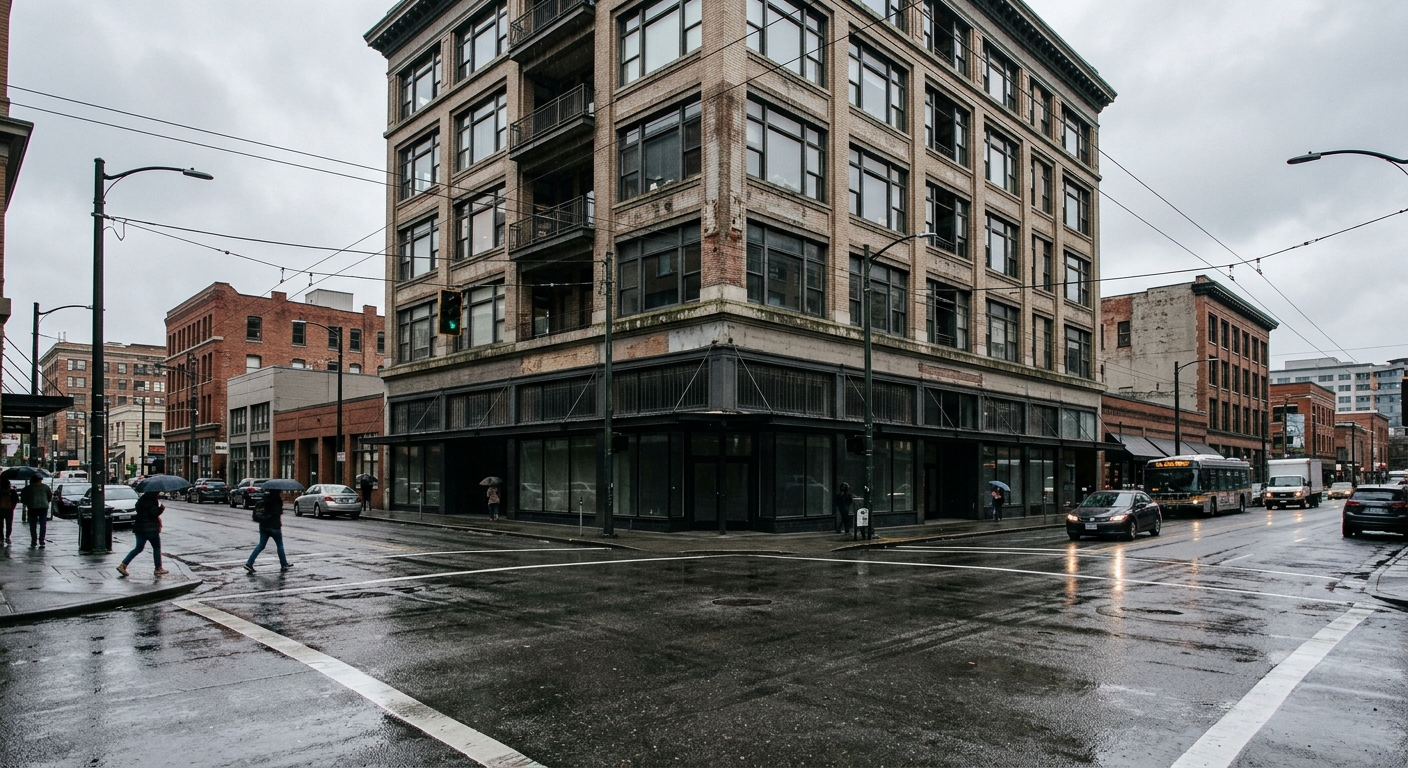
AI-generated illustration; not a photograph of the reported event.
- calendar_today June 4, 2026
A major real estate developer has filed plans to build a new data center in downtown Seattle, highlighting the region’s growing debate over technology infrastructure. Digital Realty, a Texas-based firm with a significant presence in the sector, has submitted permit applications to construct a six-story building on Third Avenue and Virginia Street. The proposal underscores the central role of data center seattle projects in shaping urban development in areas like downtown Seattle and the broader Pacific Northwest, including neighboring British Columbia.
Proposed Facility Targets Office, Retail, and Technology Needs
The planned structure is designed to house a co location data center, alongside research and development laboratories, office space, and retail outlets. According to permit filings, the site formerly hosted a Bed Bath & Beyond and now serves as the home of Cannonball Arts. Digital Realty’s plans envision an updated facility tailored to current market demands while steering clear of an exclusive focus on ai data center concerns.
Permit Process and Market Timing
Digital Realty’s approach to data center construction reflects both its longstanding experience and the volatility of the data center permits landscape in Seattle. Construction is scheduled to commence in 2027, or later depending on how market conditions evolve. The company, one of the largest operators of seattle data centers worldwide, emphasized its intention to work closely with city officials, local stakeholders, and community organizations throughout the process.
Local Regulatory Climate and Moratorium Efforts
This project arrives at a time when the seattle city council is preparing to impose a one-year moratorium on new large-scale data centers, pending a comprehensive review of long-term regulatory strategies. The move is fueled by data center energy use concerns, with public input reflecting intense worry over the impact of energy-intensive facilities—especially those that may be optimized for artificial intelligence applications.
British Columbia researchers and sustainability advocates have also watched developments in downtown Seattle closely, given similar pressures on technology infrastructure across the Pacific Northwest. The city’s review process has been notably responsive, receiving more than 54,000 messages from residents and organizations expressing diverse perspectives on data center seattle impacts.
Community Response and Stakeholder Collaboration
Digital Realty stated its commitment to addressing the concerns raised by the community. While the company clarified that the upcoming facility is not intended as an ai data center, it recognizes the broader discussion around data center energy use and the environmental implications frequently raised by Canadian and British Columbia audiences, including cross-border energy trade.
Community groups, property owners, and environmental organizations have increased scrutiny of technology infrastructure expansions in downtown Seattle, mirroring similar public debates in British Columbia’s growing tech sector. The collaboration between developers and city officials is seen as essential to balancing economic growth with sustainability.
Future of Data Centers in Seattle and the Region
The uncertainty surrounding data center permits, alongside evolving regulatory frameworks, gives the Digital Realty project an added measure of significance for investors and technology leaders on both sides of the border. With nearly 30 existing seattle data centers—typically on a smaller scale—the proposal marks a shift in scale for the region’s industry.
As cities across the Pacific Northwest grapple with data center construction and sustainability, the outcome of Seattle’s permitting and regulatory process could prove influential for British Columbia’s own approach to technology infrastructure. Many in the British Columbia tech community are watching how these data center seattle debates shape the conversation about responsible growth and innovation throughout the region.
Looking Ahead
Whether or not the proposed one-year moratorium will impact Digital Realty’s timeline remains to be seen. However, the project represents a microcosm of broader questions around balancing the economic benefits of technology infrastructure with environmental and community impacts. Local and international audiences, including those in British Columbia, will likely continue to follow the progression of seattle data centers closely in the years to come.