
- calendar_today August 26, 2025
Why Dow Jones Futures Matter in British Columbia
Although the Dow Jones Futures are rooted in the U.S. equity market, they offer valuable signals for British Columbia’s investment community. As Canada’s Pacific gateway and a hub for international trade, clean energy, forestry, and technology, B.C.’s economy is closely tied to U.S. monetary policy, global demand, and investor confidence. In 2025, movements in Dow Futures are helping guide business planning, portfolio allocation, and regional economic expectations.
Economic Landscape in B.C. for 2025
British Columbia enters 2025 facing mixed conditions. While sectors like tech and green energy are growing, inflationary pressures, rising borrowing costs, and global trade instability are weighing on real estate and consumer spending.
- Provincial GDP growth is projected between 1.4% and 1.8%, slightly stronger than some other provinces but still modest.
- Inflation remains sticky in B.C., especially in Vancouver, where housing, transportation, and food costs continue to outpace national averages.
- Slower construction activity and cautious retail spending are offset by strength in exports and the innovation sector.
U.S. Fed Policy Reverberates in Western Canada
British Columbia’s trade, housing, and investment markets are highly sensitive to monetary policy south of the border. The U.S. Federal Reserve’s rate decisions are influencing everything from consumer credit costs to real estate development financing across the province.
- The Fed Funds Rate stands at 4.25%–4.50%, with markets pricing in a potential rate cut by September.
- A U.S. rate cut could influence the Bank of Canada to ease its own stance, offering potential relief to heavily mortgaged households and developers.
- The loonie’s value may also shift depending on Fed decisions, affecting B.C.’s import and export pricing with Asia-Pacific and U.S. markets.
Global Trade Disruptions Impact Port-Driven Economy
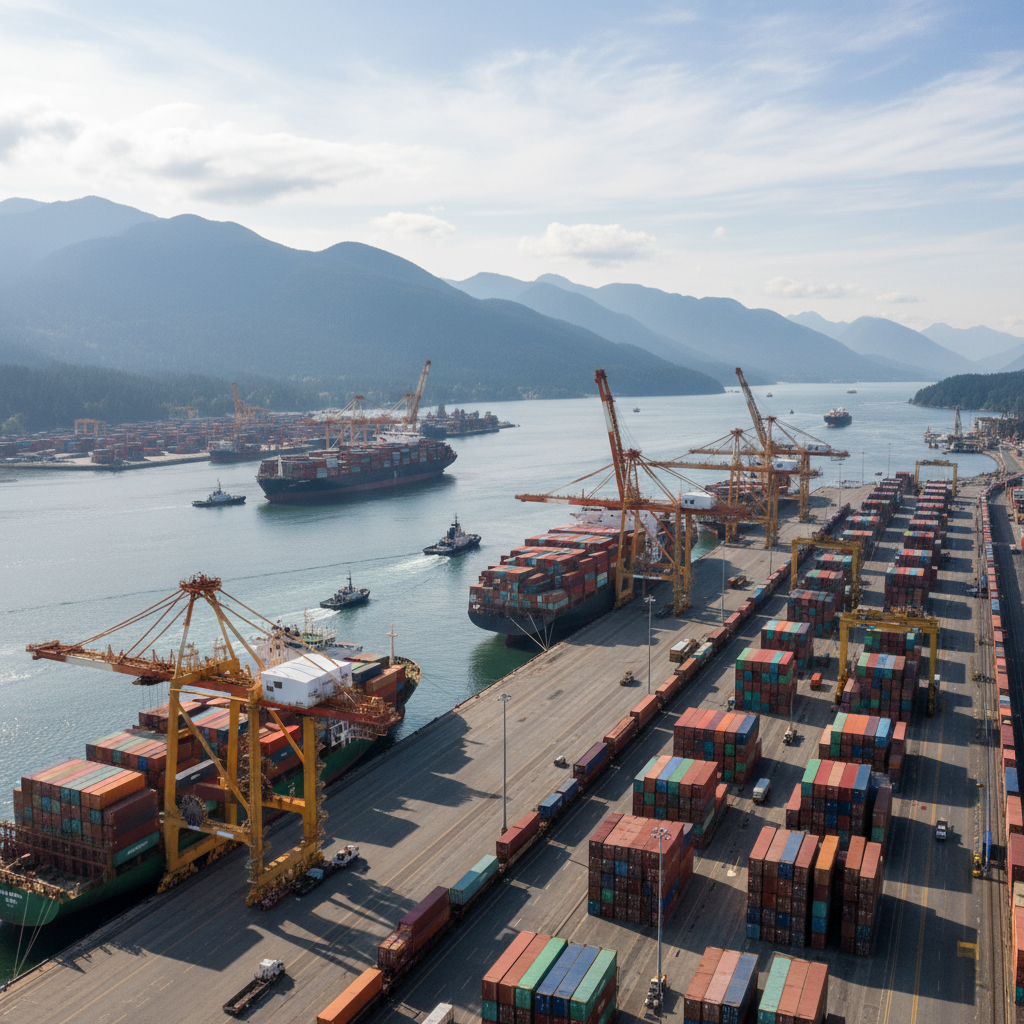
As home to Canada’s busiest port in Vancouver, British Columbia’s economy is directly affected by global shipping, commodity flows, and supply chain disruptions—often anticipated by moves in Dow Jones Futures.
- New U.S. tariffs on Chinese and Brazilian imports (enacted in July 2025) are impacting supply chain costs and shipping volumes in B.C.’s ports.
- A sluggish Chinese recovery is reducing demand for B.C. exports, including lumber, copper, and natural gas.
- Global instability—particularly in the Middle East—is adding volatility to energy and transportation prices, affecting logistics and export margins.
Sector Breakdown: Forestry, Clean Energy, Real Estate, and Tech
British Columbia’s diversified economy means it reacts differently to sectoral trends reflected in Dow Jones movements. In 2025, the response is uneven.
- Forestry and natural resources remain under pressure from global demand slowdowns and regulatory constraints.
- Clean tech and renewable energy—including hydrogen, solar, and carbon capture technologies—continue to attract capital, buoyed by U.S. investment in climate initiatives.
- Real estate, especially in Metro Vancouver, remains subdued due to high mortgage rates, though multi-use developments and rentals are seeing growth.
- Technology and digital media thrive, particularly in Vancouver and Victoria, benefiting from cross-border innovation and U.S. capital flows.
Investor Sentiment: Watchful but Selective
In British Columbia, investors are showing cautious optimism as they monitor the Dow Futures for signs of volatility, opportunity, and sector rotation.
- With U.S. AAII sentiment around 45%, many B.C.-based asset managers are mirroring similar cautious positioning.
- Investors are favoring ETFs tied to infrastructure, clean energy, and U.S. blue-chip dividends.
- Market participation is steady, though retail investors are focusing more on risk management than speculative gains.
7 Dow Futures Trends That Matter to B.C. in 2025
As British Columbia’s investors position for the rest of the year, these predictive insights will shape how portfolios respond to evolving market conditions. Futures traders across the region should be ready for continued shifts.
- Volatility around Fed policy shifts or trade headlines could lead to ±1–2% swings in Dow Futures, influencing TSX and B.C.-based companies.
- A potential Fed rate cut may ease local credit conditions and support real estate and capital-intensive industries.
- Tariff-related inflation may raise costs for import-heavy industries such as manufacturing, housing, and logistics.
- Sector divergence will continue—clean tech and tech outperform, while traditional forestry and retail face pressure.
- A stronger Canadian dollar, if driven by U.S. policy easing, could dampen export competitiveness, particularly for natural resources.
- Labor market tightness in construction, healthcare, and engineering is sustaining wage growth and cost pressures.
- Investor sentiment will remain reactive, with B.C. market players closely monitoring U.S. earnings and global geopolitical developments.
How B.C. Investors Can Position Themselves
Given ongoing uncertainty, investors in British Columbia should adopt flexible strategies while leveraging global insight.
- Consider increased exposure to renewable energy, U.S.-linked technology, and infrastructure investments.
- Use Dow Futures and Canadian ETFs for macro hedging and to gauge sector momentum.
- Keep a close eye on inflation trends, port throughput, and China-related trade data for local context.
British Columbia’s Market Outlook: Global Signals, Local Impact
In 2025, British Columbia finds itself at the crossroads of international trade, environmental innovation, and regional affordability pressures. As Dow Jones Futures respond to inflation reports, central bank commentary, and geopolitical events, they offer a clear window into where investor sentiment is heading. For B.C. stakeholders—from individual investors to institutional players—maintaining a balanced, forward-looking strategy will be essential in navigating what remains a highly dynamic economic landscape.