
- calendar_today September 3, 2025
Honestly, I Didn’t Think I’d Be This Person
There’s this soft, familiar rhythm to writing here in BC. Something about the grey sky, the hum of rain against cedar, the smell of salt and woodsmoke in the air. It pulls stories out of you. Or it used to.
I used to be the kind of writer who lit a candle, poured a strong cup of tea, and sat at my creaky desk in my Nanaimo apartment, swearing I wouldn’t move until I had at least one good paragraph. Some days, it worked. Other days, I just sat there, watching the clouds roll in, wondering when my brain would come back online.
And then one day, I opened an AI writing tool. Not because I wanted to give up control. Not because I thought a robot knew more than me. But because I was tired. And stuck. And I just needed something—anything—to help me find my way back to the page.
It Felt Like Asking a Friend for a Nudge
I don’t know what I expected, but what I got wasn’t cold or mechanical. It didn’t feel like cheating. It felt… gentle. Kind of like brainstorming with someone who doesn’t get offended when you ignore their suggestions. Someone who just keeps tossing you lines until one finally lands right.
I’d still write the way I always did—with a bit of a mess, a lot of feelings, and more commas than necessary—but now I had something there when my own words felt too far away.
And honestly? That AI-written books 2025 label? It sounds bigger and scarier than what’s really going on. We’re not turning into machines. We’re just trying not to lose the thread when life gets noisy.
This Place Shapes How We Tell Stories
BC is its own kind of wild. Between the fog in the Fraser Valley, the stillness of the Gulf Islands, and that crisp, briny air you can’t quite explain until you’ve stood in it, there’s a mood here that seeps into every sentence we write. And no tool—not even one powered by AI—can fake that.
But it can help us get through the tough parts. The middle chapters. The rewrites. The back cover blurb that makes us want to scream into a pillow.
Here’s what I’ve actually used AI for in the past month:
- Starting scenes I’d put off for weeks
- Brain-dumping messy dialogue so I could shape it later
- Playing with pacing when everything felt flat
- Rewording summaries when my brain had completely checked out
- Giving me hope that maybe I’m not as blocked as I thought
It doesn’t replace the work. It supports it. Like a well-worn flannel or an old friend who doesn’t mind sitting in silence until you’re ready to talk.
I Know What You’re Thinking—and Same
If someone had told me last year I’d be letting a machine help with my novel, I would’ve laughed. Or rolled my eyes. Probably both.
But then I had a week where I couldn’t write. And another. And then one where I thought maybe I wasn’t cut out for this anymore. That’s when I caved and tried it.
And here’s the truth: it didn’t make me less of a writer. It just reminded me I didn’t have to do it all alone.
The Soul Is Still Ours
Even with AI lending a hand, the stories still carry that British Columbia softness. That ache of a rainy drive through Stanley Park. The hush of fog curling around Douglas firs. The heaviness in your chest when someone you love walks away on a ferry.
We’re not losing our voice. We’re just making sure it survives the hard days.
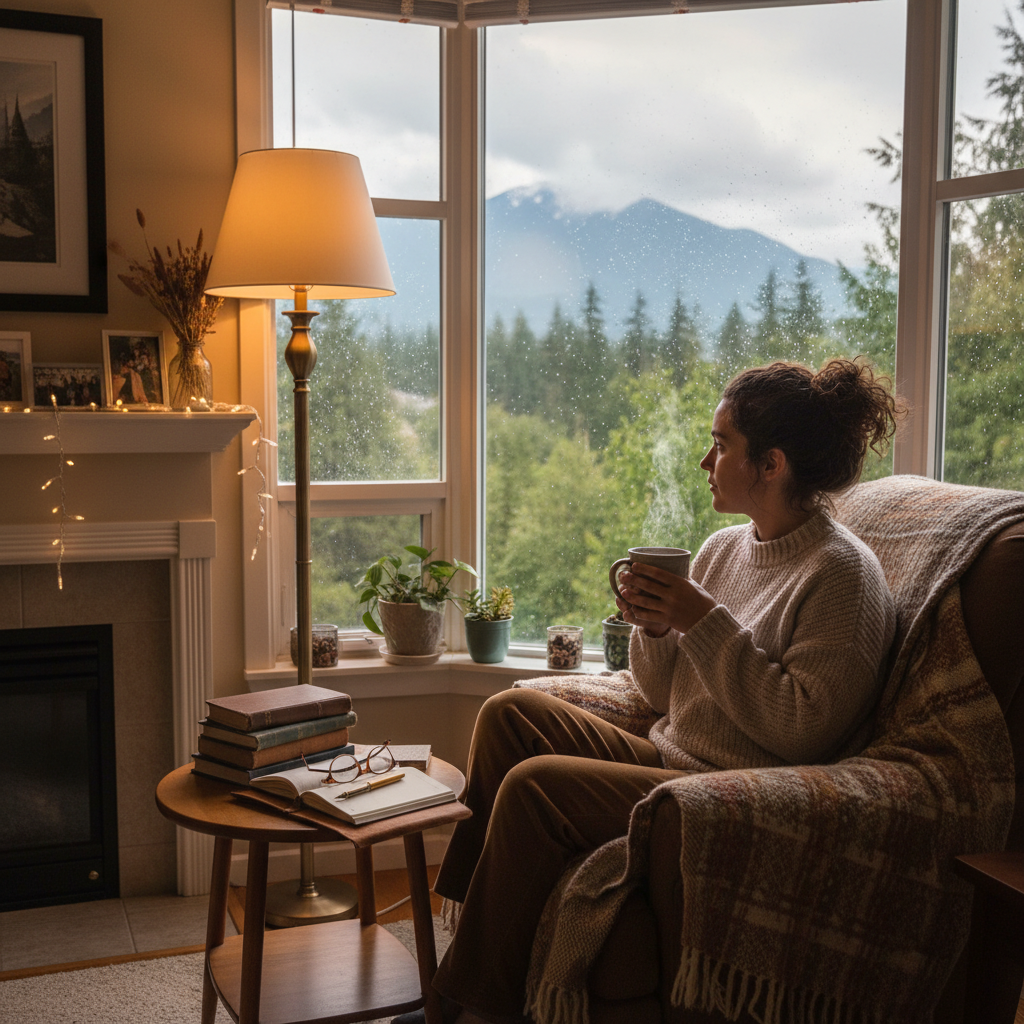
So if you’re sitting by your own rain-splattered window, wondering if you should give one of these tools a try—just know it’s not a betrayal. It’s just another way to stay connected to the part of you that still has something to say.
And in this province, where silence is sacred and words are slow and careful, that still matters. Maybe now more than ever.