
AI-generated illustration; not a photograph of the reported event.
- calendar_today November 11, 2026
Renewing Traditions: Cultural Burning in British Columbia
As winter retreats from the Nicola River valley, Leona Antoine surveys patches of open ground across her family’s land. Antoine, of Syilx and Nlaka'pamux heritage, recalls how her grandfather would kindle low, patchy fires—an act that nourished the earth and promoted new growth. This practice, she calls “good fire,” is part of a legacy disrupted by past legislation that prohibited Indigenous burning.
The Role of Controlled Burns in Ecosystem Health
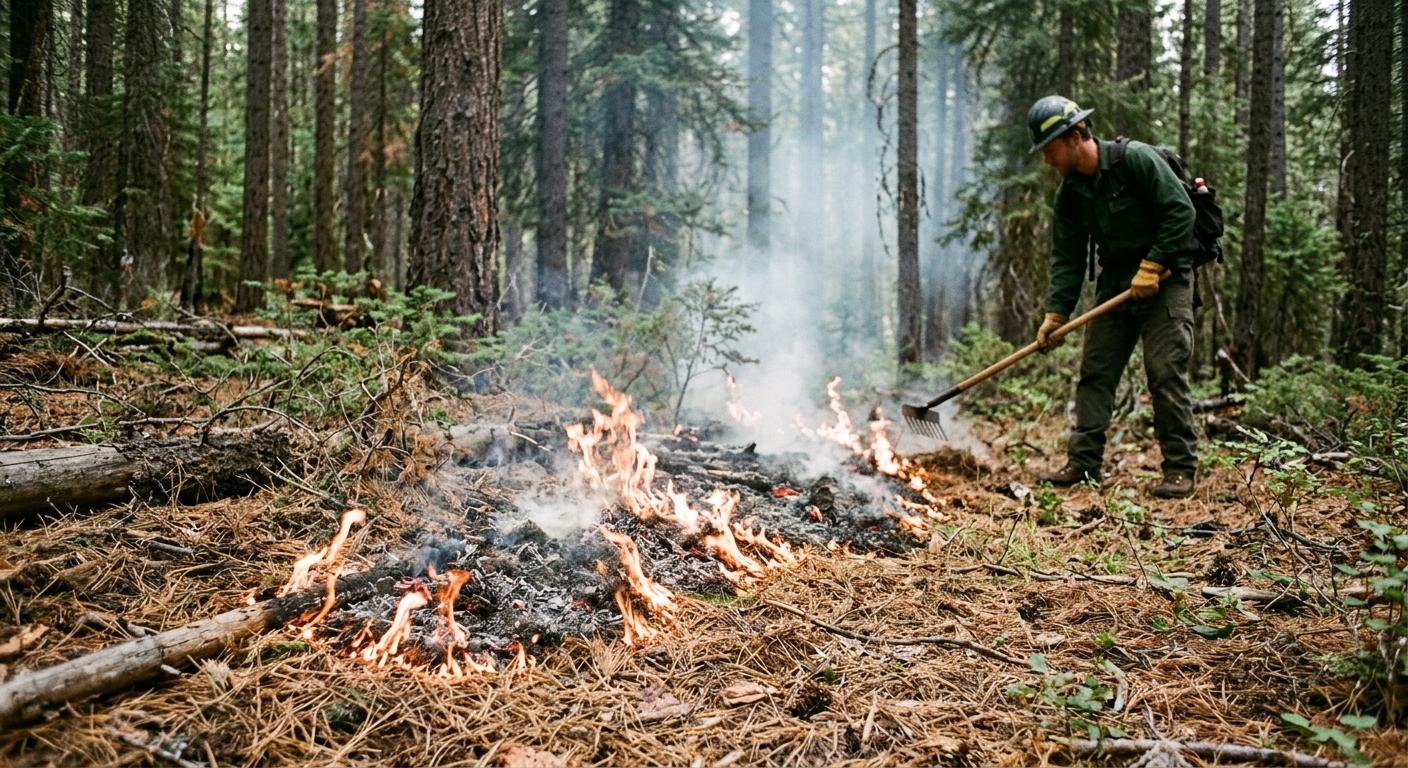
Cultural burning has long provided benefits beyond wildfire mitigation. By removing dead brush, these controlled burns allow sunlight to reach dormant seeds, release nutrients into the soil, and encourage the emergence of grasses, huckleberries, and traditional medicines. According to Antoine, these seasonal fires help restore ecosystems and create sustainable landscapes in areas like British Columbia’s southern Interior—a region increasingly vulnerable to megafires, as evidenced in communities such as Lytton and Summerland.
The Movement for Indigenous Fire Stewardship
Antoine, who serves as the chair of the Salish Firekeepers Society, is part of a growing group of Indigenous fire practitioners and researchers pushing to revive controlled burns outside peak wildfire season. They emphasize that these low-intensity fires not only limit catastrophic wildfires by removing potential fuel, but also revitalize ecosystems and reinforce Indigenous stewardship. Recent developments, including a Senate report recognizing the value of cultural burning, have increased support for Indigenous-led fire management, and several wildfire agencies—including British Columbia’s—now endorse these practices.
Barriers to Expanding Cultural Burns
Despite success stories, Canada trails the United States in the application of prescribed fires. According to the Canadian Interagency Forest Fire Centre, Canadian wildfire agencies burned about 110 square kilometres last year—most of it in B.C.—compared to thousands annually overseen by the U.S. Forest Service. The limited use is attributed to liability concerns, risk aversion, and a lack of resources.
Amy Cardinal Christianson, former Canadian Forest Service scientist and current director of fire stewardship at the Indigenous Leadership Initiative, notes that Indigenous communities struggle with staff constraints and declining elder knowledge. Climate change further complicates safe burning efforts due to shifting and more hazardous conditions. Christianson advocates for year-round funding, meaningful training, and Indigenous control in fire stewardship to ensure these practices align with community values and needs.
Challenges and Renewed Collaboration
Daylan Chookomolin, wildfire management coordinator for Weenusk First Nation in northern Ontario, manages a small volunteer team with limited capacity for large-scale controlled burns. As cultural burning is still largely restricted outside Ontario, many Indigenous communities face difficulties obtaining approval and resources for burns. Nevertheless, organizations like Thunderbird Collective provide support and knowledge sharing among Indigenous practitioners, aiming to restore control over fire to the people most connected to the land.
Chookomolin highlights the importance of balancing wildfire suppression with controlled burning, both to rejuvenate forests and mitigate future fire risks. He hopes for a future where Indigenous-led burns become commonplace, supporting healthier forests and reducing catastrophic wildfires.
Looking Forward: Healing Land and Communities
Fire suppression policies dating back to colonial times have led to denser forests and increased fire risk. Archaeological evidence and oral histories confirm that Indigenous-controlled burns have shaped Canada’s landscapes for millennia, fostering resilience and biodiversity. As recounted by Christianson, while Indigenous peoples account for five percent of Canada’s population, their communities experience over forty percent of wildfire-related evacuations.
Recent changes in B.C. legislation and increased collaboration with First Nations signal progress. Antoine recounts teaching her daughter to carry on the burning tradition—an act of stewardship and generational continuity. For advocates like Antoine and Christianson, embracing “good fire” is not just about wildfire risk reduction, but about reclaiming cultural identity, restoring ecosystems, and securing a future in which the land—and the people—can heal together.
Source: cbc.ca.