
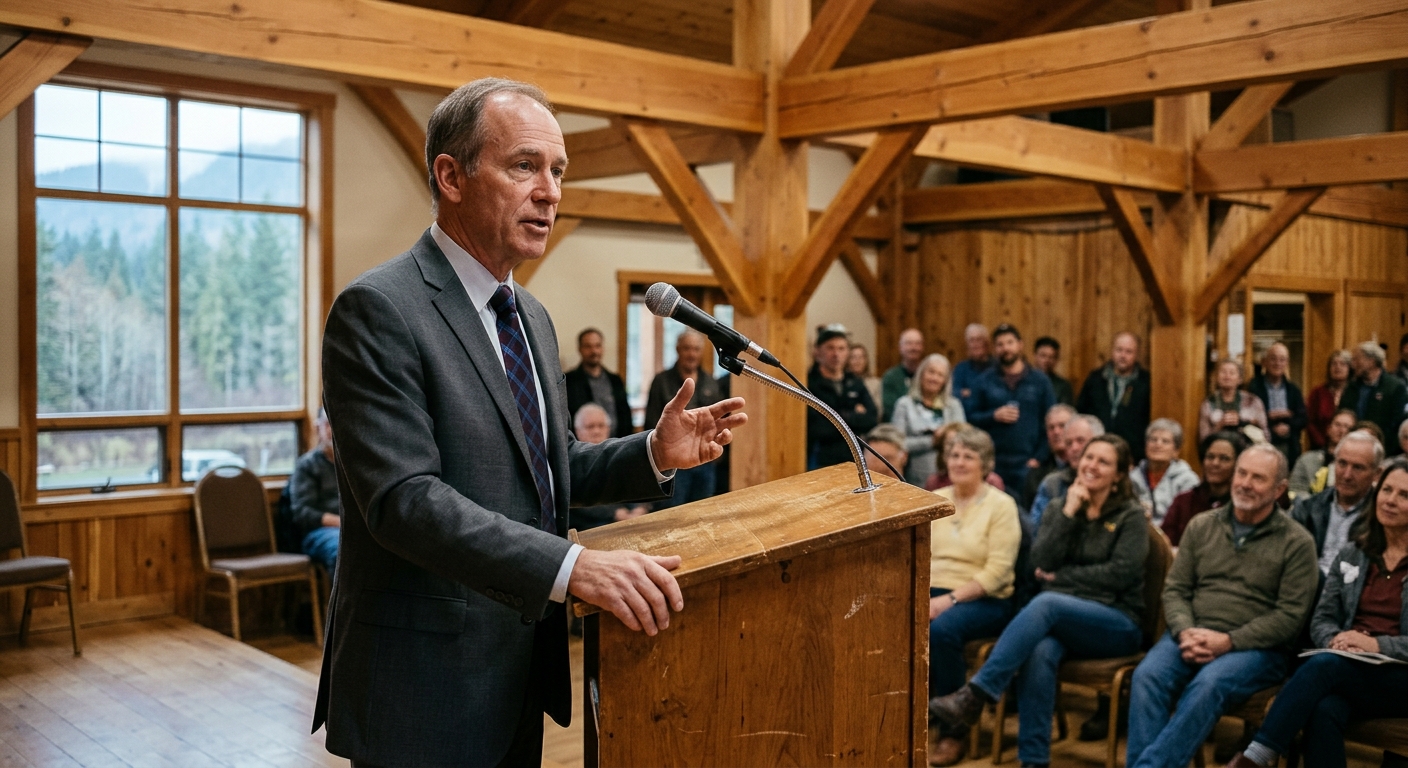
AI-generated illustration; not a photograph of the reported event.
- calendar_today October 26, 2026
Lorne Doerkson Takes Helm as British Columbia’s New Premier
Lorne Doerkson, leader of the B.C. Conservative Party, emerged as British Columbia’s premier-designate after leading his party to a decisive victory in the provincial election. His win marks a historic shift in the province’s political landscape, toppling David Eby’s NDP government and bringing the Conservatives to power for the first time in decades.
A Stunning Election Night for B.C. Conservatives
On Saturday night, Doerkson addressed a crowd of more than 1,000 supporters at Vancouver’s Rocky Mountaineer Station, introducing himself and celebrating British Columbia’s enduring trailblazing spirit. By early Sunday, Conservatives were leading in 64 ridings, securing a commanding majority government and reducing the NDP to just 27 seats. Several cabinet ministers from the outgoing government lost their seats.
The outcome is particularly notable for a party that, just five weeks earlier, was facing organizational challenges as a snap election was called. Doerkson, however, interpreted this moment as an opportunity seized by voters who felt overlooked by the political establishment in Victoria. “For a very long time, a lot of British Columbians have felt like Victoria forgot about them, like the map maybe stopped at Hope,” Doerkson told his supporters. “But tonight the whole map counts.”
From Rodeos to Newsrooms: Doerkson’s Background
Born in New Westminster and raised in both Surrey and the B.C. Interior, Doerkson ultimately settled in Williams Lake, where he raised his family. A former rodeo rider, he spent two decades publishing community newspapers and volunteering with local organizations. Doerkson attributed his work in the news industry to his deep understanding of community needs, from employment trends to business closures and community hopes.
Doerkson entered politics in 2020, winning election in Cariboo-Chilcotin as a B.C. Liberal before joining John Rustad’s fledgling Conservative caucus. His victory makes him the first premier from the B.C. Interior since Bill Bennett left office in 1986.
A Brief but Turbulent Path to Party Leadership
Doerkson learned of his colleagues’ desire for him to serve as interim party leader while returning from South Africa just a month ago, after the resignation of former leader Kerry-Lynne Findlay amidst internal party turmoil. Although initially hesitant, Doerkson agreed to take on the leadership role. His subsequent success in the provincial election brought together a coalition of social conservatives and fiscal centrists to form a government majority.
Key Campaign Promises: Tax Cuts, Red Tape, and Resource Growth
In his victory speech, Doerkson reiterated promises to cut red tape, expedite forestry and mining permits, and triple natural gas production by 2035. He pledged not to introduce new taxes and committed to maintaining “fully and publicly funded” health care in the province. Doerkson specifically promised to cut income taxes by $1,000 a year.
However, questions remain regarding how the new government plans to fund these commitments, especially given that the province is already projected to face a $13.8-billion deficit in the 2026-27 fiscal year. The outgoing NDP warned that the Conservative platform could lead to cuts in health care and education.
Unifying a Diverse Caucus and Future Challenges
As premier-designate, Doerkson faces the immediate challenge of governing while uniting a party comprising both social conservatives and centrists. He has also signaled the intention to repeal the Declaration on the Rights of Indigenous Peoples Act, while emphasizing the importance of working with First Nations communities as partners in the province’s economic development. “This future is one we build together as partners with the certainty that all of us need,” Doerkson stated.
With David Eby announcing his resignation, the NDP’s immediate focus will be selecting a new leader. Meanwhile, Doerkson and the B.C. Conservatives prepare to set the course for the province’s future policy and governance.
Source: cbc.ca.