
- calendar_today August 14, 2025
Nvidia’s 2025 Forecast: How British Columbia’s Growing AI Infrastructure and Strategic Partnerships Are Shaping the Future of Technology
Nvidia’s Strategic Expansion in British Columbia
British Columbia (B.C.) is rapidly becoming a pivotal hub in Nvidia’s U.S. expansion strategy, particularly in the realm of artificial intelligence (AI) infrastructure. The province’s robust tech ecosystem, commitment to innovation, and favorable regulatory environment make it an attractive destination for Nvidia’s initiatives.
1. TELUS Sovereign AI Factory in Kamloops
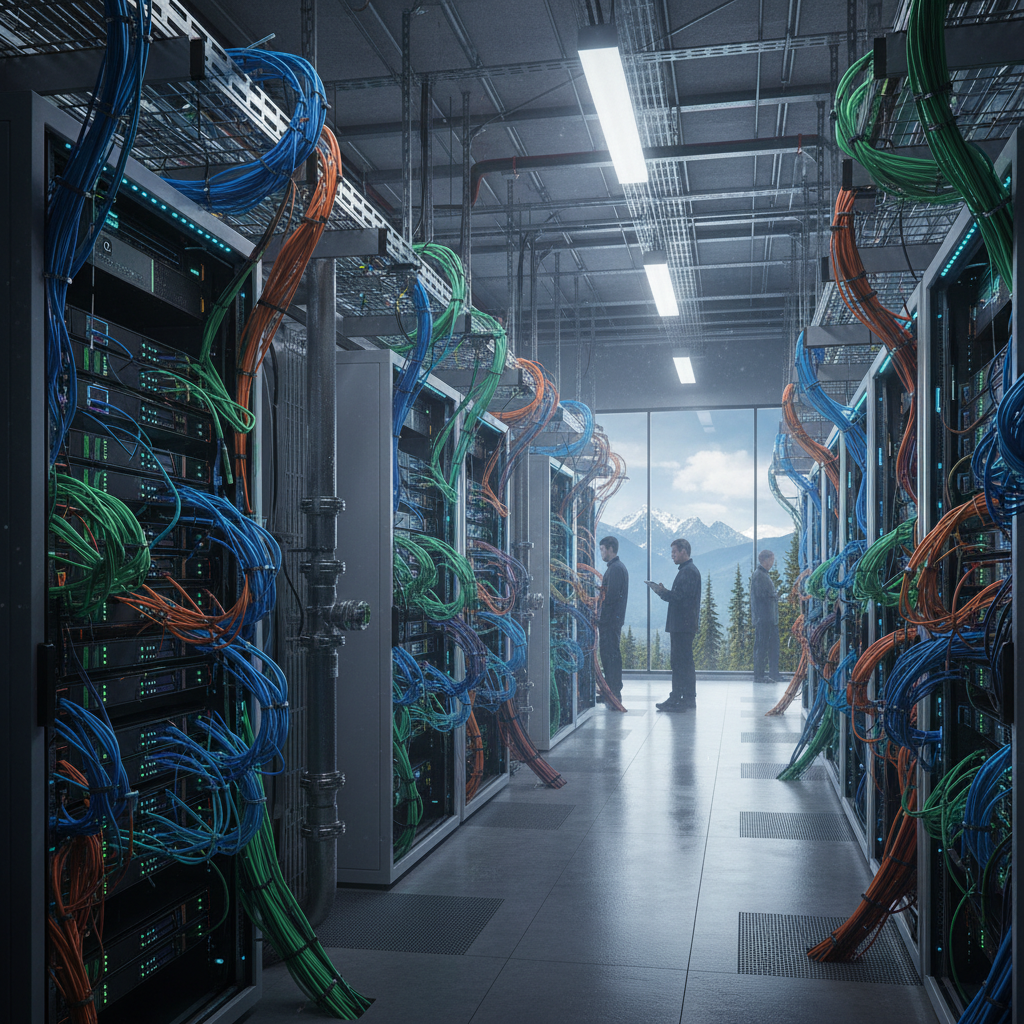
In a significant move, TELUS, in collaboration with Nvidia, announced plans to launch Canada’s leading Sovereign AI Factory in Kamloops, British Columbia. This facility aims to provide Canadian businesses and researchers with access to cutting-edge AI technology while ensuring data sovereignty. The AI Factory will leverage Nvidia’s latest-generation GPUs, including the Hopper and Blackwell architectures, to deliver high-performance computing capabilities.
The facility will be powered by TELUS’ high-speed, ultra-low-latency fibre-optic network and sustainable data centres powered by 99% renewable energy sources. These measures ensure that the AI Factory operates with minimal environmental impact while meeting the growing demand for AI services in Canada.
2. Bell’s AI Data Centre Expansion
Bell Canada is also making significant strides in AI infrastructure development in British Columbia. The telecommunications giant plans to build six new data centres in the province, with a combined capacity of 500 megawatts. These facilities will be equipped to support AI workloads and will lease space to cloud service providers, government departments, and businesses.
The first of these data centres is set to open in Kamloops, with Groq, a U.S.-based chipmaker, as the anchor tenant. This expansion underscores the growing demand for AI infrastructure in the region and positions British Columbia as a key player in Canada’s AI landscape.
3. Collaboration with Research Institutions
British Columbia is home to several leading research institutions, including the University of British Columbia (UBC) and Simon Fraser University. These institutions are at the forefront of AI research and development, collaborating with Nvidia and other industry partners to advance AI technologies.
For instance, UBC has been involved in AI-driven projects aimed at improving traffic flow and reducing emissions. In partnership with Rogers Communications, UBC deployed a 5G-connected, AI-enabled smart traffic solution on its campus, demonstrating the practical applications of AI in urban settings.
Nvidia’s Financial Outlook for 2025
As of June 2025, Nvidia’s stock is trading at approximately $143.98. Analysts maintain a positive outlook, with a consensus 12-month price target of $175, indicating a potential upside of approximately 21% from its current level. Factors contributing to this optimism include Nvidia’s leadership in AI infrastructure and its strategic partnerships across various sectors.
The company’s continued investment in AI technologies and infrastructure, particularly in regions like British Columbia, positions it well for sustained growth. Nvidia’s ability to innovate and adapt to the evolving AI landscape is expected to drive its financial performance in the coming years.
Can Nvidia Achieve $1,000 by 2026?
While ambitious, some analysts project that Nvidia’s stock could approach $1,000 per share by 2026. Achieving this would require the company to continue scaling its operations globally, maintain its leadership in AI infrastructure, and expand into new, high-growth sectors such as autonomous driving, robotics, and healthcare AI.
Nvidia’s strategy involves capitalizing on the increasing demand for AI-powered solutions across a wide range of industries. If the company continues to innovate and expand its market share, it could reach the $1,000 per share milestone.
5-Year Forecast for Nvidia
Looking ahead, Nvidia is poised to maintain its leadership in the AI data centre market. With forecasted AI-related revenues exceeding $217 billion annually by 2029, Nvidia’s dominance in the space is expected to continue for at least the next five years. This growth is driven by the rapid expansion of the AI semiconductor market, which is expected to grow at a compound annual growth rate (CAGR) of 20.4%.
In British Columbia, Nvidia’s continued investments in AI infrastructure and partnerships with local companies will drive the development of new technologies and contribute to regional economic growth. By continuing to innovate and collaborate with Canadian firms, Nvidia will play a crucial role in shaping the future of AI technology in the region.
What Will Nvidia Be Worth in 10 Years?
Looking to the future, Nvidia’s long-term valuation forecast ranges between $600 and $700 per share, with some analysts projecting a market cap as high as $10 trillion. To achieve this valuation, Nvidia would need to retain its dominance in AI infrastructure while expanding into untapped global markets.
In British Columbia, Nvidia’s strategic investments in AI infrastructure and collaborations with local companies will continue to drive growth in the region’s tech ecosystem. As the demand for AI-powered solutions across industries like healthcare, finance, and manufacturing grows, Nvidia’s position as a market leader will remain critical to its future success.
How High Will NVDA Go?
With 43 analysts currently tracking the stock, Nvidia remains one of the top picks for long-term investors. Whether through continued advancements in AI chip development, global infrastructure expansion, or deeper software integration, Nvidia’s trajectory will continue to be followed closely by investors and industry experts alike.
For now, Nvidia is not just riding the AI wave—it’s building the future of AI technology, with key investments in regions like British Columbia helping to shape that future.