
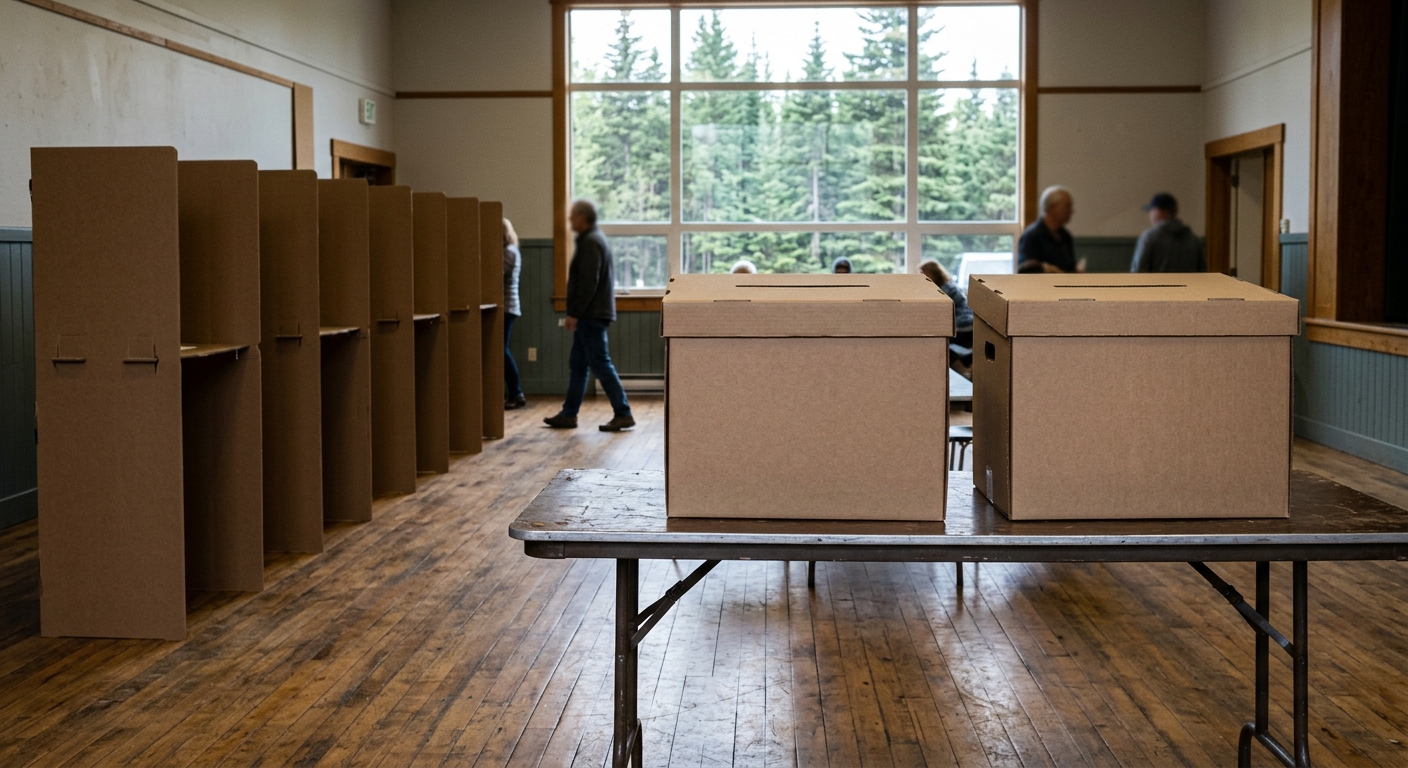
AI-generated illustration; not a photograph of the reported event.
- calendar_today October 10, 2026
Introduction: Elections Collide in October
British Columbia is facing an unusual election scenario this October, as local and provincial elections are scheduled just one week apart. While British Columbians prepare to elect mayors, councillors, school board trustees, and other officials on October 17, a provincial vote to choose 93 members of the legislature is set for October 24. The overlapping timing has led to voter confusion, concerns among candidates, and staffing challenges across the province.
Election Timeline and Overlap Issues
The decision to hold the provincial election only a week after municipal and school board elections has created widespread uncertainty. The snap provincial election call by NDP Leader David Eby occurred after municipal campaigns were already underway. The Union of B.C. Municipalities, which represents local governments, quickly condemned the decision, arguing it puts unfair strain on both voters and participants in the electoral process. Local election day even overlaps with provincial advance polling, adding to the confusion.
Candidates and Voters Struggle with Scheduling Confusion
Cori Ramsay, a former president of the Union of B.C. Municipalities and current city council candidate in Prince George, shared an example of the confusion: "I'm hearing candidates going door-to-door for the municipal election being told that 'I can't vote for you because I'm voting for our MLA.'" Ramsay noted this misperception has become common, as voters mix up local and provincial race timing. Jenna Stoner, current union president and mayoral candidate for Squamish, has also observed uncertainty among the electorate about where and when to cast their votes.
The impact isn't limited to local races. Provincial candidate Tanya Webking, running for the B.C. Green Party in Vancouver-Strathcona, reported that voters sometimes mistake her for a municipal Green Party contender or forget altogether that two elections are taking place. According to Webking, some voters are frustrated by the snap provincial election call, viewing it as costly and unnecessary.
Challenges for Voters and Volunteers
For some, keeping track of all the candidates is a daunting task. Paul Thompson, a Vancouver voter, described the municipal ballot—featuring over 100 names—as overwhelming, making it difficult to research every position or understand the distinctions between city roles and governing bodies. Thompson, who managed to vote early in both elections, criticized the snap election decision, calling it an unnecessary expense.
Stoner, Ramsay, and Webking all expressed concerns about the effect on campaign volunteers and the availability of election staff. Stoner has observed volunteer burnout and the possibility that key helpers might be diverted from local to provincial campaigns. Ramsay added that some local election workers have left for provincial positions in pursuit of higher pay and more days of work.
Responses from Elections B.C. and Political Leaders
When questioned about the overlapping election schedules, NDP Leader David Eby maintained his confidence in voters’ abilities to navigate the two processes. He expressed no concerns over the functioning of candidate elections but pointed to the potential for a future review by Elections B.C. to assess the impact of the overlaps. Elections B.C. itself said it has not yet evaluated the effects, citing that the provincial campaign is still underway. However, the agency reported receiving more applications for election staff than in previous years, though rural and remote areas continue to seek additional workers up until election day.
Impacts on Democracy and Voter Turnout
Michael MacKenzie, a political studies professor at Vancouver Island University, criticized the overlapping campaigns, warning that the situation is detrimental to democratic engagement. MacKenzie noted that both local and provincial candidates often draw from the same limited volunteer pool, creating competition for resources. He dismissed worries of voter fatigue, arguing British Columbians are used to four-year election cycles, but stressed that the primary issue is the difficulty voters face in casting informed ballots amidst the crowded electoral field.
Low municipal voter turnout is already a concern in several areas such as Prince George, where Ramsay is seeking a third term. She expressed hope for active participation at the polls but acknowledged that the attention may skew toward one election over the other. As the election dates approach, both candidates and officials remain watchful of how these overlapping contests will ultimately affect civic engagement and the democratic process in British Columbia.
Source: cbc.ca.