
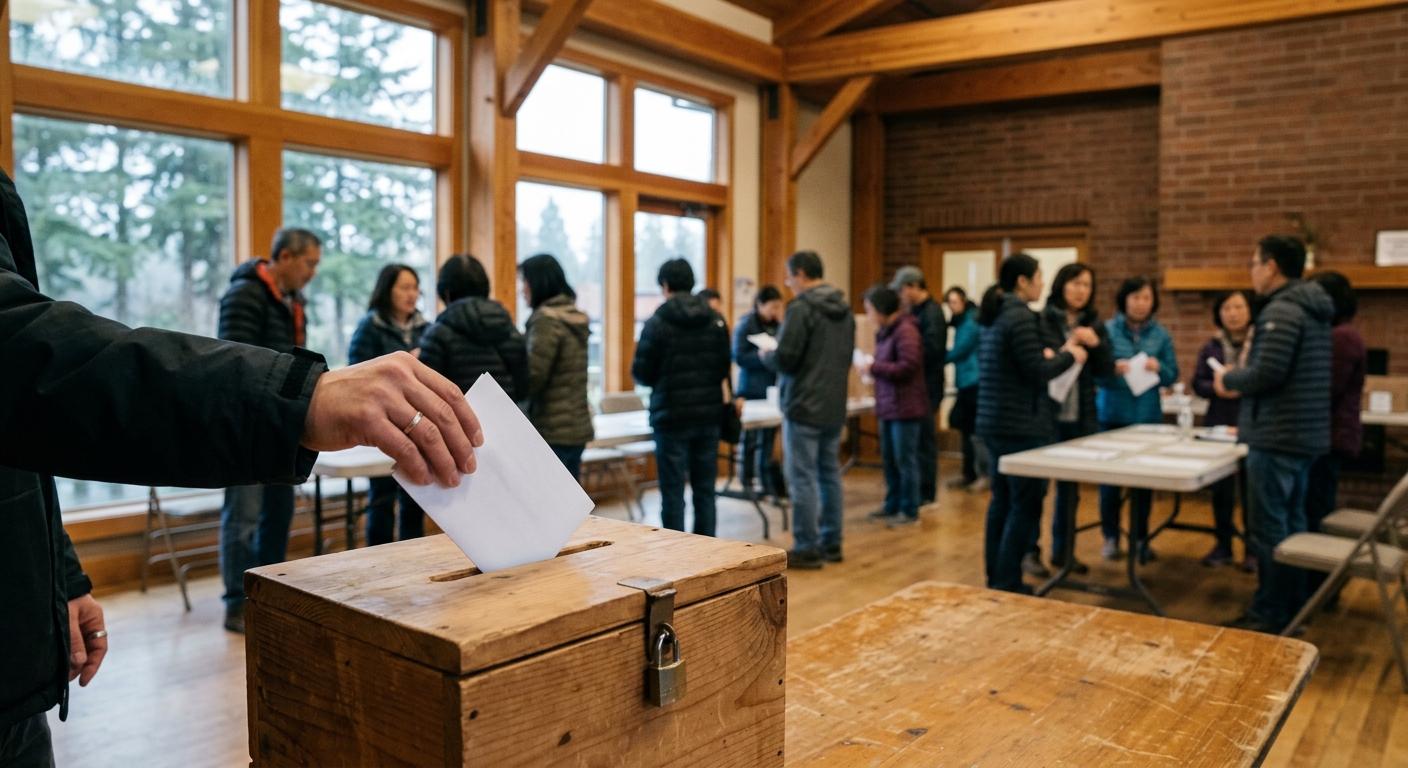
AI-generated illustration; not a photograph of the reported event.
- calendar_today October 14, 2026
Demographics and Representation on Richmond's City Council
According to Statistics Canada, Richmond’s Chinese community constitutes half of the city’s voting population, referring to citizens who are old enough to cast a ballot. However, residents and observers note that the city’s elected officials do not proportionally reflect this demographic majority, bringing renewed attention to the makeup of Richmond’s mayor and council during municipal elections.
Calls for Greater Representation
Borg Chan, who has lived in Richmond for 29 years, contends that council should mirror the city’s population. “So, they should be [a] similar proportion in the council,” said Chan. Currently, only one councillor, Alexa Loo, has an East Asian background. Chak Au, the only other councillor of East Asian descent, vacated his seat to become a member of Parliament. This perceived lack of Chinese community representation has become a sensitive issue during the current municipal elections.
Richmond Election Controversies Highlight Concerns
The issue of richmond election participation took center stage on social media during the election season. In July, an image circulated questioning why a leading mayoral candidate did not appear to reflect Richmond’s ethnic makeup. Another post later surfaced suggesting that a council candidate’s supporters would only back candidates with a Chinese background, or a Chinese spouse. The political party involved attributed the message to a poor translation, and both posts were taken down amid criticism. The episodes stirred controversy and highlighted deeper concerns.
Resident Jimmy Yuan argued, “We need more councils [with a] Chinese background. To represent our voice from the city.”
Historical Barriers Facing Chinese Canadians
Andy Yan, director of Simon Fraser University’s City Program, discussed the context behind these calls for increased representation. Yan noted that Canada has a long history of excluding Chinese Canadians from the political process. Chinese Canadians did not obtain the right to vote until 1947. “Do we actually have systemic barriers—hopefully accidental systemic barriers—that we have kind of established over time that we can perhaps remove?” Yan said. He underlined the complex history of inclusion and exclusion of Chinese Canadians in the political system and electoral process.
Low Voter Turnout and Barriers to Participation
Another key concern is richmond voter turnout. Only about 24 per cent of eligible voters participated in the last municipal election. Queenie Choo, CEO of local immigrant services organization SUCCESS, observes that a significant number of newcomers in Richmond come from countries where engagement in politics or public authority is discouraged or feared. "In some countries of origin, many believe that anybody associated with politic[s] or even authorities... will be condemned," Choo said. Some residents, including Chan, fear potential consequences of their political engagement when returning to their places of origin, such as Hong Kong or China.
The Role of Voter Education Moving Forward
Choo and others underscore the importance of voter education to overcome these barriers and boost newcomer political engagement. Chan remains optimistic, noting that the next generation may become more active politically. This optimism is reflected in recent statistics: more than 17,400 Richmond residents voted in advance polls this month, almost doubling the advance voting figures from the previous election. The city continues to navigate issues of municipal elections Richmond, aiming for a council that more accurately represents its community’s makeup.
Source: cbc.ca.