
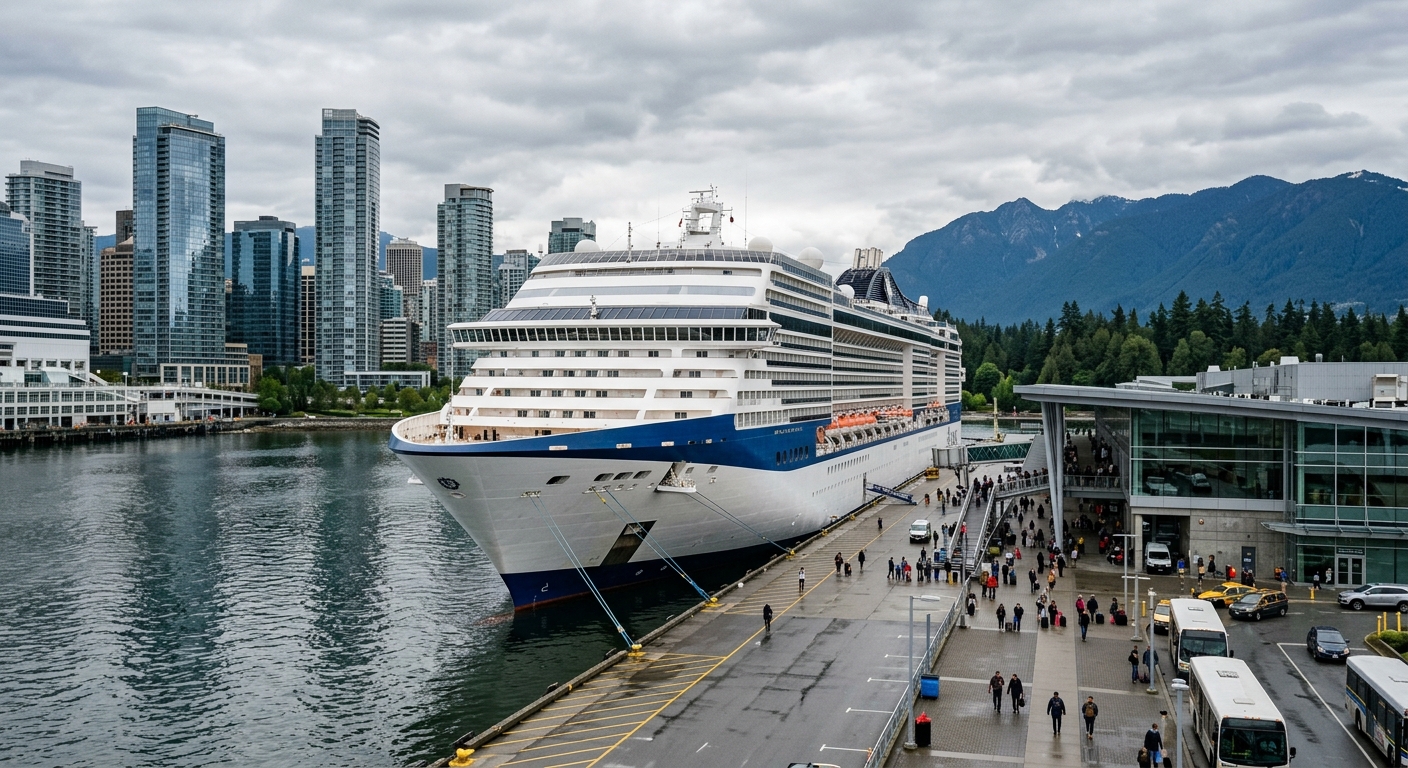
AI-generated illustration; not a photograph of the reported event.
- calendar_today October 13, 2026
Record-Breaking Year for Vancouver Cruise Tourism
The Vancouver Fraser Port Authority (VFPA) has reported a milestone year for cruise tourism in Vancouver during 2026, highlighting a surge in both passenger visits and local economic contributions. The city welcomed approximately 1.4 million cruise passenger visits between February and October, marking about 200,000 more visits compared to 2025, and setting a new record for the region’s cruise sector.
Significant Economic Impact from Passenger Spending
According to the VFPA, the influx of cruise ship passengers has injected more than $1 billion into Vancouver’s local economy. A 2025 passenger survey indicates that visitors are spending an average of $1,100 during their time in the city. This spending supports a wide range of local businesses, from hotels and restaurants to attractions and retail shops.
"Cruise passengers are making Vancouver part of their journey, not simply the place where it begins or ends," commented Royce Chwin, president and CEO of Destination Vancouver. He noted that roughly three-quarters of cruise guests spend time exploring Vancouver either before or after their voyages, providing a considerable boost to the city’s economy.
Growth in Cruise Passenger Visits and Ship Calls
During the 2026 season, Vancouver hosted 358 cruise ship calls, up approximately 20 percent in both passenger visits and ship calls over the previous year. The last vessel of the season was set to depart early Tuesday morning, signaling the end of a busy and economically significant travel period.
Chance McKee, senior trade development representative for the port authority, indicated that the city’s cruise tourism sector is poised for continued expansion. The VFPA projects another seven percent rise in both passenger visits and ship calls in 2027, underscoring the sustained demand for cruise travel in Vancouver.
Port Infrastructure and Shore Power Challenges
As cruise tourism grows, the port’s infrastructure faces increasing demands. Vancouver first introduced shore power technology in 2009, allowing ships to connect to the local electricity grid and reduce reliance on diesel-powered engines while docked. This made Vancouver one of the pioneering cities globally to adopt this environmental sustainability measure.
Currently, only two cruise ships can connect to shore power simultaneously, even though three or four ships may dock at the terminal at once. To address these limitations, the VFPA plans to upgrade infrastructure by 2027, increasing shore power connection stations from two to five. This expansion aims to support environmental sustainability while keeping Vancouver competitive in the cruise sector.
Environmental Sustainability and Future Outlook
Since the installation of shore power in 2009, the port authority reports that more than 50,000 tonnes of greenhouse gas emissions have been prevented across cruise and container operations. The VFPA equates this reduction to removing about 11,750 gasoline-powered cars from the road for a year, reflecting the port’s commitment to minimizing the environmental impact of cruise tourism growth.
Vancouver’s port authority remains optimistic about the city’s role as a leading cruise destination, with strategic investments in port infrastructure and environmental sustainability supporting robust growth projections for the coming years.
Source: cbc.ca.