
- calendar_today August 10, 2025
In 2025, the global economy was shaken by a series of aggressive tariff policies, including the U.S.’s 104% tariff on Chinese imports and Canada’s retaliatory 25% tariff on automobiles and key U.S. goods (CBC News, April 4, 2025). For British Columbia—Canada’s Pacific gateway—these developments are redefining trade, investment, and economic resilience.
Within hours, Canadian markets responded sharply. The S&P/TSX Composite tumbled over 850 points, the Canadian dollar dipped below 71 cents USD, and investors across British Columbia watched as export-heavy sectors came under pressure (Financial Post, April 5, 2025).
A New Phase of Trade Tensions
Canada’s 25% tariff on U.S. auto imports was followed by China’s sweeping 34% tariff on all North American agricultural and timber products—a major blow to B.C., where forestry and agriculture are critical exports.
“We must defend our national interests,” said Minister of International Trade, Mary Ng, in Ottawa. “We will not stand down in the face of unfair U.S. trade practices.”
— CBC News, April 4, 2025
Where the Pain Is Being Felt in B.C.
1. Forestry and Natural Resources
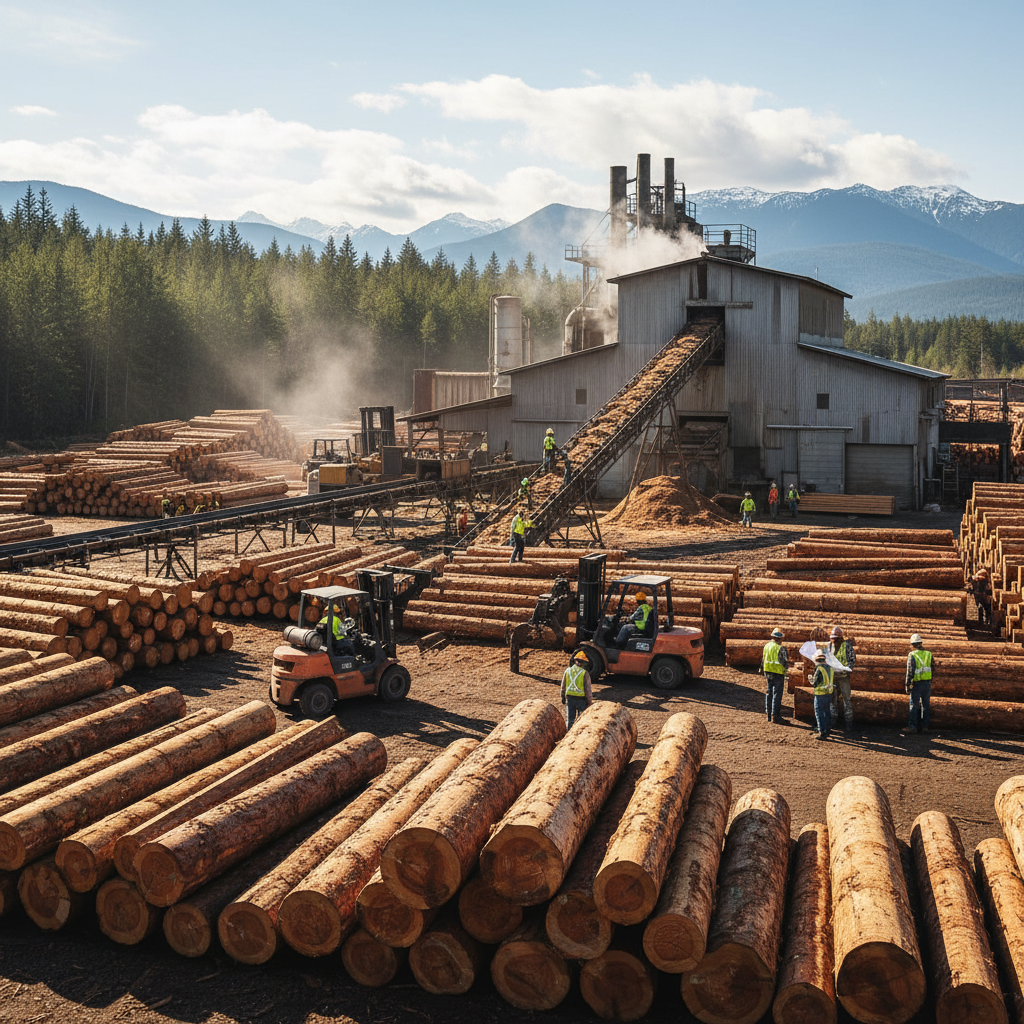
British Columbia’s forestry sector—already struggling with wildfire disruptions and softwood lumber disputes—has been hit hard. China’s 34% tariff on Canadian lumber led to a 17% decline in B.C. lumber exports within two weeks (Globe and Mail, April 10, 2025).
“Markets are drying up overnight,” said a Vancouver Island sawmill owner. “We’re cutting shifts and reconsidering export plans.”
Prices for softwood lumber have fallen 9% on the Vancouver Commodity Exchange, and analysts predict further contractions as U.S. and Chinese demand slows.
2. Agriculture and Seafood
From Fraser Valley berries to coastal seafood, B.C.’s agri-food exports are in limbo. China’s new tariffs, particularly on farmed salmon and blueberries, have caused order cancellations and price drops at the Vancouver Fish Auction.
“We’re not just losing revenue—we’re losing markets we’ve built for decades,” said a salmon exporter in Richmond.
According to the B.C. Ministry of Agriculture, exports could fall by as much as 14% in 2025 if current tariffs persist through Q3 (BCAgri Report, April 2025).
3. Technology and Green Energy
British Columbia’s growing tech scene is also under threat. With major components for clean energy infrastructure—like solar panels and electric vehicle batteries—imported from Asia, the U.S. and Canadian tariffs are disrupting supply chains and delaying green projects.
Shares of Vancouver-based renewable energy firms like Ballard Power and Westport Fuel Systems fell by over 12% in early April (Reuters Canada, April 8, 2025).
“This isn’t just about exports,” said Erin Kapoor, an economist at UBC. “It’s about the cost of inputs. Clean tech is suddenly more expensive to build, which slows innovation right when we need it most.”
Investor Sentiment: Unsettled and Watchful
Investors across B.C. are navigating a tense environment. The TSX Venture Exchange—home to many B.C. resource and innovation firms—has fallen 11% since the April announcements. Capital flight is growing, particularly from sectors tied to Asia-Pacific trade.
Meanwhile, gold, traditionally a hedge during uncertainty, hit CAD $4,195 per ounce, and B.C.-based mining companies like Goldcorp have seen renewed investor interest (Bloomberg Canada, April 9, 2025).
“Investors are defensive right now,” said Stephen Lau, portfolio manager at Canaccord Genuity. “They’re cutting exposure to anything export-heavy and focusing on domestic growth opportunities.”
Short-Term Shock, Long-Term Questions
British Columbians can expect higher prices on imported goods, from electric vehicles to smartphones. For the average household, inflation pressure may build into summer. For businesses, supply chain headaches are forcing reevaluations.
Economists warn of a possible economic slowdown if the trade conflict drags on into fall. Some predict GDP growth in B.C. could fall below 1.2% for the year, compared to 2.1% in 2024 (BMO Economics, April 6, 2025).
On the other hand, government officials argue that these pressures could accelerate Canadian self-reliance, including the reshoring of green tech manufacturing and greater investment in domestic agriculture.
What Investors in B.C. Should Be Watching
As 2025 progresses, British Columbian investors must think more locally and strategically. Sectors anchored in the domestic economy—healthcare, real estate, clean water, local infrastructure—are gaining favor, while highly globalized sectors remain volatile.
Pension funds and private investors are shifting toward farmland, logistics, and Canadian green energy assets. The B.C. Investment Management Corporation (BCI), for example, announced a $2.3 billion increase in its local infrastructure portfolio in response to global instability (BCI Press Release, April 11, 2025).
In a year where the world feels less predictable, B.C. investors are learning to think differently: prioritize resilience, watch policy closely, and avoid overexposure to turbulent global markets.
Stay informed. Subscribe to our investor bulletin for real-time trade updates, regional insights, and expert forecasts on how global tensions are shaping B.C.’s economy.