
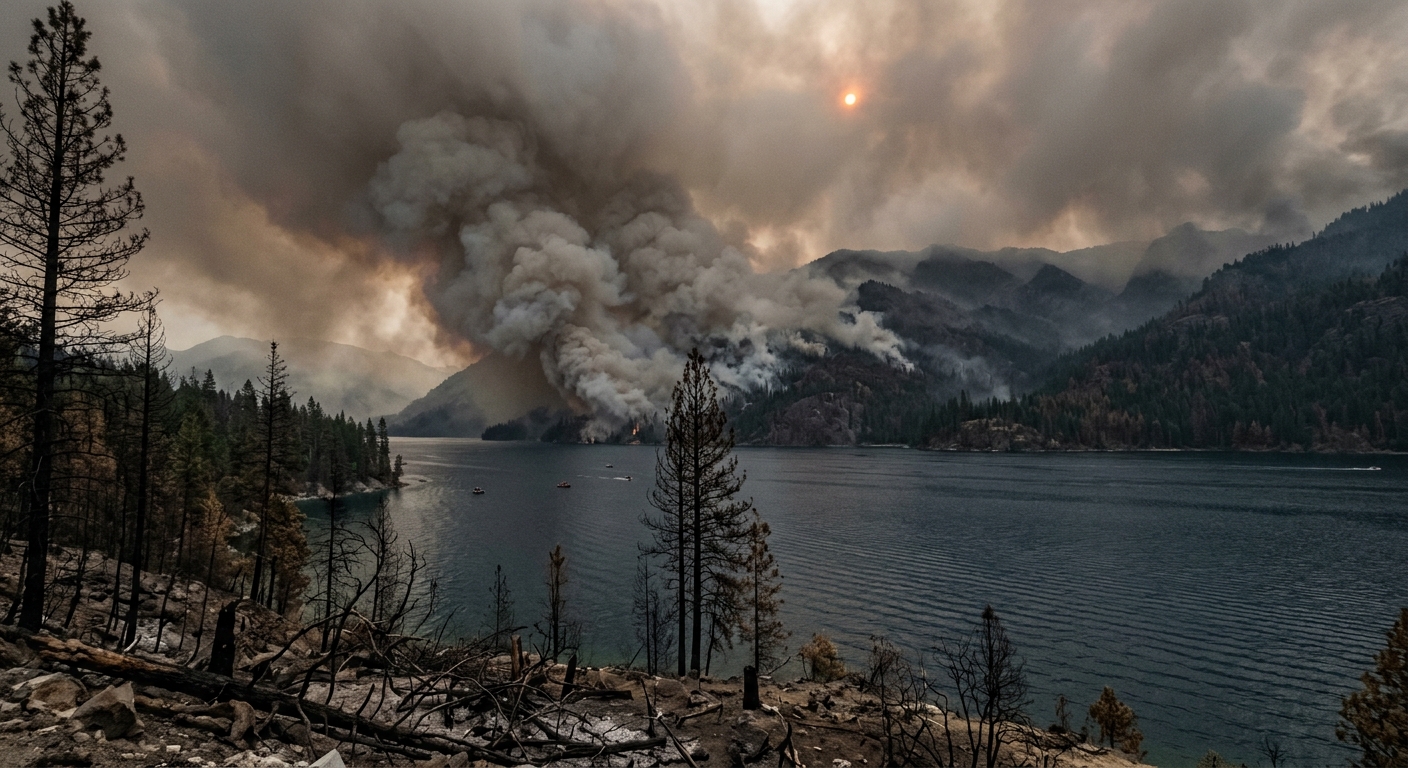
AI-generated illustration; not a photograph of the reported event.
- calendar_today August 9, 2026
British Columbia is grappling with an escalating crisis as fast-moving wildfires forced the province to declare a state of emergency on August 8, 2026. The wildfires, which include the intense okanagan lake fires, have destroyed homes and prompted mandatory evacuations for more than 20,000 residents living along the lake and nearby communities. This wave of destruction is part of a broader emergency, with over 100 wildfires currently burning across British Columbia.
Scale and Severity of Wildfire Destruction
The unprecedented wildfire destruction throughout the province has upended the lives of families and businesses, particularly in rural and waterfront areas. Emergency crews have been working around the clock, racing to contain fires fueled by relentless hot, dry wildfire weather and potent winds. Many fires remain classified as out of control, with nearly half such incidents defying immediate containment measures.
State of Emergency: Mobilizing Resources
Premier David Eby formally announced the state of emergency to accelerate response efforts and expand access to provincial resources. By declaring this status, British Columbia can mobilize firefighting personnel, shelter units, and evacuation support more efficiently. The government is also partnering with local agencies and the federal government to address urgent needs. Authorities emphasize that the safety of residents and swift wildfire response are the top priorities as the situation evolves.
Residents Facing Wildfire Evacuation and Rescue Operations
The situation along Okanagan Lake and adjacent regions has been particularly dire, as numerous neighborhoods faced wildfire evacuation orders at short notice. In some instances, emergency services resorted to wildfire rescue by air, deploying helicopters and fixed-wing aircraft to hasten the removal of stranded families. Temporary shelters, supported by local organizations and provincial agencies, are housing thousands of evacuees as communities await the latest safety updates.
Impact of BC Drought on Wildfire Control
The threat has been magnified by a prolonged bc drought that has left vegetation brittle and highly flammable. These dry conditions, coupled with persistent wind and soaring temperatures, have complicated wildfire control operations throughout British Columbia. Fire officials note that such climate conditions are a critical factor behind the severe spread and frequency of seasonal bc wildfires.
Climate Factors and Regional Response
The 2026 wildfire season has once again placed a spotlight on the links between climate-related challenges and escalating fire risks. The provincial government and regional authorities are encouraging residents to stay updated through official channels and support local preparedness programs. Collaborative wildfire response continues, aiming to protect infrastructure, restore safety for affected families, and reduce the impact on vulnerable communities in British Columbia.
Community Support and Next Steps
Efforts to aid those displaced by the fires are ongoing, with local volunteer groups, health services, and government programs stepping forward. As the province faces continued uncertainty regarding the progression of the wildfires, authorities urge public cooperation and vigilance, particularly for those in high-risk zones. The response in British Columbia stands as a testament to resilience and coordinated action in the face of natural disasters.