
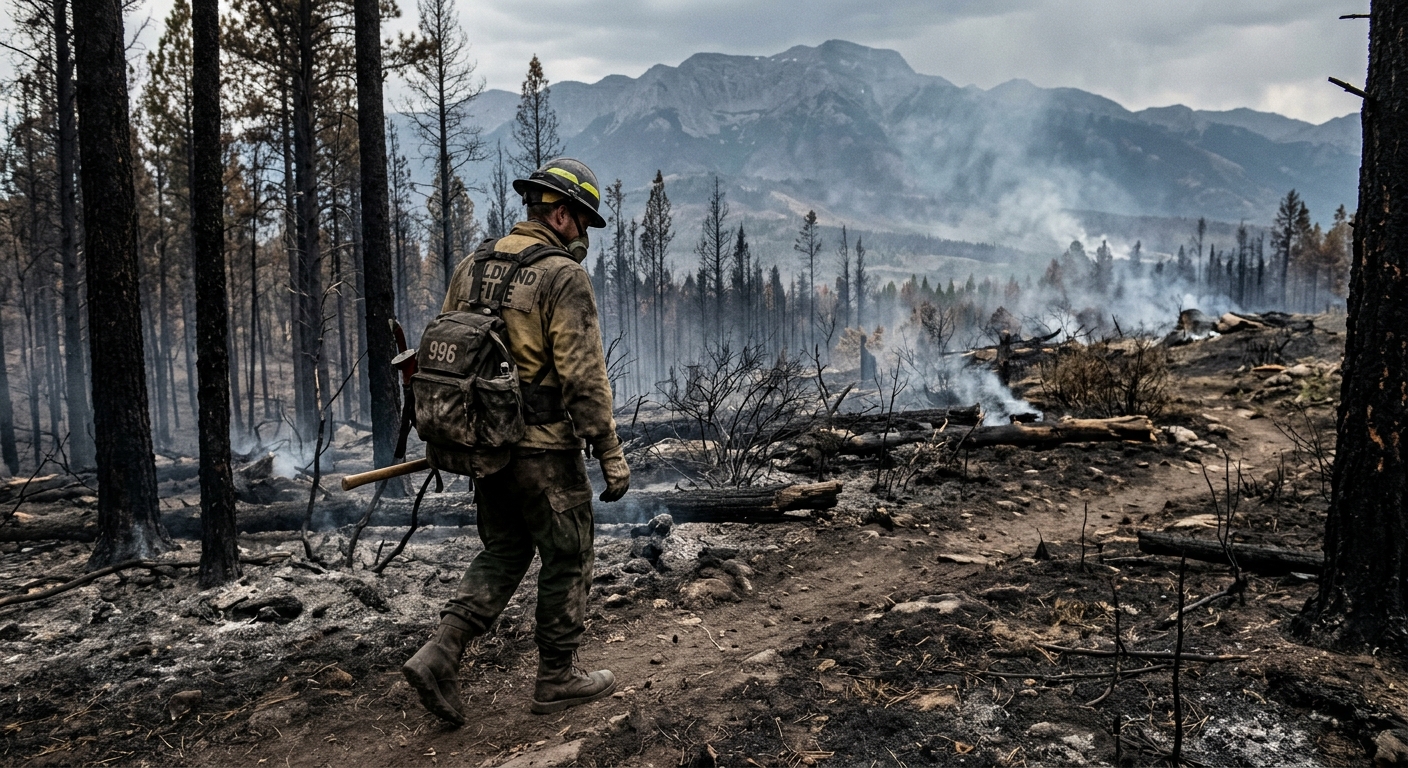
AI-generated illustration; not a photograph of the reported event.
- calendar_today November 8, 2026
Federal Government Commits Major Funding for Water Bombers
Following a devastating wildfire season in British Columbia, the federal government has announced a significant investment aimed at boosting Canada's aerial firefighting capacity. The latest federal budget commits up to $2.5 billion to support De Havilland Canada in ramping up production of its Canadair water bombers, doubling annual output to 20 aircraft by establishing a second assembly line in Alberta.
Front-Line Fighters Welcome Support but Highlight Other Needs
Firefighters who battled the 2026 wildfires in British Columbia have welcomed the injection of funds for water bombers. Riley Moskaluk, a front-line wildland firefighter in B.C. since 2016, emphasized that while aerial firefighting is vital, planes work best when deployed quickly against small fires. "If you're able to get that extremely fast support and you know they can deliver a ton of water on a small fire very quickly, that's definitely their most effective role," Moskaluk said.
Challenges for Ground Crews Remain
Moskaluk and others point out, however, that aircraft can't always be deployed—high winds and poor visibility often grounded planes during the 2026 season. He argues that more investment in ground crews is crucial for long-term wildfire management. The work is physically demanding, includes potential exposure to toxins, and current retirement and health benefits lag behind those provided to municipal firefighters, contributing to high turnover rates in the industry.
Experience and Retention Key to Effective Wildfire Response
Sebastian Kollos, vice president of the B.C. General Employees Union and an experienced wildland firefighter, stated that losing veteran crew members can lead to costly mistakes. "If you don't have the experience, you can start to make mistakes and, and those mistakes can unfortunately lead to people losing their houses," Kollos noted. He highlighted the importance of retaining experienced personnel within wildfire response teams.
Calls for Broader Federal Support and Training Standards
Chad Thomas, director of Aboriginal Land Protection Services and a veteran firefighter, suggested Ottawa could expand its support to include funding for prescribed and cultural burns, particularly benefiting remote and First Nations communities. He also proposed a national accreditation program for contract firefighters—those working with First Nations and other organizations—to facilitate coordinated response across provinces. Thomas argued that, despite an estimated 16,000 wildfire contractors available nationwide in 2026, many were overlooked in favor of international support due to the lack of national standards.
2026 Wildfire Impact and Looking Ahead
The 2026 wildfire season caused extensive damage in British Columbia, with more than 500 structures destroyed or damaged and 1,474 wildfires burning over 4,700 square kilometres. While federal funding for water bomber production is seen as a positive move, many within the wildfire community stress the need for additional investment in ground-level firefighter support and comprehensive wildfire mitigation strategies.
Source: cbc.ca.