
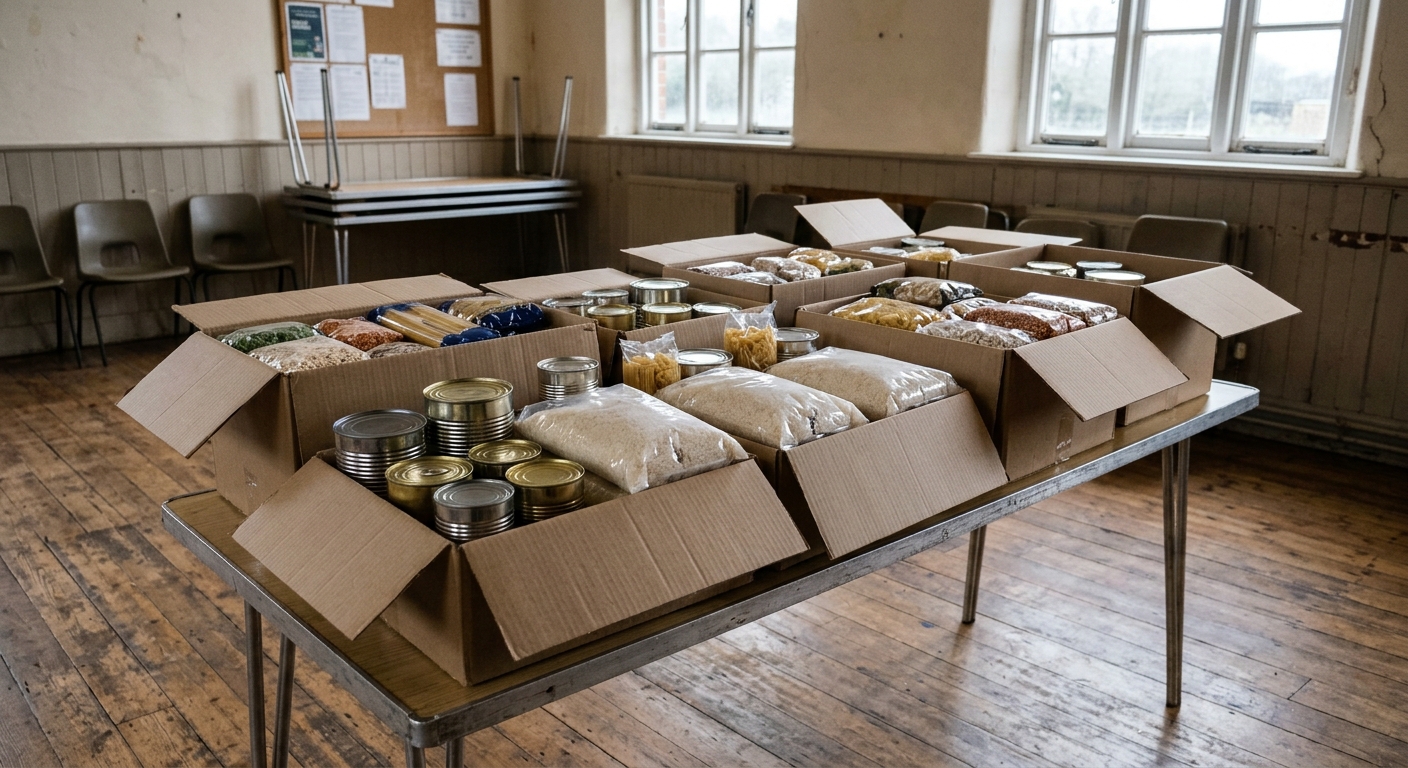
AI-generated illustration; not a photograph of the reported event.
- calendar_today October 22, 2026
B.C. Food Banks See Doubling in Usage Since 2019
Food banks across British Columbia have experienced a dramatic surge in demand, with recent data showing that usage rates have doubled since 2019. According to the latest Food Banks Canada HungerCount report, over 250,000 food bank visits were recorded in B.C. during March 2026 alone.
Children Make Up Significant Portion of Food Bank Users
The report highlights that nearly a third of food bank visitors in that month were children. The findings have intensified calls from advocacy groups for the provincial government to take urgent action to address rising food insecurity and support vulnerable populations.
Homelessness Support Organizations Call for Better Assistance
Nick Wells, spokesperson for the Union Gospel Mission (UGM) in Vancouver, stressed that income assistance levels are not keeping pace with inflation. “Income assistance hasn't kept up with inflation. I think food costs have risen 30 per cent since 2021,” Wells stated.
Wells described how the rising cost of food has become unsustainable, particularly for people in Vancouver's Downtown Eastside, those struggling with poverty, and individuals facing chronic homelessness. The UGM's main shelter location recorded a significant increase in demand—serving 67,000 meals in the first quarter of 2026, up 26 percent from 53,000 meals in the same period last year. Since tracking began in June, 460 children have visited the UGM for meals.
Food Inflation and Housing Costs Compound the Problem
Food inflation has seen a sharp rise since the COVID-19 pandemic, with Statistics Canada reporting grocery prices up by a third since September 2020. These pressures compound the ongoing challenge of high housing costs in B.C., which often account for over half of a household’s income, according to Dan Huang-Taylor, executive director of Food Banks B.C.
“When you think about housing accounting for 50-60 plus per cent of someone’s household income, you just don’t have much left after you’ve tried to cover all those essential living costs,” Huang-Taylor explained.
He also noted that two-thirds of the province's food banks have reported drops in food donations, and half have seen declines in financial donations. “They’re having to do more with less,” Huang-Taylor said, as more people turn to food banks with fewer resources available.
Calls for Government Action on Grocery Prices and Food Access
With the upcoming provincial election set for October 24, advocacy groups are pushing political parties to prioritize food access and reforms to grocery pricing. Wells emphasized the need for lasting measures rather than temporary solutions: “The next provincial government has a chance to change this. They can take a dedicated stance on supporting those dealing with food insecurity.”
One suggestion involves supporting local grocers over large chains by creating a network for direct purchasing from local food producers and food hubs, potentially using competitive bidding to secure lower prices. This method would mirror how provincial liquor sales are managed.
Election Promises Address Food and Grocery Challenges
The B.C. NDP platform includes a proposed price cap on essential items such as milk, eggs, and poultry, as well as measures to prevent real estate property controls from blocking independent grocery stores. Their promises also include clear shelf pricing and the creation of an independent regional wholesale food terminal in the Lower Mainland.
The B.C. Conservatives have pledged to reduce agricultural red tape to build a local food economy, aiming to lower overall grocery bills. As Wells added, “Those struggling right now need to see follow through on those commitments for whichever government is elected.”
Conclusion
With food bank usage at unprecedented levels and core issues like food inflation, housing costs, and food donations converging, advocacy organizations are urging the next provincial government to implement meaningful, long-term solutions to tackle food insecurity in British Columbia.
Source: cbc.ca.