
- calendar_today August 27, 2025
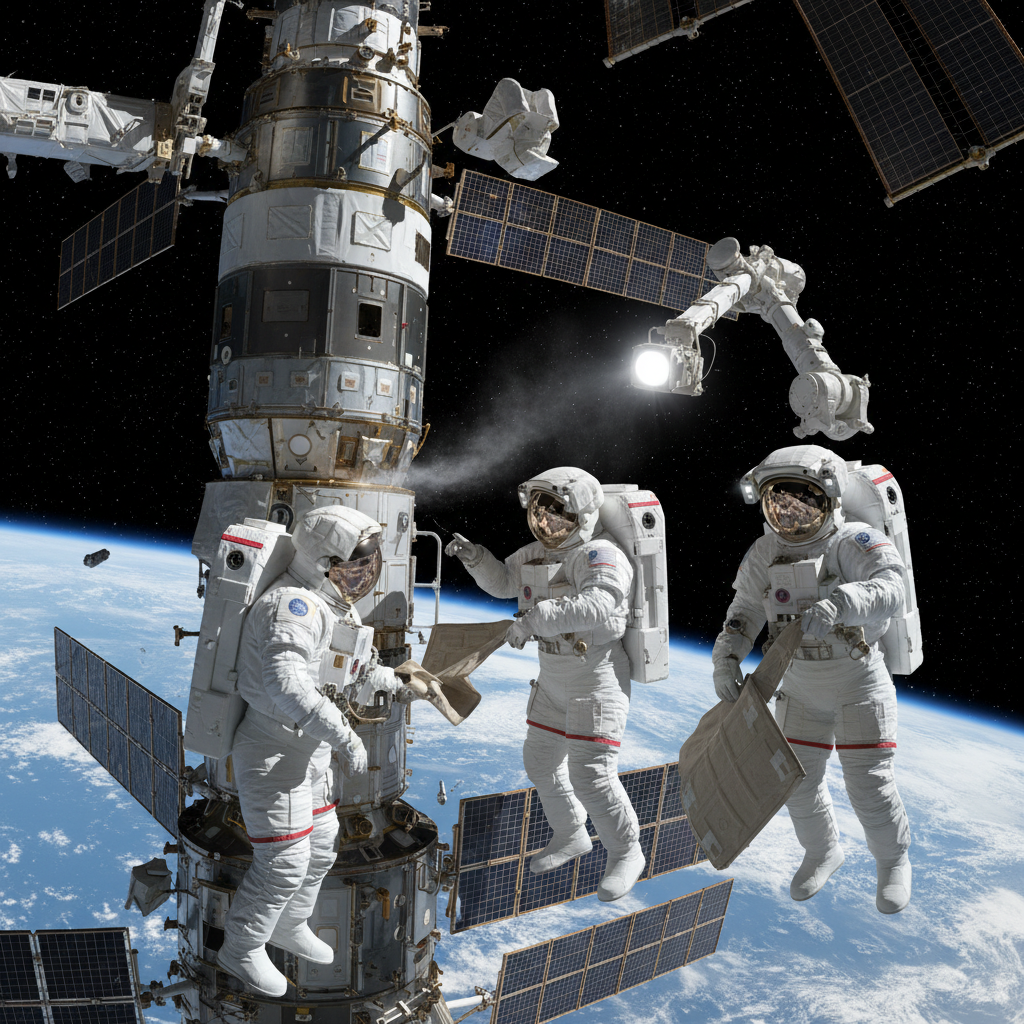
NASA faces a delay in Axiom Mission 4 launch due to a new air leak that has caused concern on the International Space Station (ISS). NASA has delayed the commercial mission that planned to transport four astronauts to the orbital laboratory while they and Roscosmos continue to analyze the current situation. The agency acknowledged the delay but did not provide numerous detailed explanations. According to multiple sources, the leak represents a critical problem due to the fact that much of the ISS hardware has been in space for nearly 30 years.
The ISS has faced multiple air leak incidents before this one. Pressure on the ISS began to decrease gradually as early as 2019. The transfer tunnel of the Russian Zvezda service module represents the main leak point on the ISS because it is one of the station’s oldest components. The PrK section serves as the joint between the Zvezda module and the docking point which Soyuz crew capsules and Progress supply ships commonly access. Russian cosmonauts have carried out various repair attempts over the years to fix small cracks in this area. The repair attempts managed to reduce the air loss rate to a couple of pounds per day but failed to completely halt it. The best solution for handling the situation has been to maintain the PrK module hatch sealed except when necessary dockings occur.
This month Roscosmos declared the successful repair of the PrK module and confirmed its complete sealing while NASA confirmed that leak rates for the module stopped as well. At first glance this appeared to be a considerable advancement. However, things quickly became confusing. The PrK leak reportedly resolved but the International Space Station remained subject to a continuous loss of air pressure. Two sources reported that the station continued to lose pressure but did not specify the exact cause.
According to the current main hypothesis the problem may originate from the hatch seals on the PrK module’s entry points. Though the PrK interior has stopped leaking air, the hatch seals might enable air from the rest of the station to enter the PrK. While the PrK module maintains steady pressure levels the entire ISS continues to experience pressure loss. The nature of this problem remains elusive yet frustrating which has led NASA to adopt a cautious stance. NASA leadership has expressed concerns about the situation and its impact on ISS structural integrity according to a senior industry source who spoke with Ars Technica.
NASA postponed Axiom Mission 4 because it was originally planned to launch on Thursday. In a brief statement, the agency said: NASA and Roscosmos now have extra time to review the situation and decide if further troubleshooting steps are needed thanks to the Axiom Mission 4 launch delay.
There’s another layer of concern: The continuing leaks could indicate high cycle fatigue for the metal structures. Metals such as aluminum which are heavily used in ISS construction develop this condition through repeated stress exposures over time. Repeated bending of a metal clothes hanger will lead to its eventual breakage. This same principle applies to spacecraft. Aircraft structural damage from metal fatigue can result in sudden catastrophic failures like the 1988 Aloha Airlines accident where metal fatigue caused part of the fuselage to tear during flight.
NASA’s internal 5-by-5 risk matrix already labels structural cracking on the ISS as the highest concern due to these possible risks since it evaluates both threat probability and severity. The crew faces no current danger yet the future concerns remain worrisome.
NASA has decided against providing additional updates and has not set up a press conference to discuss the matter further. In response to media inquiries, the agency has reiterated a single point: The International Space Station crew continues normal operations while remaining safe.
Still, the silence leaves many questions unanswered. The recent leak emphasizes the difficulties of preserving an aging space station with worn systems in the extreme conditions of outer space. A global audience observes engineers address the mystery while expecting a permanent solution.