
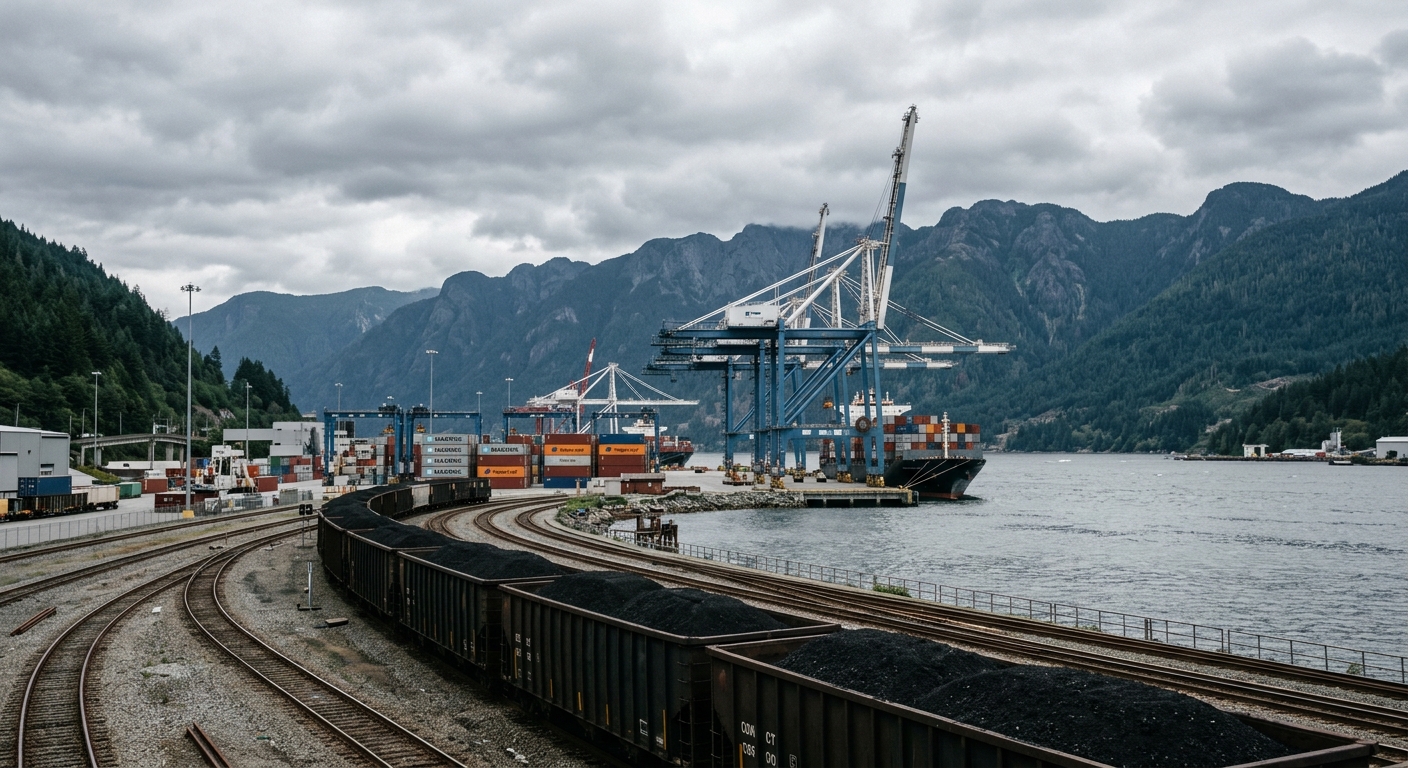
AI-generated illustration; not a photograph of the reported event.
- calendar_today November 10, 2026
Strikes and Lockout Impact Port of Prince Rupert Operations
The Port of Prince Rupert, a critical gateway on British Columbia's northwest coast, faces operational slowdowns due to three ongoing labour disputes. As Canada seeks to diversify trade beyond the United States, these disputes threaten to delay overseas shipments of coal, petroleum coke, and propane.
Key Labour Disputes Involving Trigon, SGS Minerals, and Wolverine
The disputes involve strikes at Trigon Pacific Terminals and SGS Minerals, along with a recent lockout at Wolverine Terminals:
- Trigon Pacific Terminals: Approximately 110 employees represented by the International Longshore and Warehouse Union (ILWU) Local 523 have been on strike since October 2. These workers manage equipment to unload and transfer bulk commodities, including coal and petroleum coke, at the port. The union demands better wages, benefits, and scheduling, and has raised concerns about increased automation potentially impacting job security.
- SGS Minerals: Four lab and preparation technicians have been on strike since late summer. As members of ILWU Local 505, they normally test export-bound materials from mining, forestry, and other sectors. Since the union's certification in November 2024, it has been negotiating its first agreement, with wages as the central issue. Samples now may need routing to alternative B.C. laboratories, potentially increasing costs and delays.
- Wolverine Terminals: Less than ten ILWU Local 400 workers have faced a lockout since early November. These employees maintain and discharge oil barges at the port and are also seeking their first collective agreement, focusing on wages and scheduling.
Reduced Shipments and Business Concerns
The effects of these labour disputes are already visible. On October 27, AltaGas, which operates the Ridley Island Propane Export Terminal, announced preparations for a slowdown in propane export operations due to the Trigon strike. Trigon provides crucial rail logistics and berthing for this facility.
Independent rail data from RailState indicates that coal and petroleum coke trains arriving at Trigon fell by 48% from August/September to October, dropping from an average of 11.2 trains per week to 5.8. For Conuma Coal, Trigon’s largest customer, weekly coal trains delivered fell from 8.1 to 2.9. Some affected shipments have reportedly been diverted to Westshore Terminals in Vancouver.
Responses and Developments From Negotiations
The Canada Industrial Relations Board rejected a complaint by Trigon in October alleging bad faith bargaining by the union, upholding the ongoing strike. The board also ordered Trigon to cease using contractors for specific duties normally performed by striking workers, including handling liquefied petroleum gas rail cars.
Trigon management has maintained basic operations for customers since the strike began, though company and union positions remain far apart. Trigon reports having six proposals on the table against approximately 30 from the union, emphasizing its commitment to continued negotiations and good faith bargaining.
On November 2, the B.C. Federation of Labour issued a “hot cargo edict” covering coal, petroleum coke, and liquefied petroleum gas products at the Trigon terminal, affecting goods crossing the Local 523 picket line. Affiliated unions, such as Local 505, have been asked not to handle these products.
Broader Impacts and Ongoing Uncertainty
The disputes have created a chain reaction linking Trigon, Wolverine, and SGS Minerals operations. Replacement workers used at Trigon for switch work with AltaGas are now also being deployed by Wolverine, with products from those efforts still being tested at SGS, according to statements from Local 505 leadership. All three disputes share connections through port activities and supply chains.
Negotiations continue amid operational slowdowns, raising concerns for shippers, exporters, and the broader trade diversification strategies at one of Canada’s key ports.
Related coverage
Source: cbc.ca.